
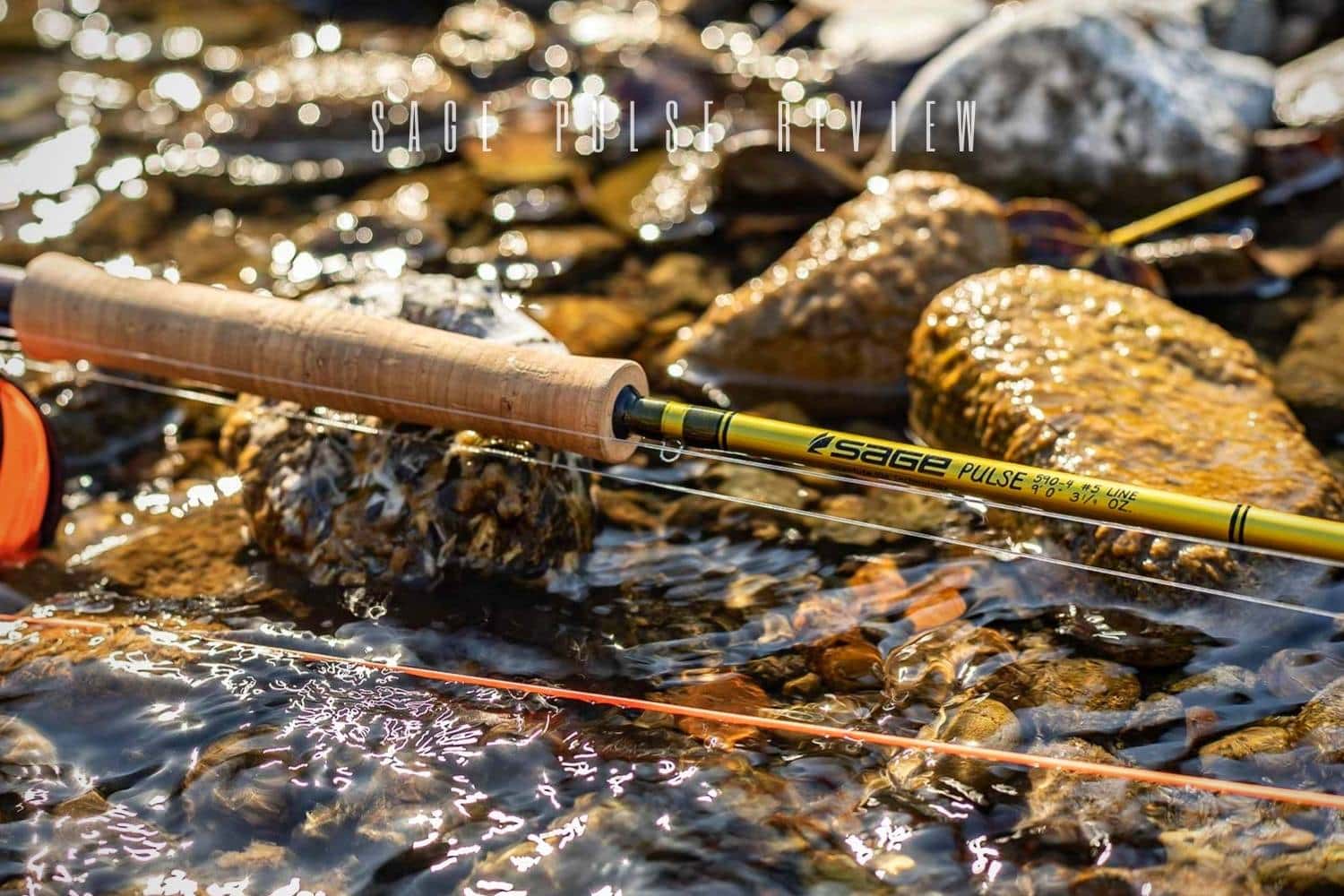
In brief: The earlier-generation Sage Pulse paired workhorse versatility with progressive power rather than a rigid casting feel. The earlier-generation range covered materially different line weights, so its broad family role must be narrowed to the exact rod and water.
Earlier-generation Sage Pulse at a glance
- Casting range and control
- The earlier-generation Pulse balanced power and control most convincingly from middle distance into longer casts. Close-range work remained serviceable, but it did not match the confidence produced on bigger water.
- Earlier-generation components and sizes
- Graphite IIIe construction, ceramic stripping guide, hard-chrome snake guides, configuration-specific grips and reel seats, and a divided tube; the earlier-generation family included 3- through 8-weight rods from 7 feet 6 inches to 10 feet.
- Best fit
- Sage Pulse is best considered for an angler who wants a capable workhorse with more feel than a severe fast-action blank, especially on larger rivers, lakes, creeks, and configurations built for fresh or salt water.
Earlier-generation Pulse identity
The Sage Pulse here belongs to an earlier product generation and served as a workhorse within that series. No later Sage inherits its exact role. The historical boundary matters because feel, componentry, warranty terms, and catalog role cannot be carried forward by name association.
Distance without disguise
Close range exposes the boundary of Sage Pulse. The rod moved weighted flies and heavier rigs without losing the progressive shape of the cast. That capability favors bigger water, while close-range accuracy is the practical limitation. Close range remained serviceable, but the exact earlier-generation Pulse configuration was strongest from middle distance outward.
Fast, but not lifeless
The fast-rated earlier-generation Pulse still flexed enough to maintain contact while playing a fish. Its progressive bend preserved connection through both cast and fight. These traits belong only to this earlier-generation Sage Pulse.
Hardware and finish
The earlier-generation Sage Pulse used Graphite IIIe construction, a ceramic stripping guide, hard-chrome snake guides, configuration-specific grips and reel seats, and a divided tube. The finish supports the rod's intended character, but the real buying value lies in straight guides, an undamaged blank, sound ferrules, and a grip that fits the hand. Those checks matter especially when encountering Sage Pulse as used equipment.
The useful compromise
The tradeoff around Sage Pulse is straightforward. Close-range work remained serviceable, but it did not match the confidence produced on bigger water. Buyers who value close delicacy above all should look elsewhere; buyers who need an older workhorse for broader water may find the earlier-generation Pulse better suited to that job.
The decision in practical terms
Pulse aimed to combine usable power with more communication than an abrupt fast blank. The earlier-generation Pulse family spanned lighter and heavier line weights for river, lake, and creek work. Because that range covered very different configurations, the sensible decision starts with line weight and water type. Buy the exact tool for the job rather than the broad workhorse label.
How to assess this exact rod
Begin a Pulse check by identifying the chosen configuration rather than relying on the family name. Read the rod marking, align all four sections, and inspect the olive wraps, guides, cork, and reel-seat hardware. Mount a balanced reel and a line appropriate to that weight rather than a generic heavy taper. At close range, note how soon the tip communicates load. At middle distance, feel whether the lower blank joins smoothly. If the configuration is intended for more forceful work, add the normal fly and test recovery without exceeding safe space. A workhorse should remain predictable through its real job; it need not imitate a lighter creek rod.
Progressive power is the meaningful distinction
The earlier-generation Pulse paired Graphite IIIe construction and a comparatively sensitive tip with strength lower in the blank. That profile can help an angler feel a cast develop without surrendering all reserve. It can also create more swing weight than a dedicated light-stream rod. The useful comparison is with rods serving the same line weight and distance, not with the entire fly-rod market.
Choose the exact earlier-generation Sage Pulse configuration by line weight, length, casting range, technique, water type, grip fit, balance, and overall condition
| Decision point | Earlier-generation performance | Reader use |
|---|---|---|
| General river work | The earlier-generation Pulse was a versatile, progressive-action rod. | Match the exact weight to ordinary fly size and current before judging fit. |
| Heavier demands | Larger earlier-generation configurations served more forceful fresh or salt water. | Do not transfer that authority to lighter trout versions. |
| Compact water | Anglers prioritizing lighter setups or smaller streams were better served by another taper. | Choose a lower-mass specialist if close work dominates. |
Who should choose this Sage Pulse
The earlier-generation Pulse offers a credible blend of power and feel for anglers who want one capable rod within a chosen line-weight job. Its progressive character is the meaningful selling point, while family breadth and possible swing mass require an exact-model comparison. It is not automatically the right answer for compact streams or the lightest presentation. Keep these conclusions with the old Pulse series and make any later Sage earn its own description.
These handling and use traits belong to the earlier-generation Sage Pulse. A later Sage workhorse or another fast-action series does not inherit Pulse feel, component details, or use boundaries.

Thanks for your review! It was very useful. I actually have just bought a sage pulse 7wt. Do you have any line recommendation for it? Thanks Again. Al
Hey Al no problem, happy to help. The line depends a lot on what you’re going to be fishing for? Our top recommendations in the 7wt range are here: https://staging.flyfisherpro.com/gear/lines/best-7-weight-fly-line/