
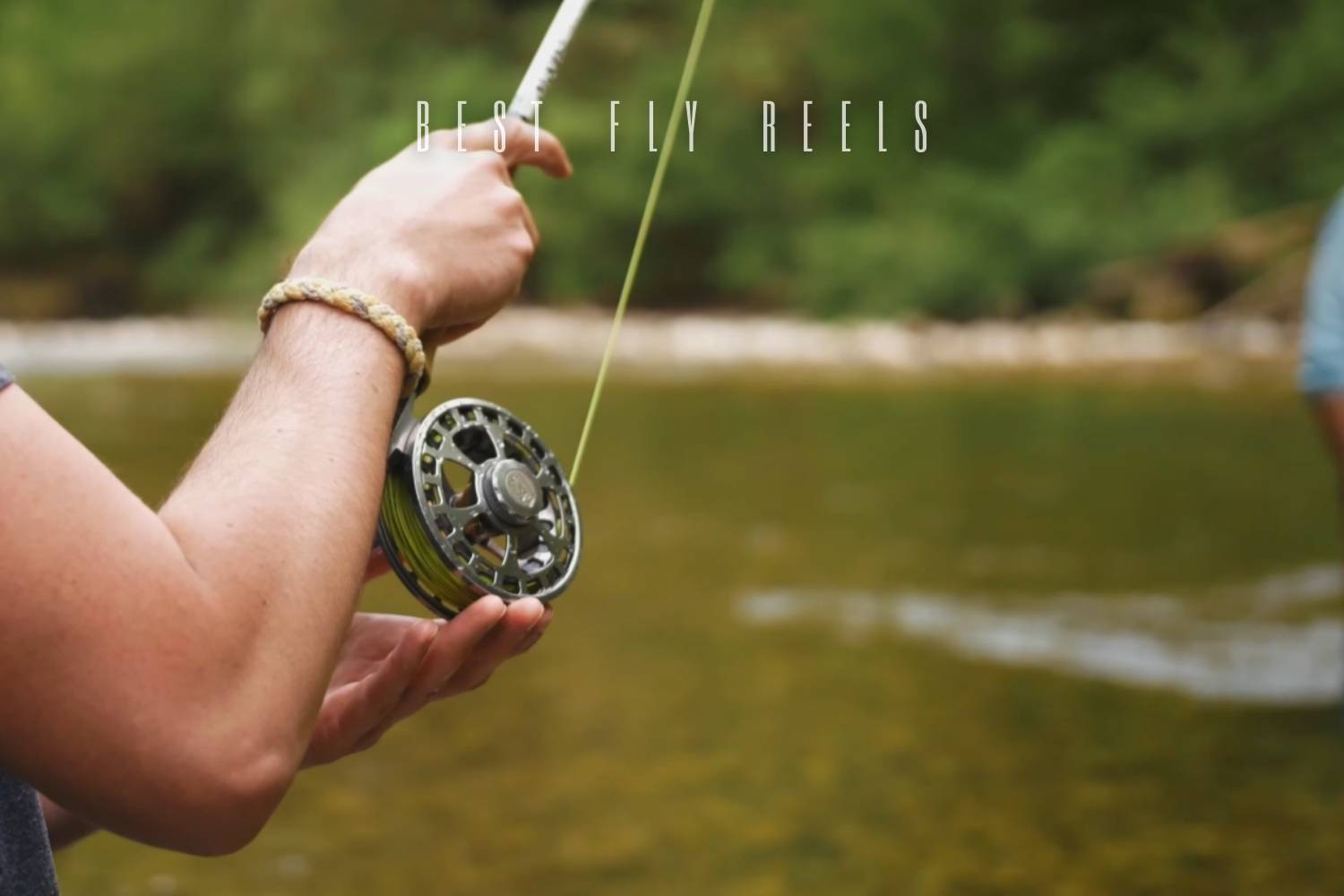
Quick answer: the Galvan Torque is our overall pick in this eight-reel comparison. Its range runs from light trout setups through heavier applications, and Galvan keeps the same core drag design across the family.
That does not make one reel right for every rod or fish. Choose the Redington ZERO for a light clicker on small-stream setups, compare the Redington BEHEMOTH when you want a broad-size adjustable-disc family, and start with the Nautilus CCF-X2 when saltwater use drives the decision.

Best fly reels at a glance
- Best overall current family: Galvan Torque
- Broad-size adjustable-disc option: Redington BEHEMOTH
- Light clicker for small streams: Redington ZERO
- Machined all-round sealed-drag option: Lamson Guru S
- Lightweight USA-made trout option: Ross Reels EVOLUTION LTX
- Traditional current click-and-pawl option: Orvis Battenkill Click
- USA-made 7–9-weight option: Orvis Mirage LT IV
- Saltwater family: Nautilus CCF-X2
Eight current fly reels compared
| Model | Best for | Range | Drag | Evidence | Action |
|---|---|---|---|---|---|
| Galvan Torque | All-round family | T-3–T-10, T-12 | Torque Drag System | Current specifications; exact-family hands-on history, size unknown | Check Trident Price |
| Redington BEHEMOTH | Broad-size disc option | 4/5–11/12 | Adjustable carbon-fiber | Current manufacturer facts plus dated same-family observations | Check Trident Price |
| Redington ZERO | Small streams and light lines | 2/3, 4/5 | Spring-loaded clicker | Current specifications; exact-family hands-on history, size unknown | Check Trident Price |
| Lamson Guru S | Machined all-round use | −3+ to −9+ | Sealed conical | Current specifications; standard-family hands-on history, size unknown | Check AvidMax Price |
| Ross Reels EVOLUTION LTX | Light-line trout setups | 3/4–7/8 | Stacked-disc | Current manufacturer facts plus launch-generation handling | Check Trident Price |
| Orvis Battenkill Click | Traditional click-and-pawl use | I–III / 1–7 wt | Click-and-pawl | Current Battenkill Click specifications; current model verified | Check Trident Price |
| Orvis Mirage LT IV | 7–9-weight setups | LT IV / 7–9 wt | Sealed carbon/stainless disc | Exact LT IV current model verified | Check Trident Price |
| Nautilus CCF-X2 | Saltwater setups | 6/8–Silver King | Sealed cork/carbon-fiber disc | Current model verified | Check Trident Price |
How these reels differ
Start with line class and backing capacity, then compare drag type, arbor format, construction, weight and intended water. A familiar family name is not enough when a reel has been redesigned or split into separate branches, so each section identifies the exact current family or configuration.
Manufacturer pages provide the current dimensions and specifications. Fly Fisher Pro hands-on comments appear only where the exact family can be identified, and an unidentified size or finish is never treated as experience with every current option.
Each buying link goes to the named reel family. Confirm the exact size, finish and retrieve direction before ordering; a family page does not mean every option is selected or available.
A merchant button applies only to the named family or configuration. It does not prove that another size, finish or retrieve direction is selected.
Fly reel reviews
Pick 1 of 8
Galvan Torque: Best overall current family
Evidence: Current Galvan specifications plus hands-on use of an unidentified Torque size

Verdict: choose the Torque when you want one reel family that spans light trout work through heavier line classes without changing the basic design language. Galvan lists T-3 through T-10 plus T-12—there is no T-11—with weights from 4.2 to 8.6 ounces.
Galvan specifies 6061 construction technology, its proprietary Torque Drag System and USA design, manufacture and assembly. Fly Fisher Pro used a Torque reel; current size-specific specifications come from Galvan’s table.
Reasons to choose it
- Wide range from light-line through heavier applications
- Same named family has a long, traceable manufacturer history
- Designed, manufactured and assembled in the USA
Reasons to skip it
- The broad family still requires careful size and capacity matching
- Published weights and capacities vary substantially by size
Pick 2 of 8
Redington BEHEMOTH: Broad-size adjustable-disc option
Evidence: Current Redington specifications plus same-family hands-on observations

Verdict: the BEHEMOTH makes sense when you need an adjustable carbon-fiber drag and a family that runs from 4/5 through 11/12. Redington specifies a die-cast chassis, a large-arbor deep-V spool and an oversized drag knob.
Manufacturer weights rise from 5.2 ounces in 4/5 to 11.4 ounces in 11/12, so the model name alone does not tell you how a reel will balance your rod. On some earlier units, the drag knob felt a little wobbly.
Reasons to choose it
- Five sizes cover trout through heavier line classes
- Adjustable carbon-fiber drag
- Oversized knob is easy to locate by touch
Reasons to skip it
- Larger sizes add substantial reel weight
- Anglers who prefer fully machined construction should compare the Torque, Guru S or EVOLUTION LTX
For a focused hands-on account of the family, read our Redington BEHEMOTH review.
Pick 3 of 8
Redington ZERO: Light clicker for small streams
Evidence: Current Redington specifications plus same-family hands-on context

Verdict: choose the ZERO when low weight and a simple clicker matter more than an adjustable disc drag. Redington lists 2/3 and 4/5 sizes at 2.7 and 3.0 ounces, with die-cast construction, a quick-change spool and a large arbor.
Fly Fisher Pro used a ZERO reel from this family, but the size was not recorded. Choose the current 2/3 or 4/5 size from Redington’s capacity table and confirm the selected finish before ordering.
Reasons to choose it
- Low documented weight for light rod setups
- Simple spring-loaded clicker system
- Large arbor and quick-change spool
Reasons to skip it
- Only two light-line sizes
- Not the choice for anglers who want an adjustable disc drag
Pick 4 of 8
Lamson Guru S: Machined all-round sealed-drag option
Evidence: Current standard Guru S specifications plus hands-on use of an unidentified standard-family size

Verdict: the standard Guru S suits anglers who want a machined large-arbor reel with a sealed conical drag across -3+, -5+, -7+ and -9+ sizes. Lamson specifies machined 6061 aluminum and stainless components, with weights from 3.73 to 5.83 ounces.
Hands-on impressions apply to the standard Guru S family; Guru S HD and Guru E-Series are separate configurations.
Reasons to choose it
- Machined aluminum and stainless construction
- Sealed conical drag
- Four sizes span common trout and heavier freshwater setups
Reasons to skip it
- Standard, HD and E-Series frames serve different jobs and should not be mixed
- Size-specific fit requires the current capacity table
Pick 5 of 8
Ross Reels EVOLUTION LTX: Lightweight USA-made trout option
Evidence: current Ross specifications plus hands-on use of an unidentified EVOLUTION LTX size and finish

Verdict: the EVOLUTION LTX is a focused trout-family choice covering 3/4, 4/5, 5/6 and 7/8. Ross specifies fully machined 6061-T6 frame and spool construction, a stacked-disc drag derived from the Evolution R and manufacture in Montrose, Colorado.
Manufacturer weights run from 4.20 to 4.91 ounces. The reel used by Fly Fisher Pro looked good and felt light in hand; current finish names, sizes and weights come from Ross specifications.
Reasons to choose it
- Four-size range centered on trout line classes
- Fully machined 6061-T6 frame and spool
- Made in Montrose, Colorado
Reasons to skip it
- The range stops at 7/8
- Finish and size choice still require the current table
Anglers comparing lighter trout setups can also see our 4-weight reel guide.
Pick 6 of 8
Orvis Battenkill Click: Traditional current click-and-pawl option
Evidence: Current Orvis Battenkill Click specifications
Verdict: choose the current Battenkill Click when you want a standard-arbor click-and-pawl reel for 1–7-weight lines. Orvis lists sizes I, II and III at 3.4, 3.8 and 4.1 ounces, using 6061-T6 aluminum, a Delrin handle and a curved reel foot.
This reel is an updated generation with documented design changes. The earlier Battenkill had a different size range, weights and construction record, so compare the current on its own specifications. Battenkill Disc is also a separate current product, not another size of the Click.
Reasons to choose it
- Simple click-and-pawl format
- Standard arbor and curved foot
- Three sizes cover light through mid-weight trout setups
Reasons to skip it
- No adjustable disc drag
Pick 7 of 8
Orvis Mirage LT IV: USA-made 7–9-weight option
Evidence: Current Mirage LT IV specifications

Verdict: the Mirage LT IV is the exact configuration to compare for 7–9-weight rods when you want a 5.0-ounce machined reel with a sealed disc drag. Orvis specifies a 4.0-inch diameter, 6061-T6 aluminum barstock, a machined aluminum handle, titanium shaft and a quick-release spool.
Mirage LT is a separate branch from the standard Mirage, not a renamed replacement. Its current specifications define this configuration.
Reasons to choose it
- Exact 7–9-weight configuration
- Sealed carbon/stainless disc system
- Made in New Hampshire
Reasons to skip it
- Only the LT IV is evaluated here, not the whole Mirage LT range
For other reels centered on this line class, compare our 8-weight fly reel guide.
Pick 8 of 8
Nautilus CCF-X2: Saltwater family
Evidence: Current standard CCF-X2 specifications
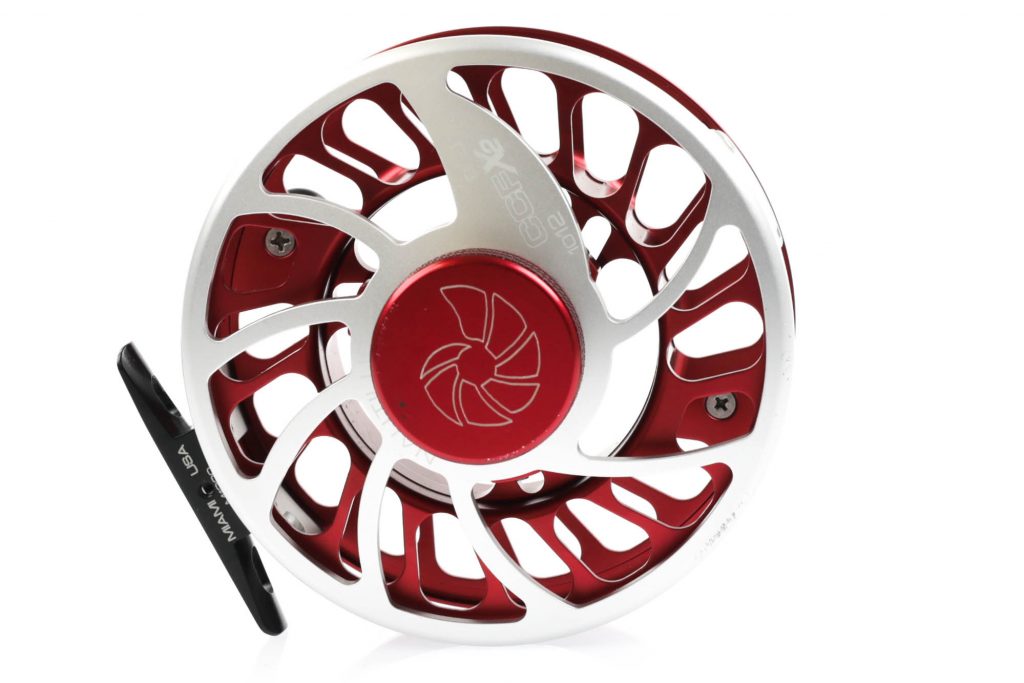
Verdict: start with the standard CCF-X2 family when saltwater use, backing capacity and a sealed drag lead the decision. Nautilus lists standard 6/8, 8/10, 10/12 and Silver King configurations, with weights from 7.8 to 9.8 ounces.
The manufacturer describes a fully sealed dual-action cork/carbon-fiber disc system with ActivSeal, InfinAdjust, hybrid ceramic bearings and TPX bushings. The reels are designed, machined, anodized and assembled in Miami. Separate America’s 250th Edition products are distinct products outside this standard-family comparison.
Reasons to choose it
- Four standard configurations cover several saltwater line classes
- Fully sealed cork/carbon-fiber drag system
- Designed and built in Miami
Reasons to skip it
- Exact size and capacity matching matter more than the family name
- Listed weight is higher than the trout-oriented families in this guide
Read our saltwater fly fishing guide and saltwater reel comparison before building a heavier setup.
How to choose a fly reel
A reel should be selected as part of a system, not as an isolated accessory. Start with the rod and fly line, then account for target fish, water type, backing and the balance you want in hand. Our guide to rod and line weights explains the numbering before you compare reel sizes.
Match the reel to the rod, line and backing requirement
Use the manufacturer’s exact size table rather than assuming every model marked with a familiar line number has the same capacity. Backing strength, line taper and spool depth all affect the fit. A reel that accepts one standard floating line may not hold the same backing with a bulky specialty line.
Rod balance matters too. A low reel weight can help a short light-line setup, while a longer or heavier rod may feel better with more mass behind the hand. Published weight is a useful starting point, but the complete rod, reel, line and backing combination decides the result.
Choose click-and-pawl or disc drag deliberately
A click-and-pawl reel uses a simple mechanical resistance system. It suits anglers who value low complexity and direct line control, particularly on lighter setups where palm pressure can add resistance. The Redington ZERO and current Orvis Battenkill Click represent two versions of that idea.
An adjustable disc drag provides a wider controlled resistance range and is usually the more appropriate starting point for heavier lines, stronger fish or situations where consistent pressure matters. Design and adjustment range still differ by model. See our fly reel drag guide for a closer look.
Understand arbor trade-offs
A larger arbor increases the circumference of the line stored near the outside of the spool. That can improve pickup per handle turn and reduce tight line coils. It does not automatically create more backing capacity: spool width, depth, hub shape and the chosen fly line all matter.
A standard arbor can suit a traditional light-line reel and keeps the design compact. Choose by the fishing job rather than treating one arbor label as universally better.
Die-cast and machined reels are different, not automatic winners and losers
Die-casting forms the frame and spool in a mold; machining cuts them from stock. Machined reels often provide tighter control over shape and material removal, while die-casting can produce capable designs with fewer machining steps. Neither label alone proves drag performance, impact resistance or service life.
Look at the complete product: frame rigidity, spool fit, handle and foot design, drag protection, retrieve conversion and the manufacturer’s repair pathway. Then decide which features matter for your fishing.
Saltwater use changes the priorities
For saltwater, verify the exact reel’s line and backing capacity, drag design and cleaning instructions. Rinse and care recommendations should come from the manufacturer. A sealed system reduces exposure at specified points, but “sealed” does not mean maintenance can be ignored.
Heavier line classes also increase the importance of rod balance and backing configuration. Do not choose a saltwater reel from a family headline alone; work from the exact size row.
Check the exact reel before ordering
Use the manufacturer specifications to match reel size, line class and backing capacity. Retailer pages may contain several sizes, finishes and retrieve directions, so confirm the exact option in the cart.
Before ordering, confirm the product name, size, finish and retrieve orientation shown in the cart.
Fly reel FAQ
What is the best fly reel overall?
The Galvan Torque is the overall pick because its manufacturer range spans light through heavier applications while retaining the same core drag design. The correct T size still depends on your rod, line and backing requirement.
What size fly reel should I buy?
Start with the line weight printed on your rod and the line you plan to use, then check the reel manufacturer’s exact capacity table. Choose a size that accommodates that line and the backing appropriate to the fishing. When two sizes overlap your line class, compare weight, diameter and capacity rather than assuming the larger reel is safer.
Is a click-and-pawl reel enough for trout?
It can be for many light-line trout situations, especially when the angler is comfortable controlling line and adding palm pressure. Strong current, light tippet and larger fish change the calculation. An adjustable disc drag provides more controlled resistance when those demands are central.
Does a large arbor hold more backing?
Not necessarily. Arbor diameter affects the spool hub and line pickup, but total capacity also depends on spool width and depth, line profile and backing diameter. Use the exact capacity specification instead of the arbor label alone.
Do I need a sealed drag?
A protected drag is useful where water, sand and salt exposure are likely, but the manufacturer’s exact design and care instructions matter. Sealing is not a universal performance score and does not remove the need for cleaning and inspection.
Can I use a saltwater fly reel in freshwater?
Yes, if its line class, capacity and weight suit the rod and fishing. The trade-off may be extra size or mass that a light trout setup does not need. Choose the reel for the complete system rather than for a saltwater label.
Are more expensive fly reels always better?
No. Additional machining, drag complexity, finish options or domestic production may matter to one angler and add little for another. The better choice is the reel that fits the rod and line, provides the drag and capacity the fishing requires, and has a product identity you can verify.
Final recommendation
Our final recommendation is the Galvan Torque.
Choose the Galvan Torque for the broadest all-round current family in this set. Pick the Redington ZERO when a light clicker fits a small-stream setup, the Ross Reels EVOLUTION LTX for a machined trout-focused range, or the Nautilus CCF-X2 when saltwater specifications lead the decision.
Whichever reel you shortlist, finish with the exact configuration table. Match line class, backing, weight and drag to the fishing you actually do, and verify each current generation and size separately.
First-party sources
The manufacturer records below provide the current product identities and specifications:
