
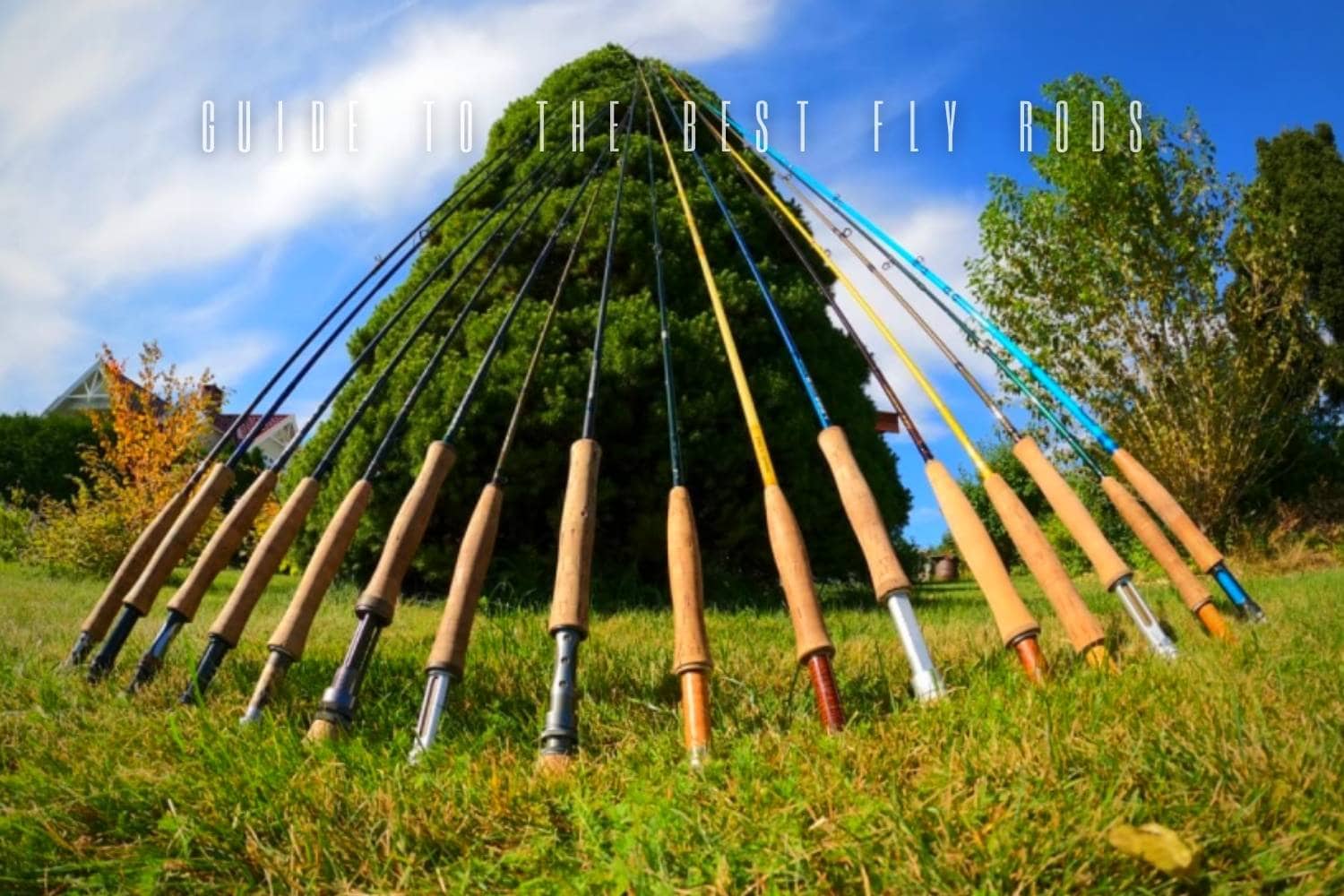
Fly rod buyer’s guide
A fly rod is only “best” when its line weight, length, action, and hardware suit the work it will actually do. A delicate creek rod and a wind-cutting saltwater rod can both be excellent, but asking either to do the other’s job creates frustration. Start with your most common water, fly size, and casting distance; then decide how much specialization you truly need.
This guide uses named rods as article-era examples rather than promises about today’s range. The practical framework remains useful even when model names change: select the fishing job first, compare feel second, and treat warranty language as a condition to read rather than a shortcut to quality.
Match the rod to its hardest regular task
Do not choose around the easiest cast of the season. Choose around the recurring cast that demands the most from the rod: a bulky streamer, a long leader, a windy bank, a tight canopy, or a fish that requires stronger tackle. A rod that handles that demanding job without becoming clumsy during ordinary fishing is a better all-rounder than one selected from a brand name alone.
| Fishing situation | Useful starting point | Main trade-off |
|---|---|---|
| Small trout water and light dries | Lighter line weight, shorter to standard length, moderate feel | Less authority with wind, large flies, and heavier rigs |
| General trout fishing | A balanced five-weight around standard length | Versatile rather than exceptional at either extreme |
| Bass, streamers, and larger freshwater | More line weight and a quicker recovery | Reduced delicacy at close range |
| Wind and light saltwater work | Heavier line class, fast action, corrosion-conscious fittings | More demanding timing and a less forgiving short cast |
| Long-leader nymph control | Extra length with low swing weight | Awkward under trees and less convenient in transport |
What the article-era rods teach
The names below identify the exact rod sections represented in the retained article. They are useful for understanding distinct design jobs, not for assuming an unchanged retail generation.
Douglas SKY G: feel-led trout choice
The tested article-era SKY G earned its place through how it felt in hand across trout water. The important buyer lesson is not to chase a score in isolation. A responsive, light-feeling rod can make repeated casting more pleasant, but that advantage matters most when its taper also matches your normal fly size and casting rhythm.
Scott Sector: big-water crossover
The matching Sector section describes a saltwater-first rod that also handled large freshwater work. That is a coherent crossover because both jobs reward line speed, authority, and hardware suited to harsher conditions. It is not the same kind of versatility as a trout five-weight, and it should not be judged by delicate creek presentation.
Douglas Upstream: small-creek specialization
The article-era Upstream was fished as a dedicated light dry-fly rod on small water. Its lesson is that specialization can be worthwhile when most casts are short and accuracy under cover matters more than distance. A buyer who mainly throws weighted streamers would be solving the wrong problem with this design.
Winston AIR 2: presentation priority
The retained AIR 2 observation centers on dry-fly presentation and a rod that rewards a controlled touch. Anglers who enjoy feeling a cast develop may value that response more than maximum line speed. Those who commonly push bulky flies into wind should put that tougher job ahead of elegance.
Redington Classic Trout: traditional trout work
The matching Classic Trout section records a rod used for dry flies and smaller nymphs. It illustrates a useful entry path: moderate trout work does not require the stiffest blank. A more forgiving loading feel can help an angler sense timing, provided the line and leader are balanced to the rod.
Douglas DXF Gen 2: broad trout utility
The exact DXF Gen 2 section presents a medium-fast all-rounder. This is the design space to investigate when one rod must cover changing trout tactics. The compromise is honest: it may not be as delicate as a creek specialist or as forceful as a heavy predator rod, but it can reduce the number of rods needed for ordinary days.
ECHO Trout: action choice within trout fishing
The retained ECHO Trout section treats the original named generation separately from similarly named later rods. That boundary matters. Even when names are close, do not move casting impressions across generations. Judge a second-hand or old-stock example by its own label, condition, and line pairing.
Read action, weight, and length together
Line weight sets the working range
Line weight is not a measure of build quality. It is a system choice that influences fly size, wind handling, presentation, and fish-fighting leverage. Lighter weights preserve finesse and make modest fish lively. Heavier weights carry bulkier flies and provide more authority, but they can land softly only with careful technique.
Action changes timing
A fast-action rod bends more toward the tip and tends to recover quickly. It can generate line speed, yet it asks for cleaner timing. A moderate rod bends deeper, communicates the load more clearly, and often feels friendlier at ordinary distance. Neither description guarantees accuracy; the caster, line, leader, and fly still form one system.
Length changes reach and clearance
Extra length improves reach for mending and line control, while a shorter rod can move more easily beneath branches. Transport length also depends on section count, so compare the packed case with the space you actually have. More sections are convenient, but every ferrule deserves routine inspection and secure assembly.
Inspect the rod before blaming the cast
- Check every guide for a groove, bend, loose foot, or cracked wrap finish.
- Seat ferrules firmly without forcing them, and stop fishing if a joint repeatedly works loose.
- Confirm the reel foot fits securely and the locking hardware turns smoothly.
- After corrosive water, rinse exposed hardware with fresh water and let the rod dry before storage.
- Transport the rod in a protective tube and avoid closing doors, tailgates, or rod vaults on an exposed tip.
A warranty can be valuable, but the word “lifetime” does not describe who qualifies, what damage is covered, or which fees apply. Read the written terms for the exact rod and owner before treating coverage as part of the decision.
Build a short list you can explain
Write down three things before comparing rods: the water you fish most, the largest fly or heaviest rig you cast regularly, and the distance at which most presentations happen. Eliminate any rod that is poorly suited to one of those realities. From the remaining choices, compare loading feel, grip comfort, packed size, hardware, and service terms.
The winning rod should make your normal fishing easier without pretending to cover every edge case. Choose the specialist when one technique dominates your season; choose the balanced all-rounder when your methods change by the hour. A clear job description is more durable than any annual ranking.
