
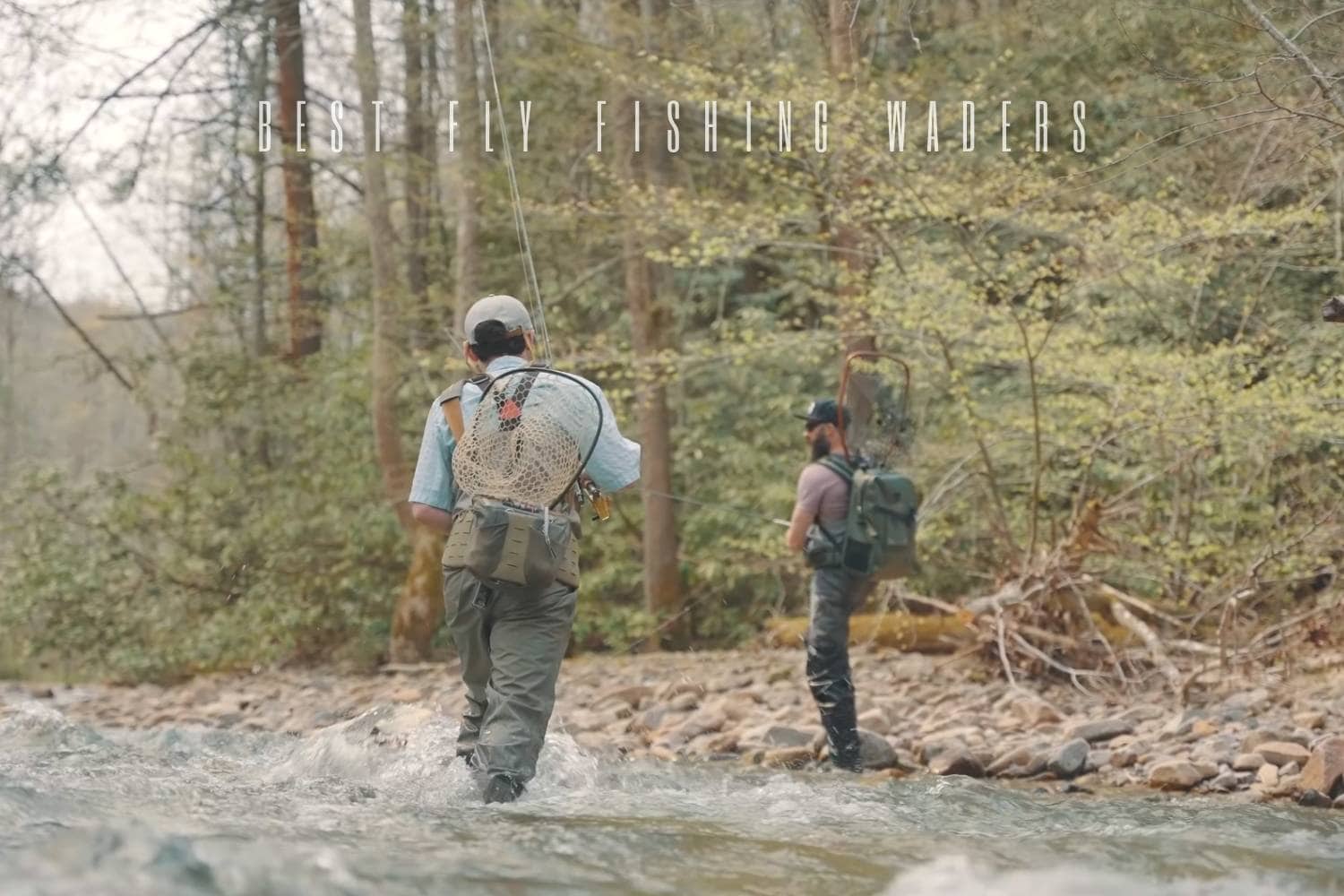
I have spent time in each of the six wader families below. Together they cover the choices most anglers actually need: hard-wearing everyday use, long hike-ins, better value, front-zip access, youth sizing and a simpler budget option.
Our top recommendation is the Simms G3 Guide Waders.
The short answer is the Simms G3 Guide stockingfoot for anglers who fish often and put real wear into their gear. My pair has held up across several seasons and repeated backcountry use. That is an observation about the pair I used—not a promised lifespan for the current generation or for yours.
The G3 is also more wader than many people need. The rest of this guide makes the trade-offs clear: packability, value, front-zip access, youth sizing and a simpler budget construction.
Quick answer: which fly fishing waders should you buy?
- Best overall for frequent anglers: Simms G3 Guide
- Best for travel and long hike-ins: Orvis Men’s Ultralight
- Best value in the current Simms line: Simms Tributary
- Best premium zip-front option: Simms G4Z
- Best youth-specific option: Simms Kid’s Tributary
- Best straightforward budget breathable option: Compass 360 Deadfall
These are six field-tested model families whose current identity and construction were rechecked separately. That distinction matters: model names often survive changes to fabrics, pockets and zippers. Where my experience belongs to an earlier generation, I say so.
How we chose these waders
The products described from experience were worn by me and were bought or borrowed, never gifted. I keep those observations tied to the generation I used. If the current version has changed, I call that out and check its specifications separately.
Price, stock and warranty terms can change. Check the current product page before ordering, especially when fit options or construction details affect your choice.
Each entry carries one of these evidence labels:
- Field-tested family; current generation verified: the family was used by Fly Fisher Pro, while current identity and construction were checked separately.
- Field-tested exact family; current identity verified: the tested family and current merchant identity match.
- Manufacturer-specified, current model verified: current product details come from manufacturer documentation; current model details verified.
The best fly fishing waders compared
| Model | Best for | Evidence | Decision | Action |
|---|---|---|---|---|
| Simms Men’s G3 Guide Waders – Stockingfoot | overall for frequent anglers | Field-tested family; current generation verified | Choose the G3 if you fish often, cover rough approaches and want a repairable premium wader without stepping up to a front zipper. | Check Trident Price |
| Orvis Men’s Ultralight Waders | for travel and long hike-ins | Field-tested family; current generation verified | Choose the Ultralight when pack size, hiking comfort and waist-high conversion matter more than a heavy-duty shell. | Check Trident Price |
| Simms Men’s Tributary Waders – Stockingfoot | value in the current Simms line | Field-tested family; current generation verified | Choose the Tributary if you want a current Simms stockingfoot wader and would rather pay for core function than premium storage or a zipper. | Check Trident Price |
| Simms Men’s G4Z Waders – Stockingfoot | premium zip-front option | Field-tested family; current generation verified | Choose the G4Z when front-zip access is a daily convenience rather than an occasional luxury. | Check Trident Price |
| Simms Kid’s Tributary Waders – Stockingfoot | youth-specific stockingfoot option | Field-tested family; current generation verified | Choose this for a child who needs a genuine stockingfoot fishing wader and compatible separate wading boots. | Check Trident Price |
| Compass 360 Deadfall Stockingfoot Wader | straightforward budget breathable option | Field-tested exact family; current manufacturer and Amazon offer verified | Choose the Deadfall when you want a current, basic breathable stockingfoot wader and can accept a simpler support and feature package. | View on Amazon |
Field-tested picks
Pick 1 of 6
Simms Men’s G3 Guide Waders – Stockingfoot: Best overall for frequent anglers
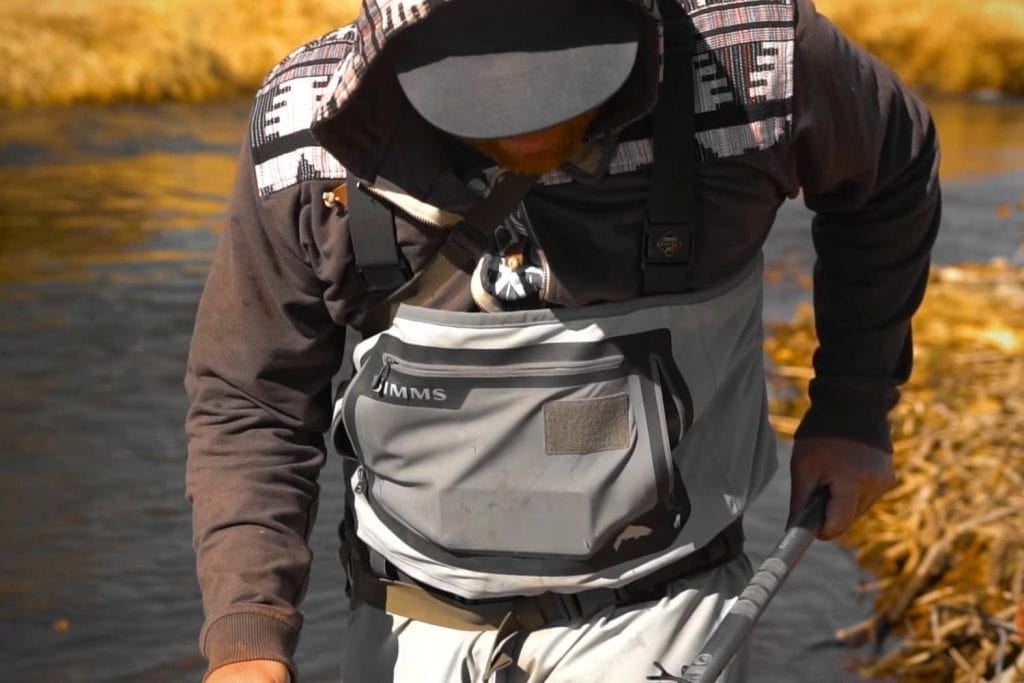
Evidence: Field-tested family; current generation verified
My G3 pair has held up through several seasons and repeated backcountry use. That durability is the main reason it remains my overall pick, but it is an observation about the pair I used—not a promise that every current pair will last a fixed number of seasons.
Choose the G3 if you fish often, cover rough approaches and want a repairable premium wader without stepping up to a front zipper.
Reasons to choose it
- Strong balance of mobility and reinforced lower-leg protection
- Documented repair program
- Useful chest storage and belt integration
Reasons to skip it
- More expensive than value-focused models
- Not the lightest option for flights or long hike-ins
Main caution: Premium build and repair support come with more weight and cost than entry-level waders. Fit still matters more than brand.
Pick 2 of 6
Orvis Men’s Ultralight Waders: Best for travel and long hike-ins
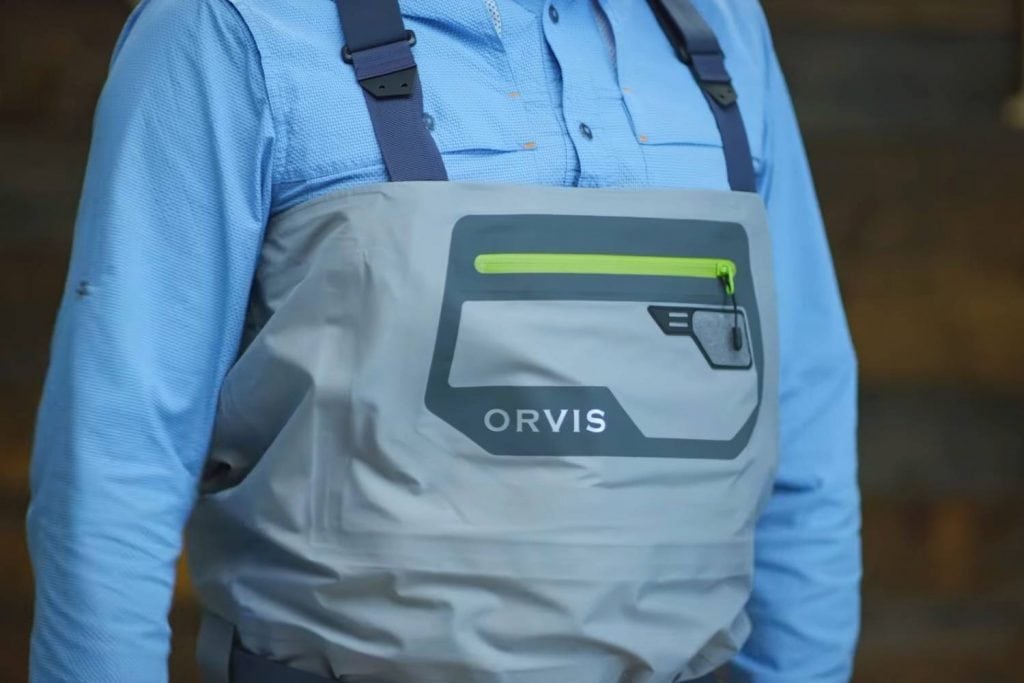
Evidence: Field-tested family; current generation verified
The conversion system was the standout feature in the Ultralight generation I used: dropping the upper to waist height made warm walks noticeably more comfortable. The current model keeps that convertible design, but its storage layout has changed.
Choose the Ultralight when pack size, hiking comfort and waist-high conversion matter more than a heavy-duty shell.
Reasons to choose it
- Easy to pack for travel
- Converts to waist height without removing the wader
- Wide size and inseam range
Reasons to skip it
- Less protective than heavier guide-oriented shells
Main caution: The lighter design is optimized for mobility and packability rather than maximum abrasion resistance.
Pick 3 of 6
Simms Men’s Tributary Waders – Stockingfoot: Best value in the current Simms line

Evidence: Field-tested family; current generation verified
The Tributary is the straightforward option in this group: it keeps the practical fleece-lined pocket, gravel guards and reinforced lower construction without pretending to be a cut-price G3.
Choose the Tributary if you want a current Simms stockingfoot wader and would rather pay for core function than premium storage or a zipper.
Reasons to choose it
- Simpler feature set keeps the decision straightforward
- Layered lower construction for common abrasion zones
Reasons to skip it
- Less storage and fewer refinements than premium Simms models
- Warmth still depends on the layers worn underneath
Main caution: Fewer premium details and less structured storage than the G3 or G4Z.
Pick 4 of 6
Simms Men’s G4Z Waders – Stockingfoot: Best premium zip-front option

Evidence: Field-tested family; current generation verified
The shoulder straps on the G4Z generation I used were notably comfortable. The current model keeps the zip-front concept and uses a three-layer upper with a four-layer lower.
Choose the G4Z when front-zip access is a daily convenience rather than an occasional luxury.
Reasons to choose it
- Full waterproof front zipper
- Reinforced lower construction
Reasons to skip it
- Highest-cost option in the primary list
- Heavier and more complex than a non-zip wader
Main caution: The waterproof front zipper adds cost and weight; it is unnecessary for anglers who do not value the access.
Pick 5 of 6
Simms Kid’s Tributary Waders – Stockingfoot: Best youth-specific stockingfoot option
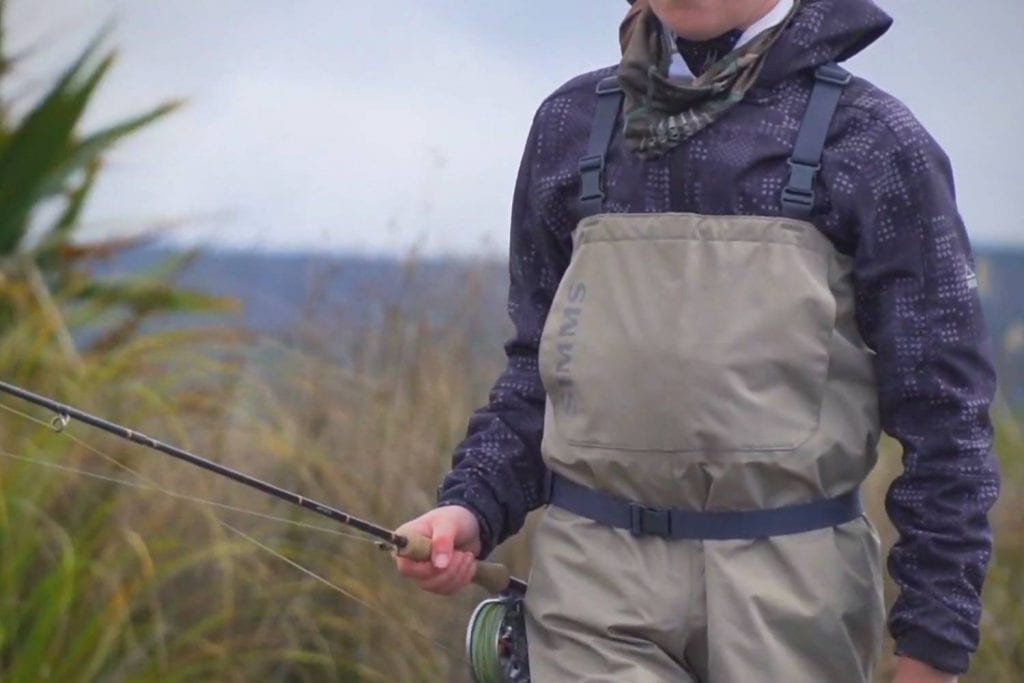
Evidence: Field-tested family; current generation verified
The useful distinction here is the youth-specific cut and suspension rather than a scaled-down marketing label. Check the current size chart with the layers the child will actually wear.
Choose this for a child who needs a genuine stockingfoot fishing wader and compatible separate wading boots.
Reasons to choose it
- Youth-specific fit
- Stockingfoot format allows separate boot choice
Reasons to skip it
- Requires separate wading boots
- Growth makes careful sizing especially important
Main caution: Children can outgrow waders before wearing them out; fit, supervision and a correctly worn belt are more important than feature count.
Pick 6 of 6
Compass 360 Deadfall Stockingfoot Wader: Best straightforward budget breathable option
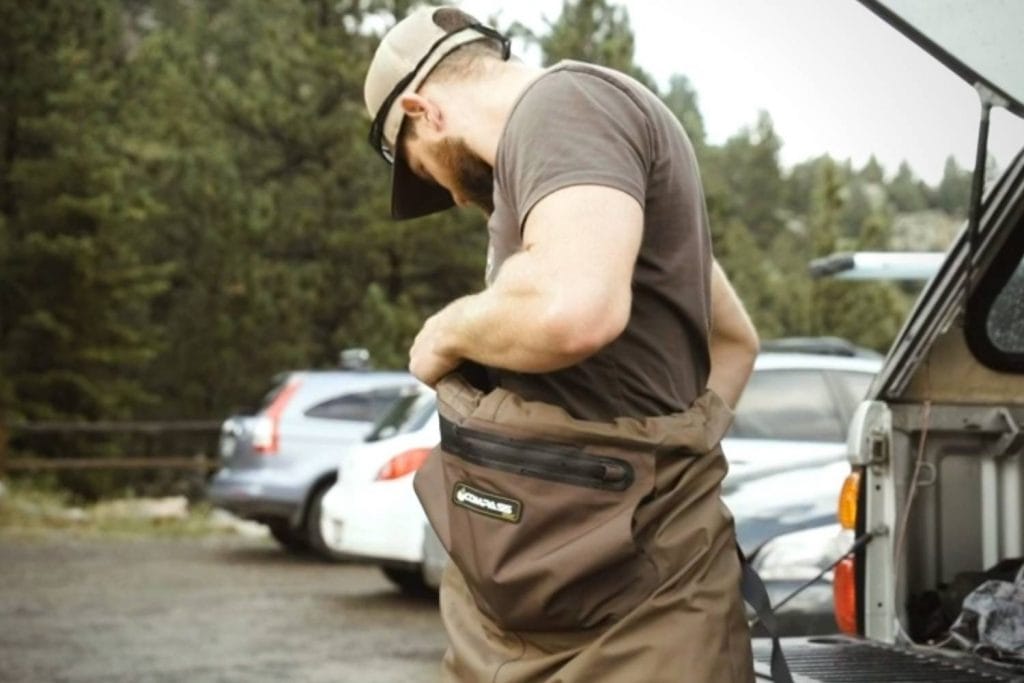
Evidence: Field-tested exact family; current manufacturer and Amazon offer verified
The Deadfall’s elastic suspenders and 4 mm neoprene booties make it easy to understand and use. Its value is the simple four-layer stockingfoot design, not a claim that it performs equally in every climate.
Choose the Deadfall when you want a current, basic breathable stockingfoot wader and can accept a simpler support and feature package.
Reasons to choose it
- Simple four-layer stockingfoot construction
- Regular and stout sizing options
Reasons to skip it
- Less sophisticated fit and storage than premium models
- No reason to expect the same repair experience as Simms or Orvis
Main caution: It offers fewer fit and repair-program advantages than the premium brands; do not treat breathable fabric as insulation.
How to choose fly fishing waders
Buying waders becomes easier when you make the decisions in the right order. Start with fit and how you fish, then choose construction and features. Brand comes later.
Fit comes first—and fit includes your fishing layers
Waders need enough room for the base and mid layers you actually use, plus an unrestricted high step, kneel and squat. A tight crotch or shoulder line restricts movement; excess fabric can bunch and create avoidable wear. Check inseam as carefully as chest or waist, and use short, long or stout options where the manufacturer offers them.
For children, check the current size chart with the layers they will really wear. A correctly fitted wading belt and close adult supervision matter more than an extra pocket.
Stockingfoot versus bootfoot
Stockingfoot waders end in neoprene socks and require separate wading boots. They let you size the garment and boots independently, choose traction for the water you fish and pack the two pieces separately. All six primary picks in this guide are stockingfoot models.
Bootfoot waders integrate the boot. They are quick to put on and can make sense for cold, low-movement fishing, but they are bulkier and offer less flexibility in body fit, boot fit and sole choice.
For most walk-and-wade fly fishing, stockingfoot is the more adaptable format. The primary list focuses on current breathable stockingfoot models. If you need bootfoot or neoprene construction, use the fit and temperature criteria below and compare the exact current model rather than treating it as interchangeable with these picks.
Breathable versus neoprene
A breathable wader is a waterproof shell, not insulation. Warmth comes mainly from the base and mid layers underneath it. Size the wader for those layers rather than expecting the shell itself to keep you warm.
Neoprene provides insulation but is stiffer, less breathable and often too warm for active walking outside cold conditions. For one versatile pair across a wider season, breathable stockingfoot waders with a deliberate layering system are usually the practical starting point.
Zip-front versus non-zip
A waterproof front zipper improves access, makes layer adjustment easier and can be valuable during long days. It also adds cost, weight and another component to maintain.
Ask one honest question: would you use front-zip access regularly? If yes, the G4Z earns its place. If it is only a nice idea, a non-zip G3, Tributary or Ultralight keeps the build simpler.
What actually affects durability?
There is no responsible fixed lifespan for fly fishing waders. Durability depends on fit, days of use, terrain, abrasion, drying and storage, and whether small leaks are repaired early.
Heavier lower-leg construction helps where gravel, brush and kneeling create wear, but no fabric is puncture-proof. Lighter travel waders make the opposite trade: less bulk and easier movement in exchange for less emphasis on abrasion protection.
Repair and warranty questions to ask
Warranty terms change, so check the manufacturer’s current policy before buying. Useful questions include:
- Does the brand evaluate and repair wear-related leaks as well as manufacturing defects?
- Is paid repair available after the warranty period?
- Are evaluation, repair and shipping costs explained clearly?
- Does buying through a marketplace seller affect eligibility?
- What turnaround time does the brand currently publish?
A repair pathway can matter more over time than an extra pocket. It should be part of the buying decision, not an assumption made after a leak appears.
Buy for how often and where you really fish
For occasional trips with easy access, a simpler breathable model such as the Deadfall may be enough. Regular weekend anglers who want a current Simms build without premium storage should start with the Tributary. Frequent use over rough approaches makes the stronger case for the G3.
If the approach involves flights, packs or long walks, the Ultralight’s packability matters more. Choose the G4Z for genuinely useful front-zip access, and use the youth-specific Kid’s Tributary when buying for a child.
How the six picks differ
Each ranked wader has attributable hands-on experience and a clear current product identity. Where the current model differs from the generation used, the page keeps those observations tied to the exact generation rather than applying them to a different product.
The six picks cover distinct jobs: durability, travel, value, zip-front access, youth fit and straightforward budget use. Start with the use case that sounds most like your fishing, then compare fit, construction and repair support.
Other current waders to compare
Manufacturer-specified; current model verified
Patagonia Swiftcurrent Traverse Zip-Front Waders
Current Patagonia zip-front alternative. The Traverse Zip-Front fills a packable zip-front niche. Compare it on its current construction, fit and warranty.
Check Trident PriceManufacturer-specified; current model verified
Orvis Men’s Clearwater Stockingfoot Waders
Current Orvis value alternative. The four-layer Clearwater is a value-positioned breathable stockingfoot option. Current model verified; compare it on its current construction, fit and warranty.
Check Trident PriceFly fishing waders FAQ
What are the best fly fishing waders overall?
The Simms G3 Guide stockingfoot is the overall pick for frequent anglers. Its current construction places a lighter three-layer upper over a more reinforced four-layer lower, while my own earlier-generation pair has held up across several seasons of repeated backcountry use. That experience is evidence about one used pair, not a guaranteed lifespan.
What are the best fly fishing waders for beginners or a tighter budget?
Start with the Compass 360 Deadfall for occasional use and a simple four-layer breathable construction. Anglers fishing most weekends should also compare the Simms Tributary, which adds a current direct-manufacturer route and a more established repair pathway without moving to the G3’s premium feature set.
Are stockingfoot or bootfoot waders better?
Stockingfoot waders suit most walk-and-wade fly fishing because the boots and garment can be fitted separately and traction can be chosen for the riverbed. Bootfoot waders are quicker to put on and can suit cold, low-movement use, but they are bulkier and offer fewer fit and sole choices.
How should fly fishing waders fit?
They should accommodate the layers you fish in and allow a high step, kneel and squat without pulling through the crotch or shoulders. Check inseam as carefully as chest or waist, and use the manufacturer’s current short, long or stout options when available.
Are breathable waders warm enough for winter?
A breathable wader blocks water and wind but provides little insulation by itself. Winter warmth comes from the base and mid layers worn underneath, so choose size and fit with those layers in mind. Neoprene provides its own insulation but sacrifices breathability and mobility.
How long do fly fishing waders last?
There is no honest universal number. Lifespan varies with fit, frequency of use, terrain, abrasion, care and repair. Two identical pairs can last very different lengths of time, so treat any fixed season promise with caution.
Should leaking waders be repaired or replaced?
Small isolated punctures are often repairable; widespread seam failure or delamination needs a different assessment. Check the manufacturer’s current repair instructions and service policy before deciding, and address small leaks before they spread.
Are expensive waders worth it?
They can be for frequent anglers who use rough access and value refined fit, reinforced construction and an established repair service. For a handful of easier trips each year, a simpler breathable stockingfoot can be the more rational buy, leaving more budget for correctly fitted boots and layers.
Final recommendation
Our final recommendation is the Simms G3 Guide Waders.
Choose the Simms G3 Guide for frequent use over rough ground, the Simms Tributary for current Simms value, and the Orvis Ultralight when travel and long walks lead the decision. Buy the Simms G4Z only when front-zip access will earn its keep, use the Kid’s Tributary for youth-specific sizing, and consider the Compass Deadfall for a simpler occasional-use setup.
Whichever model fits your fishing, confirm the current size chart with your actual layers, wear the wading belt and deal with small leaks early.
