
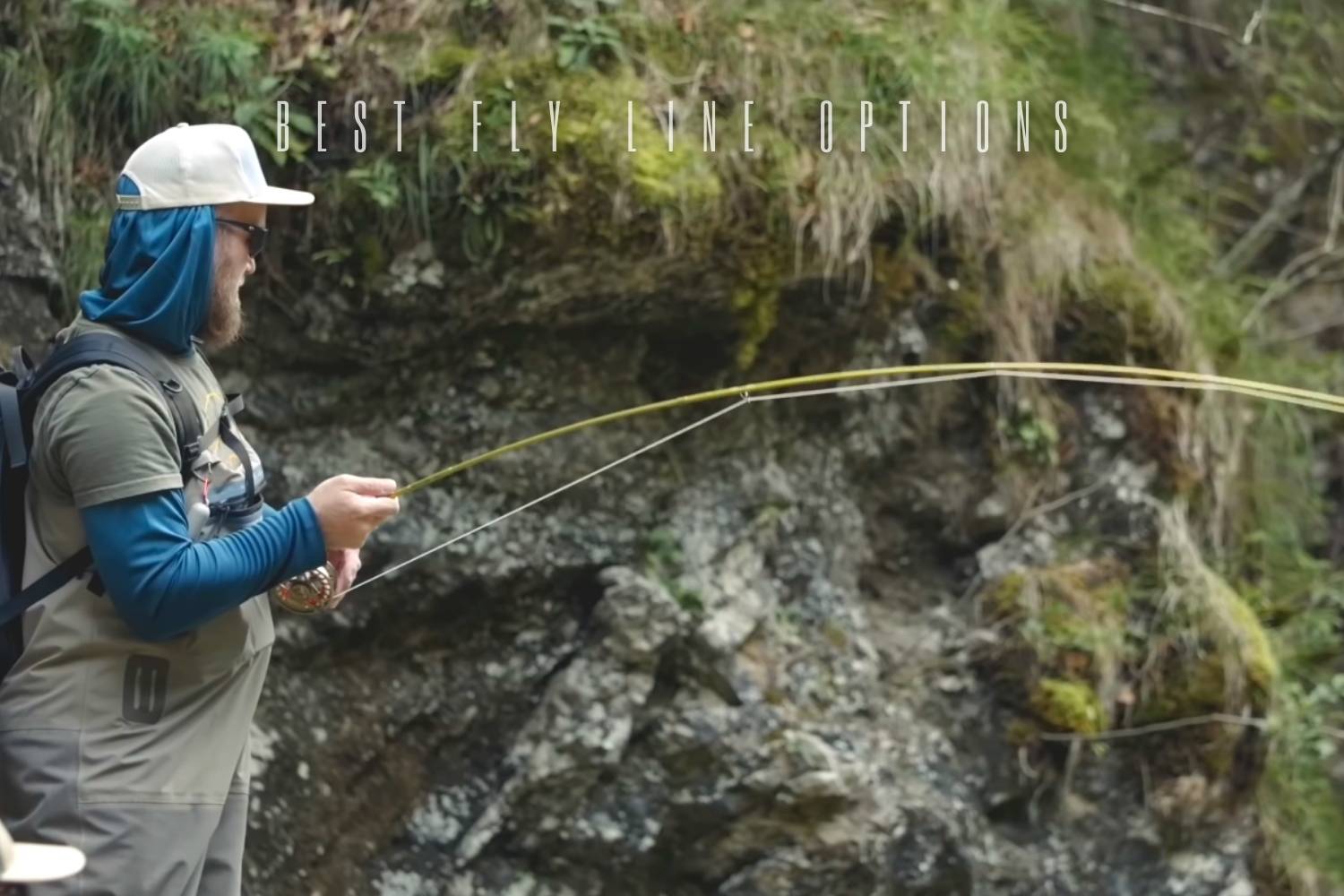
The best fly line is the one whose weight, taper, density, and temperature range fit your rod and the water you actually fish. For a current, straightforward general-purpose trout line, RIO Mainstream Trout WF is the clearest starting point. New casters should also consider the Orvis Clearwater Trout Fly Line, while anglers who favor lighter rigs and a longer general-purpose taper can look at Scientific Anglers Frequency Trout GP.
Current fly lines compared
These exact products appeared in their manufacturers’ current catalogs on August 10, 2026. Choose the line weight, taper and color on the exact product page; shops may carry only part of a family.
| Current product | Best fit | Published configuration | Generation note |
|---|---|---|---|
| RIO Mainstream Trout WF | Straightforward general trout fishing | Floating WF, 3–8wt; slightly heavy, short front taper | Current product. Older Mainstream observations are not applied to this version. |
| Orvis Clearwater Trout Fly Line | Beginners and general freshwater use | Floating WF, 3–9wt; half-size heavy; 90 ft | Current item 2ZKE. Different item from the older Clearwater generation. |
| Scientific Anglers Frequency Trout GP | General trout fishing with lighter rigs | Floating WF, 3–8wt; quarter-size heavy; 85 ft | Current GP generation. Not the older Frequency Trout line. |
| Scientific Anglers Amplitude Textured Trout GP | Feature-rich textured trout line for mending and distance | Floating WF, 3–8wt; quarter-size heavy; textured tip and running line | Current GP generation. Older Amplitude Trout findings do not transfer. |
| Cortland 444 Peach WF / 444 Peach DT | Traditional supple presentation; choose taper by job | Floating, 2–9wt; separate 90 ft WF and DT products | Current WF and DT products. Older observations are not applied across every current taper and weight. |
| RIO Premier Creek | Short casts on creeks, brooks, and tight streams | Floating WF, 0–5wt; close-range taper; coldwater core | Current Premier generation. Not the earlier RIO Creek generation. |
| RIO FIPS Euro Nymph | Competition-style Euro nymphing and tight-line control | One 2–5wt floating line; ultra-thin; high-visibility tip | Current product. Earlier Euro Nymph observations are not transferred because the exact older version is uncertain. |
| RIO Elite Stillwater Floater | Lake indicators, long leaders, and multi-fly rigs | Floating WF5F–WF8F; low-stretch ConnectCore Plus | Current Elite product. Role-equivalent only; not the old InTouch family. |
| Airflo Superflo Max Ridge 2.0 Universal Taper | Feature-rich general-purpose freshwater use | Floating WF, 3–9wt; Ridge 2.0; braided core | Current. A role-equivalent, not a proven successor to Super-DRI Elite. |
Choose by fishing job, not by a single score
A universal ranking hides the decision that matters most: a line built for tiny creeks should not outrank a stillwater line at lake fishing, and a competition-style Euro line is not a general-purpose floating line. Use the following order.
- Match the line weight to the rod. Start with the number printed on the rod. A manufacturer may deliberately build a line a quarter- or half-size heavy, but it should still be sold under the rod weight it is meant to match.
- Choose density. A floating line is the practical first line for most river trout fishing. Add a sinking or intermediate line when depth and retrieve control—not simply fly weight—demand it. Our separate guide to fly fishing with a sinking line covers that choice.
- Choose the taper. Weight-forward lines are the versatile default. Double-taper lines remain useful for controlled, delicate presentations at modest range. Dedicated creek, indicator, streamer, and Euro tapers trade all-purpose balance for a specific job.
- Match temperature and core. A line that is supple in cold water can feel too soft in tropical heat; a warm-water line can coil badly in winter. Follow the maker’s stated temperature range rather than the species name alone.
- Check the exact selection before paying. A retailer can carry the family without carrying your chosen weight, taper, or color. Confirm the selector and model name at checkout.
Current picks in detail
RIO Mainstream Trout WF: the straightforward starting point
RIO currently positions Mainstream Trout WF for dry flies and indicators, with light streamers as a secondary job. The line is slightly heavier and uses a short, powerful front taper. That combination should help load a rod without turning the line into a specialist short-range design. The current family runs from 3wt through 8wt.
Choose it if: you want one reasonably simple floating trout line for mixed river fishing. Skip it if: your priority is the most delicate long-leader presentation or a dedicated Euro-nymph setup. If you prefer a double taper, RIO sells Mainstream Trout DT separately in 3wt through 6wt.
Orvis Clearwater Trout: beginner-friendly current option
The current Clearwater Trout Fly Line is item 2ZKE, a 90-foot weight-forward floating line in 3wt through 9wt. Orvis specifies a half-size-heavy grain weight, a front welded loop, and a multifilament core for cool-to-moderate water. The extra grain weight is intended to make rod loading easier to feel, which makes this a sensible learning line or uncomplicated all-round freshwater choice.
Do not read the older Clearwater durability and loop comments as findings on item 2ZKE. The current item is a different generation from the one pictured and linked in the earlier review.
Scientific Anglers Frequency Trout GP: lighter-rig versatility
Frequency Trout GP is a current new-generation line, not a relabelled copy of the older Frequency Trout. Scientific Anglers gives it longer front and rear tapers, a quarter-size-heavy weight scheme, an 85-foot total length, and 3wt through 8wt options. The maker describes it as a general-purpose trout line for anglers who do not consistently throw bulky indicators or large streamers.
This is the better fit when “versatile” means dries, nymphs, and moderate rigs rather than maximum turnover power. Anglers regularly casting bulky rigs should compare a more aggressive taper instead of assuming the premium logo or a heavier price makes this one suitable.
Scientific Anglers Amplitude Textured Trout GP: premium textured option
The current Amplitude Textured Trout GP uses a quarter-size-heavy design, a mid-length head, AST Plus, floating texture at the tip, and shooting texture on the running line. The current range is 3wt through 8wt. Those features target lower friction, mending, and control at distance, but they do not make the line universally better than a smooth, less expensive line.
Texture is a preference as well as a performance feature. Some anglers like the feedback and shooting behavior; others prefer the quieter feel of a smooth coating. Most importantly, this GP model is a new product. The older Amplitude Trout score and on-water comments do not belong to it.
Cortland 444 Peach: choose WF or DT deliberately
Cortland currently sells 444 Peach as separate weight-forward and double-taper products. Both are 90-foot floating lines with a braided nylon multifilament core, and both run from 2wt through 9wt. The family remains a useful counterpoint to increasingly specialized tapers: supple, straightforward, and available in two classic profiles.
Choose the 444 Peach WF when you want the easier-shooting all-round option. Choose the 444 Peach Double Taper when short-to-medium-range presentation and the reversible DT format matter more. Do not buy from a family-level listing without confirming that the selector shows the taper and line weight you intend.
Specialist lines: creek, Euro nymph, and stillwater
RIO Premier Creek is built to load at close range for small creeks and streams. It covers 0wt through 5wt and uses a supple coldwater core. That makes it a better tool for tight shots than a long-bellied all-round line, but it is not the default for open water or long casts.
RIO FIPS Euro Nymph is a single 2–5wt, ultra-thin floating line with a high-visibility tip and FIPS Mouche competition-legal positioning. Buy it for tight-line control, not as a conventional weight-forward floating line.
RIO Elite Stillwater Floater runs from WF5F through WF8F and is designed to lift long leaders, multi-fly rigs, and stillwater indicators. Its low-stretch ConnectCore Plus may improve contact, but it is a distinct current product—not a continuation of every older line that used RIO’s InTouch name.
Airflo Superflo Max Ridge 2.0 Universal Taper is a current premium all-rounder from Airflo’s official shared storefront. It spans 3wt through 9wt and uses Ridge 2.0 and Superflo Max Hybrid construction. It fills a similar broad freshwater job to the old Super-DRI Elite, but Airflo does not identify it as that line’s direct successor.
Legacy hands-on notes: useful, but generation-bound
Fly-line names can survive while tapers, cores, coatings, SKU ranges, and even catalog families change. The notes below preserve what the author found on the older products without pretending those findings apply to current replacements.
| Legacy product | Source-generation observation | Current boundary |
|---|---|---|
| Orvis Clearwater WF | The author found it easy to load at short range and suitable for a beginner. | Current item 2ZKE is a different generation. |
| RIO Mainstream Trout | The author liked the easy turnover and the DT version’s soft presentation. | Current WF and DT records have exact SKUs that the older review did not identify. |
| Airflo Super-DRI Elite | The author reported smooth shooting and good surface ride. | No exact current Super-DRI Elite was found; Superflo is a different family. |
| RIO Euro Nymph, older naming | The author valued its light, sensitive feel, visible tip, and short dry-dropper utility. | Current FIPS Euro Nymph is a probable identity match, but the old SKU is missing. |
| Scientific Anglers Frequency Trout | The author praised value, flotation, and all-around freshwater use. | Frequency Trout GP is a new quarter-size-heavy generation. |
| RIO InTouch family | The author liked the low-stretch connection and stillwater take detection. | The old section mixed a broad family; Elite Stillwater Floater is a different, narrower product. |
| Scientific Anglers Amplitude Trout | The author described smooth casting, useful distance, and a visible color scheme. | Amplitude Trout GP products are new generations. |
| Cortland 444 Peach | The author liked its suppleness and the DT line’s delicate presentation. | The older specimen has no SKU and the copy mixed WF and DT. |
| RIO Creek | The author found it quick-loading and useful in tight water. | Premier Creek is an updated 0–5wt SlickCast generation. |
Fly-line buying guide
Line weight
The number on a fly line describes the standard grain window it is designed around, not the breaking strength. Match that number to the rod first. A 3-weight is a light small-water tool; 4- to 6-weight lines cover much of ordinary trout fishing; 7-weight and heavier lines are increasingly useful for larger flies, stronger wind, bigger freshwater fish, and saltwater work. Those are practical tendencies, not hard species rules. For more focused choices, see our guides to 3-weight fly lines, 6-weight fly lines, and saltwater fly lines.
Weight-forward versus double taper
A weight-forward line concentrates more mass in the front head and then narrows into running line. It is the practical default for shooting line, handling mixed rigs, and covering varied distances. A double-taper line has a mirrored taper and a long level middle. It suits controlled presentations and can be reversed when one end wears, provided the coating and core remain sound. Do not assume “DT” automatically means delicate or “WF” automatically means aggressive; head length and front-taper shape still matter.
Floating, intermediate, and sinking
Start with floating line when you fish dry flies, indicators, shallow nymph rigs, or rivers where mending matters. Intermediate line sinks slowly and can keep a retrieved fly just below the surface on lakes and saltwater flats. Sinking lines and sink tips cover different depth and retrieve jobs; their sink rate matters as much as the label. If your main fishing is below the surface, compare dedicated sinking fly lines rather than forcing a floating-line ranking to answer the wrong question.
Head length and over-weighting
Short heads load quickly and turn over with less line outside the tip, which is useful in tight quarters and for beginners. Longer heads can improve carry, mending, and control at distance, but they ask for more line management. A quarter- or half-size-heavy design can make a modern rod feel easier to load; it can also feel clumsy on a soft rod. Trust the exact taper chart more than a generic “fast-action” or “beginner” label.
Fit, care, and replacement
Make sure the line fits the reel with the backing amount you intend to use. Clean it according to the manufacturer’s instructions, keep sunscreen and harsh chemicals away from the coating, and avoid storing tight coils in high heat. Replace a line when cracks, a damaged core, failing loops, or persistent coating problems affect safe, dependable fishing—not simply because a new generation appears.
Frequently asked questions
What is the best fly line for a 5-weight trout rod?
For mixed trout fishing, start with a current 5-weight floating weight-forward line. RIO Mainstream Trout WF is the straightforward option here; Orvis Clearwater Trout is the beginner-oriented option; Scientific Anglers Frequency Trout GP suits lighter general-purpose rigs. The rod’s action and your usual fly size should break the tie.
Should fly-line weight match rod weight?
Usually, yes. Start with a 5-weight line on a 5-weight rod. A line sold as 5-weight may already be designed a quarter- or half-size heavy, so do not automatically buy a 6-weight line to make the rod load faster.
Is weight-forward or double taper better for trout?
Weight-forward is the more versatile first choice for mixed distances and rigs. Double taper is attractive for controlled, delicate work at short to medium range. Current RIO Mainstream and Cortland 444 families let you compare separate WF and DT products without treating the taper names as interchangeable.
Is Frequency Trout GP the same line as the older Frequency Trout?
No. Scientific Anglers presents Frequency Trout GP as a new product with a quarter-size-heavy design and longer front and rear tapers. Older Frequency Trout scores and durability comments should not be applied to the GP generation.
Can I use a normal floating line for Euro nymphing?
You can learn short-line nymphing with ordinary tackle, but a dedicated Euro line is thinner and built for tight-line control. The current RIO FIPS Euro Nymph is a single 2–5wt line with a visible tip and competition-legal positioning. It is a specialist tool, not the best general floating line.
Is an expensive fly line always better?
No. Premium coatings and textures can improve shooting, flotation, or durability for a particular job, but taper fit matters first. A modest line with the right weight and taper will usually fish better than a premium line designed for the wrong water or rig.
How to use these recommendations
Match the exact model to your rod, water and usual rig, then confirm the selected weight and taper before buying. Availability can differ within a product family. Hands-on notes remain limited to the older products identified above. For more on the site’s review approach, read how we test and review products.
Bottom line: choose RIO Mainstream Trout WF when you want a straightforward current line for mixed trout fishing; choose Orvis Clearwater Trout when learning and easy rod loading matter; choose Frequency Trout GP for lighter general-purpose rigs. Move to Premier Creek, FIPS Euro Nymph, Elite Stillwater Floater, or another specialist line only when your fishing job calls for it.
