
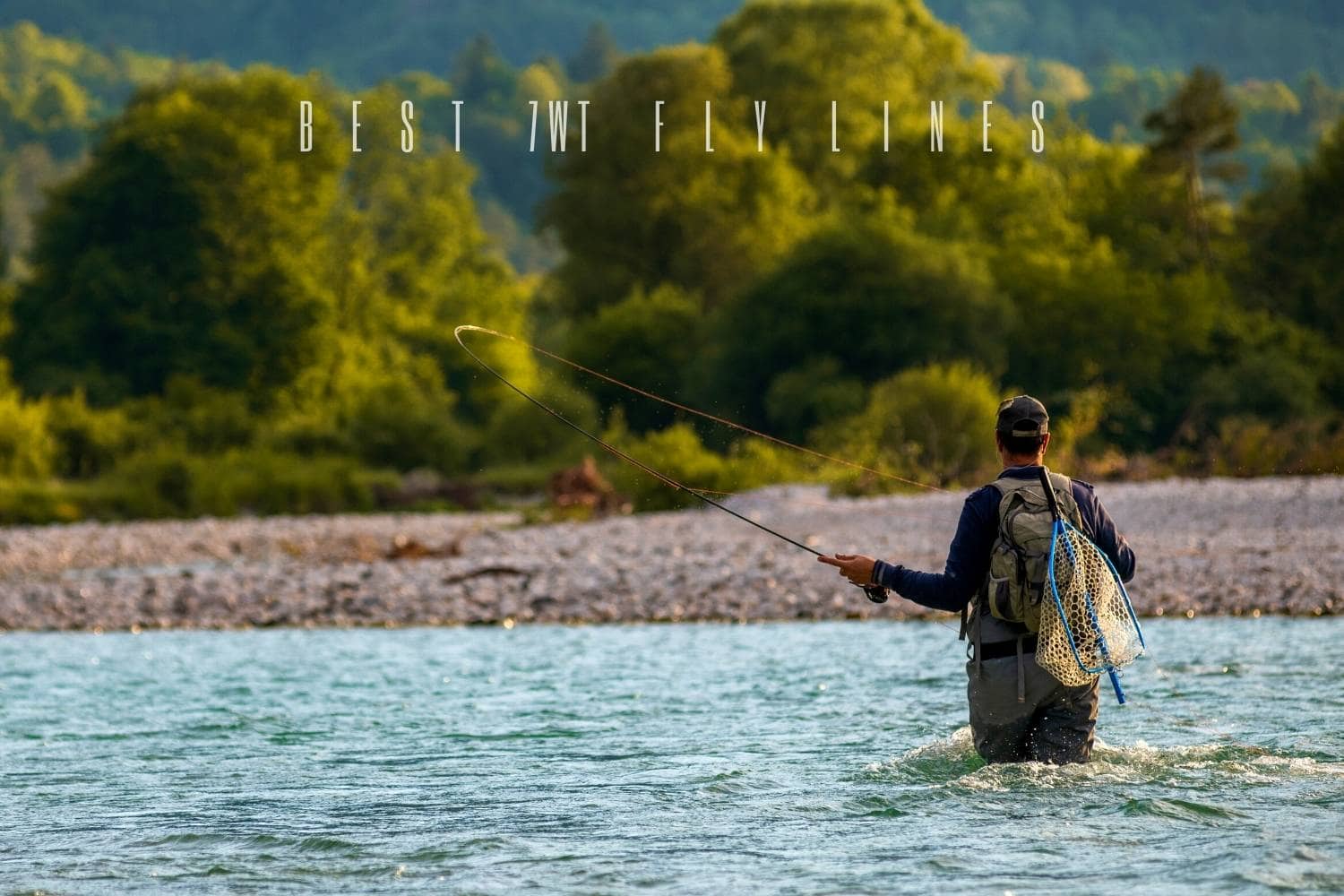
A 7-weight fly line is a bridge tool: more authority than a typical trout setup, but less mass than an 8-weight outfit. Choose it by the fly and water, not by the number alone. Bass poppers, articulated streamers, heavy trout rigs, wind and light saltwater can all suit a 7-weight, but they do not call for the same taper, density or temperature-specific core.
The most useful starting points are Cortland Bass for warmwater bass, RIO Elite Gold Max for powerful floating trout work, and RIO Premier OutBound Short when large flies or a sinking density are central. For light saltwater, choose between the braided-core Cortland Cold Redfish and hard monofilament-core Cortland Tropic All Purpose according to climate.
7-weight fly lines compared by job
This is a job-based comparison rather than a universal ranking. The right first line for a 7-weight rod is usually a floater, but the correct floater depends on whether the outfit is carrying bass bugs, trout rigs or saltwater flies.
| Line | Best fit | Exact 7-weight build | Main boundary |
|---|---|---|---|
| Cortland Bass | Warmwater bass, poppers and streamers | LILY GREEN / HOT ORANGE / WF7F; floating; 100 ft; braided nylon multifilament core; full line size heavy | A dedicated aggressive bass taper, not a presentation-oriented trout line |
| RIO Elite Gold Max | Windy trout, heavy indicators, larger dries and light streamers | 7wt Float; 210-grain first 30 ft; 280-grain total head; 39 ft head; 100 ft line | Full-size-heavy floating taper; too forceful for the most delicate work |
| RIO Premier OutBound Short | Large flies, distance and integrated sinking choices | 7wt; 265-grain, 30 ft head; Float, Float/Hover/Intermediate, Intermediate, Int/3ips/5ips or Int/5ips/7ips | Compact power and density control take priority over delicate presentation |
| Cortland Cold Redfish | Cool saltwater and larger or weighted flies | WF7F; floating; 100 ft; braided nylon multifilament core; short aggressive taper | Cold-condition construction is not the tropical default |
| Cortland Tropic All Purpose | Hot saltwater, wind and forceful turnover | WF7F; floating; 90 ft; hard monofilament core; short aggressive taper | Tropical firmness can be a poor match for cool conditions |
Choose a 7-weight line by fishing job

Bass and bulky surface flies
For bass, the fly often matters more than the fish. Deer-hair bugs, foam poppers and weighted streamers create drag and need a short, assertive front profile. Cortland Bass is built a full line size heavy and uses a short, powerful head, so its matching WF7F already carries extra loading mass. Do not add another line size unless the rod maker’s grain window and your casting distance justify it.
Windy trout and heavier rigs
A 7-weight trout outfit makes sense when the regular load includes large indicators, split shot, big dries or streamers, especially in wind. RIO Elite Gold Max places more weight in a compact, rear-loaded floating head. That helps carry heavier rigs while retaining the mending and pickup advantages of a floater. It is not the best choice for tiny dries and long, fine leaders; a lighter presentation outfit is better there.
Large streamers
Large streamers ask two separate questions: can the head turn over the fly, and where should the fly travel? RIO Premier OutBound Short supplies a short 265-grain head in its 7-weight versions. Choose the floating configuration for buoyant flies and shallow work, an intermediate configuration for a level subsurface track, or a multi-density configuration when the front of the line must pull the fly deeper.
Light saltwater crossover
A 7-weight can serve selected light-salt jobs when fly size, wind and target class remain within the outfit’s limits. Climate comes first. Cold Redfish uses a braided nylon multifilament core and supple coating for cool conditions. Tropic All Purpose uses a hard monofilament core for heat. Neither should be treated as an all-climate substitute for the other.
Choose floating, intermediate or multi-density
Floating is the versatile first spool
A floating line keeps pickup simple, handles indicators and surface flies, and allows mending in current. It can also fish weighted streamers at modest depth. Choose the taper for the fly: Cortland Bass emphasizes short-range turnover, while Elite Gold Max balances heavy-rig power with control and mending.
Intermediate keeps the fly below chop
An intermediate line is useful when the fly should track under the surface instead of rising during the retrieve. The 7-weight Premier OutBound Short Intermediate keeps the same 265-grain, 30-foot head dimensions as its other 7-weight density choices, but changes how the system travels through the water.
Multi-density lines control the line angle
Premier OutBound Short separates Float/Hover/Intermediate, Int/3ips/5ips and Int/5ips/7ips constructions. These are distinct systems, not a simple faster-is-better ladder. A gentler transition can keep the fly in the upper water column; a denser front is for a deeper path. Current, retrieve speed, pause time and fly buoyancy all change the working depth.
Match the core and coating to temperature
Temperature changes line handling. A line designed to remain supple in cold water can become overly soft on a tropical deck, while a hard tropical line can hold coils when used far below its intended temperature range.
The construction contrast is clear in Cortland’s 7-weight saltwater options. Cold Redfish uses a braided nylon multifilament core and is intended to remain supple in cold conditions. Tropic All Purpose uses a hard monofilament core and hard finish for intense heat. Choose from destination and season before choosing from species.
Freshwater also spans temperature extremes. A summer bass taper and a cool-weather trout or steelhead line may share the WF7F label without sharing the same handling. If one outfit crosses seasons, keep the primary climate in mind and use a second spool when the temperature swing is large enough to change line behavior.
Match head weight to the rod, not just the label
Two lines marked 7wt can load a rod very differently. Elite Gold Max lists 210 grains in the first 30 feet and 280 grains across its 39-foot head. Premier OutBound Short lists a 265-grain head concentrated in 30 feet. Cortland Bass is described as a full line size heavy even though its configuration remains WF7F.
Use the rod maker’s grain window when it is available, and compare that window with the head section you will actually cast. Short bank and boat shots may keep nearly the whole compact head outside the guides. Longer carries with a longer head distribute mass differently. The printed line number is the beginning of the match, not the complete answer.
For broader line selection, use the Best Fly Line guide. For warmwater detail, see the bass fly line guide. For deeper systems, compare the sinking fly line guide. Saltwater anglers should use the saltwater fly line guide when the fishery is no longer a light crossover job.
The 7-weight picks in detail
Cortland Bass: warmwater floating specialist
The exact LILY GREEN / HOT ORANGE / WF7F configuration is a 100-foot floating weight-forward line on a braided nylon multifilament core. Its short aggressive taper and full-line-size-heavy build suit fast-action bass rods, poppers and streamers. Choose it for summer bass work; skip it when subtle trout presentation or sustained subsurface depth is the priority.
RIO Elite Gold Max: powerful floating trout choice
The 7wt Float version has a 39-foot head, with 210 grains in the first 30 feet and 280 grains across the total head. RIO’s rear-loaded, full-size-heavy profile is intended for heavy indicators, big dries, dry-dropper rigs and light streamers. Choose it when turnover and mending both matter; skip it for the most delicate long-leader work.
RIO Premier OutBound Short: streamer and density system
Every listed 7-weight version uses a 265-grain, 30-foot head. The important choice is density: Float, Float/Hover/Intermediate, Intermediate, Int/3ips/5ips or Int/5ips/7ips. Choose the exact configuration for the water column and retrieve rather than buying the densest option automatically.
Cortland Cold Redfish: cool-condition salt crossover
The exact WF7F configuration is a floating, 100-foot line with a braided nylon multifilament core, supple coating and short aggressive taper. It is the climate-specific option for cool saltwater and larger or weighted flies, not a universal tropical line.
Cortland Tropic All Purpose: hot-condition salt crossover
The exact WF7F configuration is a 90-foot floating line with a hard monofilament core and short aggressive taper. It is built for heat and wind. Use it when the line will live in tropical conditions; do not assume that the same firmness will remain comfortable in cold water.
Frequently asked questions
What is a 7-weight fly line best for?
It is well suited to bass, larger trout rigs, streamers, windy freshwater and selected light saltwater. The limit is set by fly size, wind, target power and the rod—not by species name alone.
Should I put an 8-weight line on a 7-weight rod?
Not automatically. Many aggressive 7-weight lines already carry extra mass. Check the exact head weight and the rod’s recommended grain window before overlining.
Is a floating line enough for streamers?
Often, yes. A floating line with a weighted fly covers shallow water and makes pickup easy. Move to intermediate or multi-density only when the fly must hold a subsurface track or reach greater depth.
Can one 7-weight line cover freshwater and saltwater?
Only when its temperature range, core, taper and density fit both jobs. A crossover label does not make a cold-condition braided-core line and a hard tropical monofilament-core line interchangeable.
Is a 7-weight good for delicate trout fishing?
It can cast a trout fly, but the outfit is usually more line and rod than small dries and fine leaders require. Use it when wind, rig weight, streamer size or fishery scale creates a real need for the extra authority.
Bottom line
Choose Cortland Bass for warmwater poppers and streamers, Elite Gold Max for powerful floating trout work, and Premier OutBound Short when compact turnover or density control is the central job. For light saltwater, let temperature decide between Cold Redfish and Tropic All Purpose. Match the exact head mass to the rod, and do not ask one core or density to solve every environment.
