
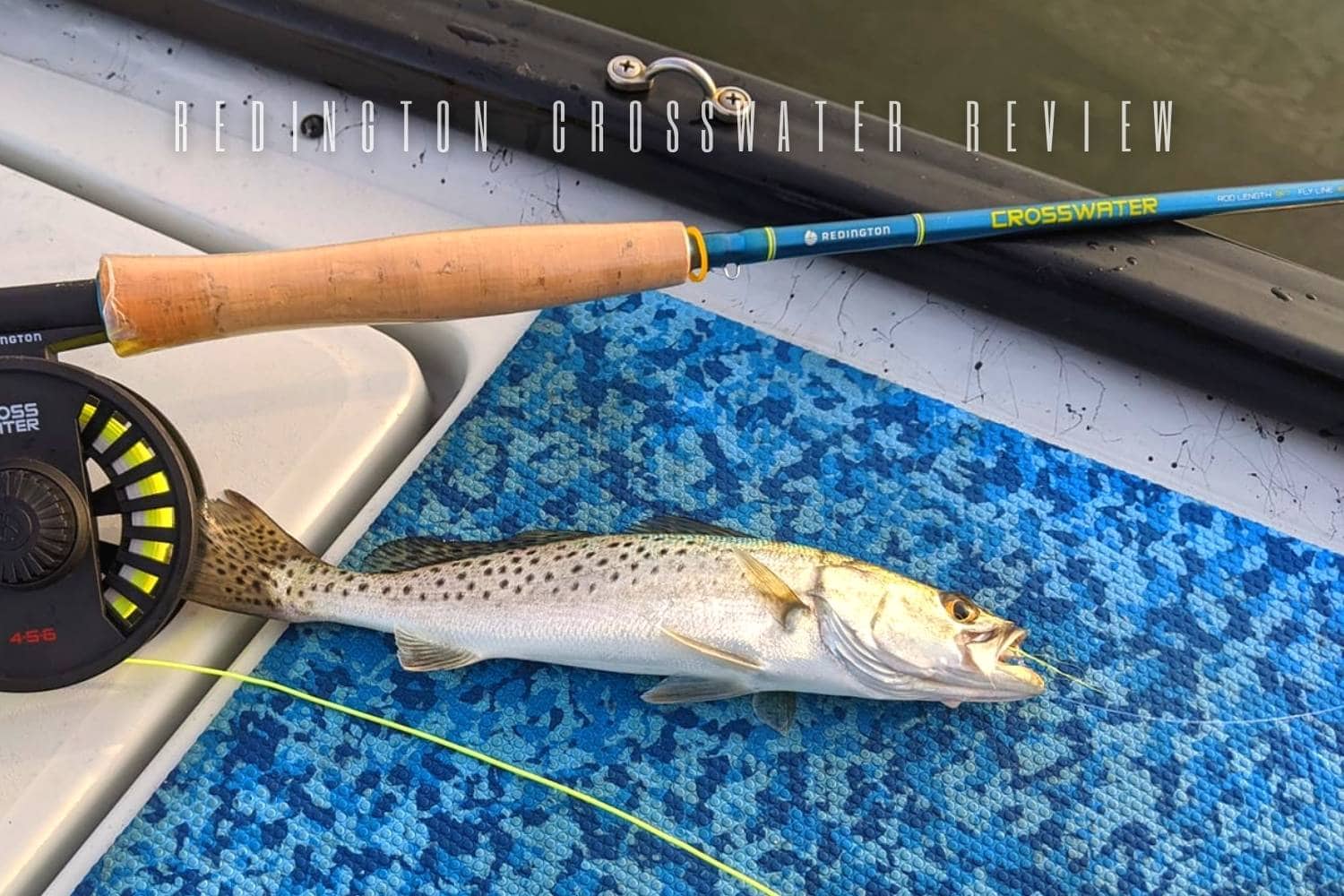
This Crosswater account covers one exact outfit: the blue, four-piece Redington Crosswater 9-foot 5-weight paired with a Crosswater reel, backing, RIO Mainstream WF5F line, and a zippered rod-and-reel case. The hands-on findings below stay with that outfit and do not move to another Crosswater generation or weight.
What was actually tested
The 9-foot 5-weight was taken to the river. At ordinary trout distances, it loaded without demanding perfect timing and formed sufficiently clean loops for practical dry-fly and nymph fishing. The same experience found declining accuracy and reserve as casts lengthened, with wind and heavier flies revealing the limitation sooner.
Those are exact-generation observations. They do not describe a heavier Crosswater, an earlier or later blue rod, or another Redington kit. The included components also belong to this defined outfit. Similar names and colors are not enough to transfer the result.
Observed, specified, and judged
- Observed with this outfit
- Forgiving loading at normal trout distance, useful placement with ordinary dry and nymph work, reduced accuracy and power farther out, tidy wraps, comfortable reversed half-wells grip, and basic but functional guides.
- Exact outfit details
- Nine-foot length, 5-weight designation, four sections, medium-fast graphite rod, anodized aluminum reel seat, matched Crosswater reel, backing, WF5F line, and zippered case.
- Buyer fit
- The tested Crosswater suits a first trout setup, teaching outfit, loaner, or practical spare. A proficient caster seeking stronger distance, wind authority, or refinement is likely to outgrow it.
Forgiveness is the central advantage
A new caster needs a rod that gives enough feedback to find timing without requiring force. This Crosswater sat on the forgiving side of medium-fast during the river session. That allowed attention to stay on loop shape and presentation rather than on making a resistant blank bend.
The benefit is most relevant inside realistic trout range. It does not mean every cast will be accurate, nor does it erase the need for a smooth acceleration and stop. It means the outfit gives a learner a workable platform while technique develops.
Where the compromise becomes visible
As more line was carried, the tested rod gave up accuracy and reserve compared with a more capable setup. Wind and bulky flies magnified the gap. That limitation is acceptable for a beginner-focused 5-weight if ordinary work consists of modest dries, nymph arrangements, and small streamers on small or medium rivers.
It becomes a poor bargain when repeated long casts or heavy payloads define the day. Do not solve that mismatch by overpowering the Crosswater. Use a configuration and rod class intended for the larger job.
Build quality in practical terms
The graphite blank felt comfortable, the blue finish was distinctive, and alignment dots made four-piece assembly quicker. The tested rod’s wraps were tidy. Its guides were basic rather than luxurious, but they performed their task. The anodized aluminum reel seat made sense on an outfit likely to see teaching duty and routine knocks.
The reversed half-wells cork grip supported the 5-weight comfortably during a normal session. That observation remains personal and exact to the tested rod. Another hand may prefer a different diameter or contour, so a buyer should still cast before relying on the description.
Reel, line, and case
The matched package reduces setup decisions. The Crosswater reel balanced the rod and provided a functional trout starting point. It was adequate rather than the reason to choose the outfit. The included WF5F line also worked, while leaving room for a later improvement as casting developed.
The zippered case held the rod sections and reel together, useful for travel, a car setup, or lending. The observed case lacked a shoulder strap, a minor convenience issue rather than a performance defect. Keep it dry and free of grit before storing the outfit.
A sensible upgrade path
When skills begin to exceed the supplied setup, assess the fly line before replacing the reel. A line can materially change loading, shooting, and turnover, while the basic reel already performs the modest freshwater job. Choose a taper that fits normal casts rather than using an extreme line to hide the rod’s boundaries.
Upgrade the whole rod only when the needed capability changes: more accuracy at distance, greater wind authority, heavier flies, or finer tracking. That decision is stronger than replacing components because the outfit no longer feels novel.
Fit table for the tested 9-foot 5-weight
| Use | Fit | Exact-outfit reason |
|---|---|---|
| First trout outfit | Strong | Forgiving load and matched components |
| Teaching or loaning | Strong | Simple setup, four pieces, protective case |
| Long casts in wind | Limited | Observed accuracy and reserve fell away |
| Bulky flies or regular saltwater | Poor priority | Five-weight rod and basic reel serve ordinary trout work |
Inspecting another example
Confirm that the blank reads 9-foot 5-weight and that all four sections match. Check ferrules, alignment dots, guide wraps, cork, reel-seat threads, line condition, backing, and the reel’s operation. A complete case does not guarantee that the outfit inside is the exact one described.
If a different Crosswater is in front of you, treat it as a separate rod. Its action, included line, reel, storage, and field behavior must be assessed independently. Similar family branding cannot safely fill those gaps.
Final verdict on the tested Crosswater outfit
The blue Redington Crosswater 9-foot 5-weight package succeeded at its central job: getting a new angler onto trout water with a manageable rod, functional reel and line, and convenient case. Its forgiving load at ordinary distance matters more than its lack of high-end refinement.
Choose it for learning, teaching, lending, or backup duty if the exact outfit is sound. Skip it when distance, wind, larger flies, or advanced tracking dominate. The hands-on verdict ends with this precise Crosswater setup and does not follow the name into another generation.

Interesting article. The Redington Crosswater also comes as a combo with rod, reel and line. I’m curious to know what you think of the line included with the combo. Thanks
The line that comes with the combo is great to get started, however, as your skills improve you’ll want to swap it out for some Rio gold or grand. We have an article on the best fly rod combos here if you’d like to compare them?