
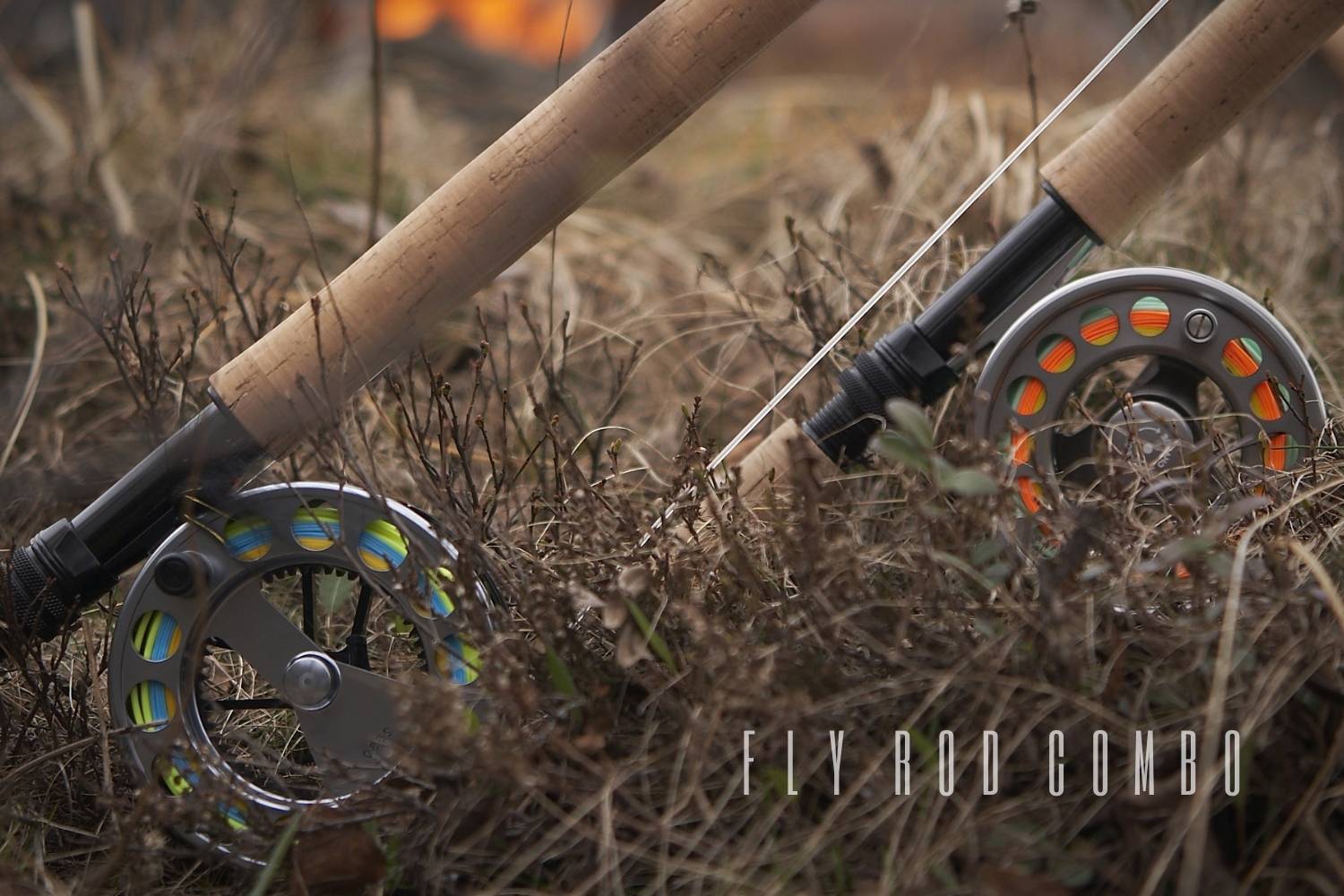
Complete outfit buyer’s guide
A fly rod combo is not automatically ready to fish just because a rod, reel, and line share one box. The useful question is whether every part fits the same job. A sensible outfit matches line weight, balances in the hand, has a leader appropriate to the intended flies, and arrives with enough protection to survive transport.
The named outfits in this guide are article-era examples. Use them to understand what a complete package should contain, not as a statement about later versions. The safest buying method is to inspect the whole system before comparing logos.
Choose the fishery before the package
Begin with the flies and water. Small dry flies on sheltered trout streams call for a different line and rod feel than weighted streamers on open banks. If the outfit must cover mixed trout fishing, a balanced general-purpose line weight is easier to grow with than a highly specialized setup. If bass, salmon, saltwater, or long-leader nymphing dominates, start with that demand instead.
- Define the casting load. Consider the largest fly, added weight, indicator, and leader you will cast regularly.
- Pick the rod’s line class and length. Match reach and clearance to the water rather than choosing by package size.
- Confirm the supplied line. The taper and density should suit the technique, not merely carry the same weight number.
- Check reel balance and capacity. The reel should hold the line and backing without crowding and should not make the outfit feel needlessly heavy.
- List what is still missing. Leaders, tippet, flies, forceps, nippers, floatant, indicators, and storage are consumables or tools, not proof of rod quality.
Compare systems, not accessory counts
| Component | What to verify | Why it matters |
|---|---|---|
| Rod | Line class, length, action, section count, ferrule fit | Determines casting range, clearance, transport, and timing |
| Reel | Spool capacity, retrieve direction, drag operation, secure reel-seat fit | Prevents crowding, imbalance, and avoidable setup trouble |
| Fly line | Weight, taper, density, condition, and correct installation | The line loads the rod and carries the fly |
| Leader and backing | Appropriate strength, length, knots, and enough backing | Connects the system and protects against sudden failure |
| Case | Rod sections and reel fit without pressure points | A useful outfit should travel without crushing its tip or guides |
| Small tools | Actual usefulness and acceptable quality | Extra items do not compensate for a mismatched rod or poor line |
What the article-era outfit examples show
These names belong to the exact historical sections retained for this page. Their role here is to illustrate different package philosophies. Components, model generations, and included items should be checked on the physical outfit under consideration.
Cabela’s Bighorn Fly Combo: a simple trout baseline
The article-era Bighorn package paired a four-piece, nine-foot five-weight rod with a large-arbor reel and a weight-forward floating line. That is a recognizable general trout template: broad enough for common learning situations without turning the package into a bag of marginal accessories. For a similar used or old-stock outfit, inspect the line for cracks and memory before valuing it as part of the package.
Maxcatch Premier Combo: the accessory-heavy approach
The retained Premier section lists a rod, reel, floating line, backing, leaders, a small fly box, flies, zinger, nipper, forceps, and a case. This demonstrates why item count can mislead. The tools may help someone start, but rod fit and line quality still decide how the outfit casts. Treat flies and leaders as replaceable supplies rather than reasons to accept the wrong rod weight.
Echo Base Kit: a stripped-back outfit
The article-era Echo Base Kit focused on the core system: rod, reel, floating line, backing, leader, and combined case. That narrower package is easier to judge because each included part has an essential job. A buyer should still confirm the exact line weight and make sure the reel is configured for the preferred retrieve.
Orvis Encounter Outfit: essential parts with a basic leader
The matching Encounter section describes a four-piece rod, reel, weight-forward floating line, backing, and one tapered leader. It is another example of a core outfit rather than an all-accessories kit. The practical lesson is to budget attention for the next step: suitable tippet and replacement leaders must match the flies and conditions.
Redington Crosswater Outfit: transport and assembly details
The retained Crosswater package highlights alignment dots, a protective tube, and a pre-spooled reel. Alignment marks can make assembly quicker, but they do not replace checking that ferrules are clean and seated. A combined case is useful only if sections lie without stress and the reel cannot strike the blank in transit.
Redington VICE Combo: faster-action direction
The article-era VICE outfit paired a fast-action rod with a reel, line, and hard case. Compared with a more moderate starter rod, a faster blank may reward decisive timing and help generate line speed, but it can give a new caster less feedback at short range. Casting feel should carry more weight than decorative reel options.
Sage Foundation Outfit: an integrated branded system
The exact historical Foundation section presents rod, reel, line, backing, leader, and case as one coordinated outfit. A single-brand package can reduce compatibility questions, but the name does not eliminate the need to inspect each piece. On a second-hand example, confirm that the line has not been replaced with an unknown weight or taper.
TFO NXT Black Label: core package with protective storage
The retained NXT Black Label example follows the familiar formula of four-piece rod, reel, weight-forward line, backing, and protective case. It shows what many buyers actually need: a complete casting system and safe transport. Any service promise should be read for owner, registration, and damage conditions rather than assumed from a short label.
Assemble and test the outfit in order
Lay every rod section on a clean surface, inspect the female and male ferrules, then assemble from the butt upward. Align the guides, mount the reel, and pull line through while checking each guide for roughness. Confirm that the fly line comes off the spool in the correct direction and that the reel handle sits on the side you intend to use.
Outside, begin with a short length of line. The rod should load without a sharp hinge or an obvious feeling that the line is far too light. Add distance gradually. If the outfit refuses to load close or collapses when more line is carried, verify the printed line identity before blaming your casting stroke.
Do not forget the terminal end
A suitable leader turns the line’s energy into presentation. Thick, short leaders favor larger flies and turnover; longer, finer leaders favor delicacy but demand cleaner loops. Replace a memory-coiled or damaged packaged leader rather than judging the whole outfit through a weak final connection.
A good combo leaves fewer hidden problems
The best package is the one whose core parts agree about the same fishing job. A modest kit with a well-matched rod, line, reel, leader, and case is more valuable than a crowded bundle built around the wrong line class. Count compatibility first and accessories last.
Before committing, explain the outfit in one sentence: “This rod, line, and leader are for these flies on this water.” If that sentence is clear, the package has a purpose. If it depends on vague claims that it can do everything, step back and rebuild the system from the fishery outward.
