
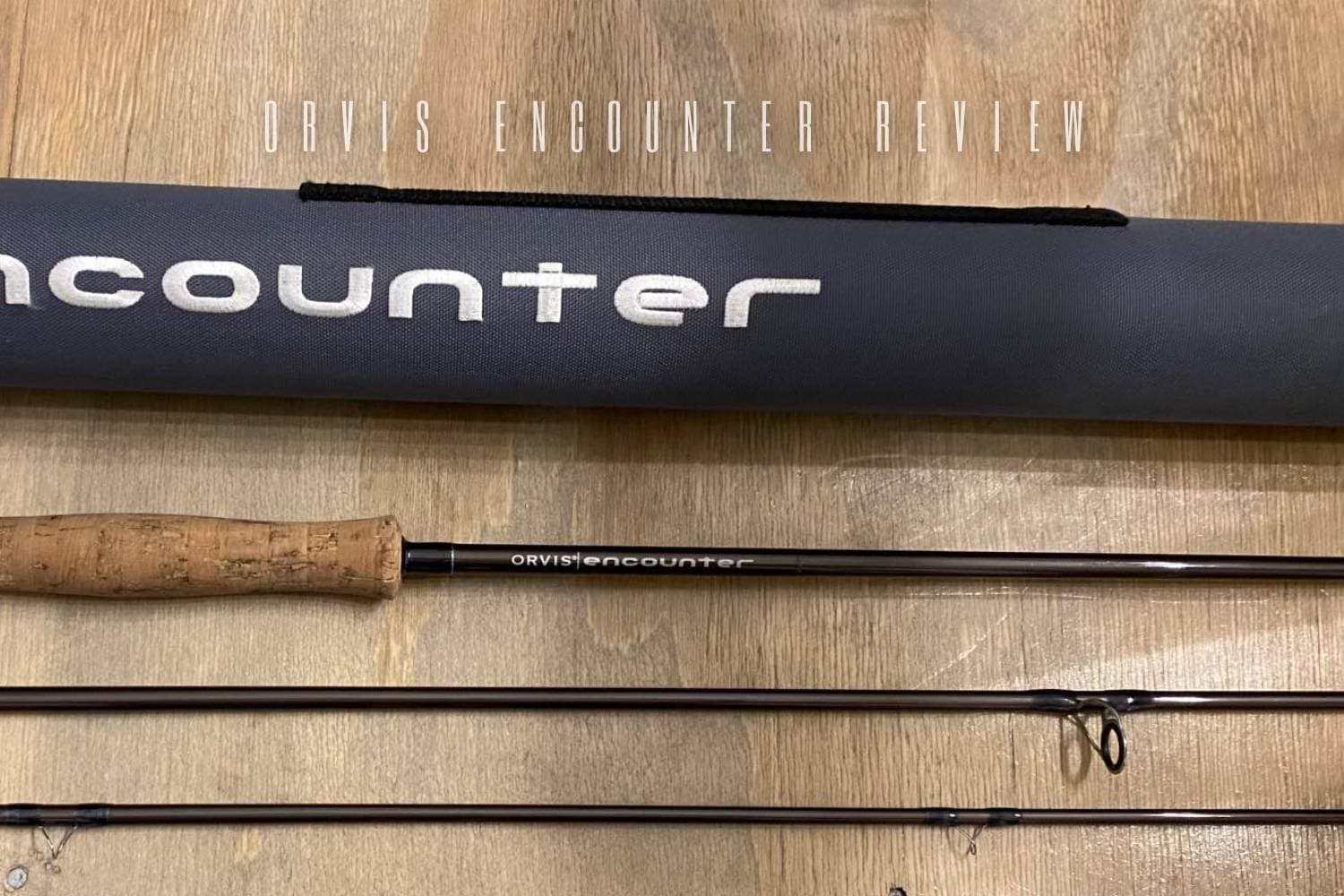
Short answer: A matched starter outfit that removes setup decisions while keeping a readable medium action. Encounter is best understood as a coordinated outfit, not simply a rod blank. The reviewed package joined rod, reel, backing, line, and leader so a new angler could practice without first solving five compatibility problems. That convenience only matters because the assembled system was balanced and the medium action made loading easy to feel. It offers an approachable path into casting, while its reel construction and support terms set clear limits on what the package should be asked to endure.
Orvis Encounter at a glance
| Category | What applies here |
|---|---|
| Original Encounter outfit | Rod, composite reel, backing, fly line and leader, with a carrying case |
| Original Encounter range | Original configurations spanned 5 through 8 weight |
| Original Encounter lengths | Original configurations ran from 7 through 10 feet |
| Original Encounter action | Moderate or medium |
| Observed emphasis | Balanced assembly, smooth casting, useful sensitivity for learning |
The specifications and handling guidance apply only to the four-piece Encounter complete outfit supplied with its composite reel. Judge the rod, line, reel, leader, and configuration as one matched system rather than extending these conclusions to another Encounter package.
Casting character of this generation
As a complete assembly, the Encounter felt light, balanced, and smooth enough for repeated practice. The moderate action provided visible and tactile feedback through the stroke, helping a learner recognize when the line had straightened behind. The flexible tip contributed sensitivity, while the lower half retained sufficient support for ordinary casts. Because the reel and line were already matched to the rod, the user could focus on timing, loop shape, and a controlled stop instead of diagnosing an arbitrary equipment mismatch.
Encounter is tested as a system. Rod loading, reel balance, line behavior, and leader turnover should cooperate well enough that a learner can diagnose timing rather than fight mismatched components.
Blank, grip and hardware
The original Encounter package paired a four-section graphite rod and cork handle with a composite reel, anodized seat, line, backing, leader, and carrying case. The reel is the obvious economy component. It can perform its line-storage and fish-control role, but its plastic construction deserves more careful handling than machined metal. The original reel used an unsealed drag, so exposure to salt demands prompt cleaning and drying. The outfit’s practical merit lies in coordination, not luxury hardware.
The graphite rod and composite reel define the original-generation package, but secondhand value depends on every component. A damaged line or rough reel can make a sound Encounter rod seem unnecessarily difficult.
Where the rod makes sense
A 5-weight configuration suits common trout and panfish practice with modest dries, nymphs, and small streamers. The heavier listed versions can address larger flies and warmwater or light coastal tasks when the exact setup is appropriate. Medium action gives a learner time to feel the rod work and discourages an unnecessarily violent stroke. It can still form a purposeful loop in light wind, but success comes from rhythm and a full back-cast rather than trying to overpower the blank.
The outfit suits introductory freshwater work when fly and line match the printed configuration. Heavier flies, coastal exposure, reel capacity, and drag demands can quickly move the job beyond this coordinated starter system.
Tradeoffs that define the design
Experienced casters who already know their preferred taper may outgrow the rod’s generalist feel. The composite reel is less durable than a robust metal design, and the standard long Orvis guarantee did not apply to this series. There is also no reason to expose the package to salt merely because one configuration can cast there; reel care, hardware condition, line weight, and target species all need to agree before that use is sensible.
Economy is visible in the composite reel and narrower guarantee, while the medium-action rod remains the package's teaching strength. Those compromises explain the outfit's place instead of turning it into an all-purpose claim.
A practical choice test
For a first outfit, evaluate simplicity as well as casting. Confirm that every listed component is present, then string the rod exactly as supplied and practice at short range. A suitable Encounter should reveal loading without collapsing the loop and should let the caster hold the cork with a relaxed hand. If the user already needs specialized sink tips, oversized flies, or a high-capacity sealed drag, beginning with a more purpose-built system will prevent an early replacement.
Inventory the rod, spool, backing, line, leader, and case before evaluating a used Encounter. Missing or substituted pieces break the very equipment coordination that supports this review's conclusion.
Setup and condition check
Inspect used packages piece by piece. Look for ferrule cracks, bent guides, torn line coating, backing knots, reel-foot damage, drag roughness, and cork gaps. Check that the spool belongs to the included reel and that the line designation matches the printed rod weight. After freshwater use, dry every component before closing the case. After any salt exposure, rinse the reel and hardware with gentle fresh water, dry fully, and avoid forcing the drag while grit remains inside.
- Verify the complete Encounter outfit identity and printed configuration on the blank itself.
- Seat and inspect every joint on this complete Encounter outfit before applying a full casting load.
- Balance the complete Encounter outfit with the reel, line, leader, and fly intended for its actual job.
- Judge a different Encounter package by its own rod, reel, line, and leader rather than this complete outfit’s behavior.
Verdict on the original-generation Orvis Encounter
The original-generation Encounter succeeds as a teaching system because its parts arrive coordinated and its medium action communicates the casting cycle. Its rod is balanced enough to remain useful after the first lesson, yet the composite reel and narrower support terms explain why it sits below more durable outfits. Choose it for a straightforward start and realistic fishing loads, not as a universal platform. A later Encounter package must be assessed on its own components before receiving this conclusion.

Just back from a day trip to the 10,000 Islands in SW Florida. First trip with my Encounter Combo. Picked up sea trout, reds and silvers. Rod and reel were just a delight. I bought the 8-wgt and LOVE IT!
Thanks for the update Doug. Am glad to hear you did well with the rod!
I have switched my retrieve to right hand on this reel, what is the best way to take off and re spool the line and backing? It should be coming from the bottom to the first eyelet correct?
Please correct the statement saying where these are made. Encounter and Clearwater are MADE IN CHINA. Vermont sounds lovely, but it was only designed there, not made there. For a site referring to itself as “pro” this is kind of a blatant failure, maybe intentional(?).