
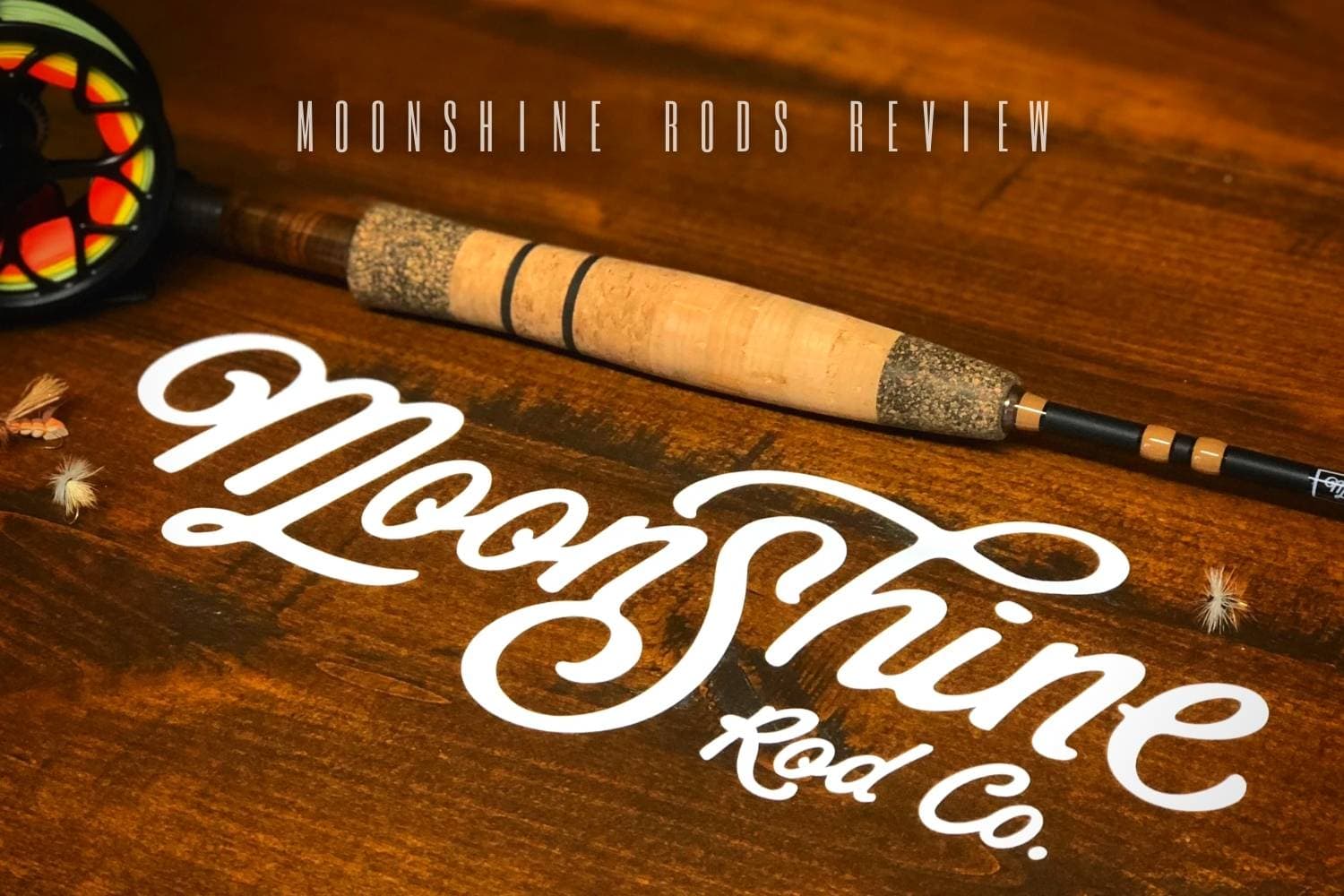
Moonshine rod family guide
How the historical Moonshine lineup divided the water
Moonshine’s historical lineup is easiest to understand as five deliberately different personalities rather than a ladder from basic to premium. The Drifter brought an old-school look to general fly fishing, the Epiphany concentrated on tight-line nymphing, the Outcast carried the heavier work, the Revival slowed the casting rhythm with glass, and the Midnight Special sat apart as a fast, performance-minded design. Those names describe an earlier lineup; they should not be read as a list of models offered today.
That distinction matters because a rod family only helps when it matches the kind of cast, fly, water, and fish you expect. Start with the job, then use the model name to understand the design direction. A visually striking rod that fights your normal casting tempo is a poor match, while a less obvious family can feel natural after only a few casts.
A job-first map of the historical lineup
| Family | Primary role | Casting character | Decision cue |
|---|---|---|---|
| Drifter | General freshwater fishing | More measured, medium-action feel | Choose when rhythm and classic styling matter |
| Epiphany | Euro and tight-line nymphing | Sensitive working tip with support below | Choose around contact and line control |
| Outcast | Heavier flies and stronger fish | Faster, more forceful delivery | Choose when power outranks delicacy |
| Revival | Shorter, presentation-led fishing | Deep-loading fiberglass tempo | Choose for close work and a slower stroke |
| Midnight Special | Fast-action all-around work | Crisp and responsive | Choose for a more immediate recovery feel |
The five families, without forcing a ranking
Drifter: the relaxed generalist
The Drifter was presented as the traditional-looking member of the family, with a brown blank, burl details, cork grip, and a medium action. Its appeal was not simply cosmetic. A more measured bend can give a caster time to feel the rod load, which is useful when accuracy and an unhurried stroke matter more than maximum line speed. It makes the most sense as the historical all-rounder for anglers who prefer feedback through the cast rather than an abrupt stop-and-fire sensation.
Do not confuse “generalist” with “identical in every configuration.” The historical range crossed several line classes and lengths. Any older Drifter should therefore be judged by the markings on that specific blank, not by a remembered family description. Match the actual rod to its line, inspect both tip sections if supplied, and make sure the ferrules seat cleanly before deciding whether the relaxed Drifter idea fits your fishing.
Epiphany: contact before distance
The Epiphany occupied the nymphing branch. Its defining idea was a sensitive upper section paired with more authority lower in the blank, a combination intended to keep an angler in touch with a tight-line rig while retaining control when a fish turns. That is a specialized advantage. Someone who spends most days carrying line in the air for dry-fly casts may not benefit from the same length and balance choices that help with contact nymphing.
Fit here is largely about the complete system. Reel weight, leader length, grip position, and the amount of line beyond the tip all influence fatigue and control. An Epiphany that feels tip-heavy in an empty-room waggle may balance differently once rigged, so evaluate it as a fishing setup rather than as an isolated blank. The historical family also included different reel-seat arrangements; confirm which one is in hand instead of assuming every Epiphany shares one layout.
Outcast: the power branch
The Outcast was the family aimed at bigger flies, stronger fish, and conditions that ask for a firmer casting platform. Its fast-action description and fighting-butt configuration placed it far from the Revival’s relaxed glass feel. That separation is useful: an angler choosing the Outcast should already know why additional lifting strength, line speed, or wind-handling matters. Buying that stiffness merely because it sounds more capable can make ordinary trout-sized work less pleasant.
For an older Outcast, pay close attention to guides, wraps, reel-seat hardware, and the area immediately above the grip. Heavy-duty rods often experience hard fighting angles and repeated transport, so cosmetic condition alone is not enough. Assemble every section, sight down the guide train, apply only gentle hand pressure, and reject unexplained clicking, shifting hardware, or cracks. Salt exposure also makes careful cleaning history more relevant, though appearance cannot prove how a rod was maintained.
Revival: fiberglass changes the conversation
The Revival represented the glass option, and glass should be chosen for its casting experience rather than treated as a lower-tech substitute for graphite. A deeper bend and slower recovery encourage a smoother stroke, particularly at the shorter distances common on intimate streams. That can make small-fly presentation enjoyable, but the same feel can frustrate a caster who relies on very tight timing or routinely drives bulky flies into wind.
Used glass deserves a different visual check. Look along the blank for bruising, whitening, uneven bends, and damage around ferrules. Then examine the handle and reel seat for movement. The Revival’s vintage presentation is part of its appeal, yet attractive burl or warm blank color cannot compensate for compromised joints. Let material and intended distance lead the decision; styling comes afterward.
Midnight Special: the crisp alternative
The Midnight Special was framed as the faster, more performance-oriented member of this historical group. Its natural carbon appearance and dark fittings separated it visually, while the action placed it on the opposite side of the tempo spectrum from the Revival. It suits a caster who likes a decisive stop and quick response. It is less persuasive for someone hoping the rod will automatically correct rushed timing; faster recovery can expose rather than hide a hurried stroke.
Choose by the cast you repeat most
Picture an ordinary day, not the most ambitious trip on your wish list. Frequent tight-line nymphing points toward the Epiphany. Short casts and a deliberate glass rhythm point toward the Revival. Larger flies and more forceful fish make the Outcast’s purpose clearer. A broad freshwater mix with a relaxed cadence fits the Drifter concept, while a caster who prefers a crisper graphite response may gravitate toward the Midnight Special. This approach prevents five colorful names from becoming five vague versions of the same rod.
Line choice still needs to follow the exact blank. Avoid compensating for poor timing by automatically moving to a heavier line. Begin with the marked line class, use a balanced reel, and test at realistic distances with a leader and fly similar to what you actually fish. A useful trial includes pickup, one back cast, a change of direction, a short presentation, and a controlled roll cast—not only repeated long casts on open grass.
A practical inspection for an historical Moonshine rod
- Confirm the family name, line class, length, and section count from the rod itself.
- Assemble all sections and check that ferrules engage securely without unexplained gaps or noises.
- Inspect each guide foot and wrap under good light, especially near the tip and stripping guides.
- Test the reel seat with the reel you intend to use and check the grip for rotation or deep damage.
- If a second tip is included, compare straightness, fit, guide alignment, and length rather than treating it as an automatic bonus.
Documentation, service terms, and replacement arrangements can change, so an older rod should stand on its present condition and casting fit. Treat any accessories as useful only after their identity and condition are confirmed. The central decision remains simple: buy the Moonshine personality that matches your everyday stroke, not the one with the most dramatic name.

I just ordered a Moonshine Drifter 4wt. I’m looking forward to receiving it and wetting a line!
Fantastic Wyatt. Let me know how you get on!