
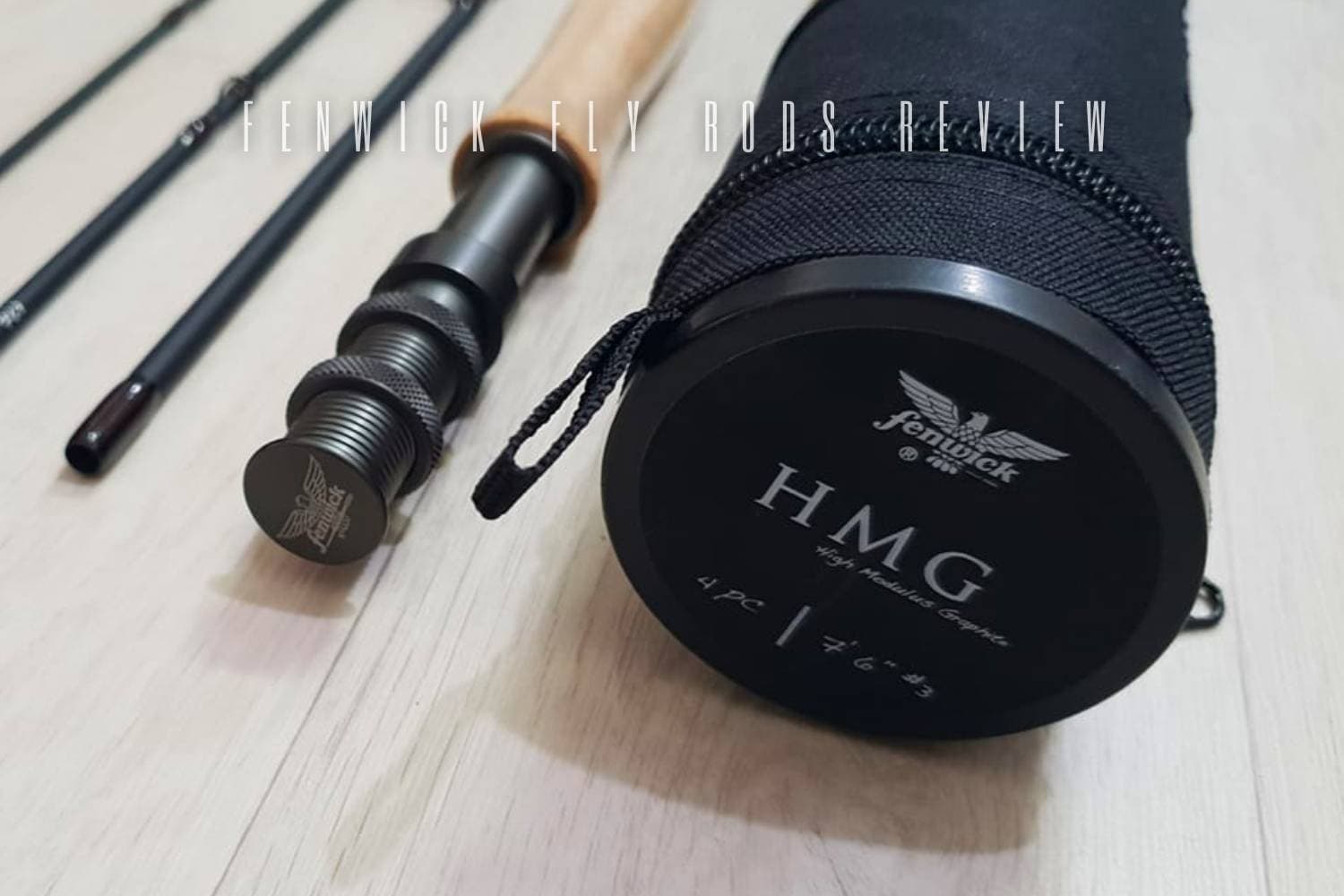
Fenwick historical fly-rod guide
Fenwick’s historical lineup tells a story about materials and fishing scale
The historical Fenwick family spans graphite history, fiberglass feel, accessible utility, saltwater strength, and longer river control. Aetos, HMG, Fenglass, Eagle, Fenlite Salt, and Fenlite Streamflex Plus were not six steps on one staircase. They represented different answers to how far, how delicately, with what material, and against what kind of resistance an angler wanted to cast.
These names are historical examples only. They should not be interpreted as a list of models offered now or as proof that an old specification applies to every generation. Use the family distinctions to frame a test, then let the exact rod and its condition decide.
Six historical families by material and water
| Family | Historical identity | Most revealing test |
|---|---|---|
| Aetos | Fast graphite across varied uses | Recovery at short and long practical range |
| HMG | Graphite heritage with a measured action | Ease of loading during ordinary casts |
| Fenglass | Fiberglass presentation and deep bend | Smooth close-range turnover |
| Eagle | Straightforward utility | Balanced, repeatable fishing motions |
| Fenlite Salt | Heavier saltwater work | Realistic fly turnover and hardware condition |
| Fenlite Streamflex Plus | Longer river and nymph control | Reach, balance, and line management |
Material determines tempo before marketing does
Aetos: quick graphite with a broad historical footprint
Aetos was presented as a fast-action family spanning freshwater, saltwater, and longer configurations. That breadth means the name alone cannot tell you how an individual rod should feel. A light trout Aetos and a heavier or longer one carry different lines and solve different problems. Confirm the inscription first, then test recovery, tracking, and effort at the distance appropriate to that configuration.
Test both close accuracy and longer casts rather than assuming either from the Aetos family name. An older rod should demonstrate those qualities rather than inherit them automatically. Make a short presentation, a controlled change of direction, and a longer cast with a representative leader. Watch the tip after the stop and notice whether the rod asks for more speed than your normal stroke supplies.
HMG: graphite heritage is context, not a casting instruction
HMG carries historical importance because the name is associated with early graphite development, while the historical lineup described a later, modernized rod with a medium-fast character. That is exactly why generation discipline matters. Do not transfer a statement about one HMG era to every blank bearing the letters. Treat the particular rod as its own object.
A medium-fast HMG concept suits anglers seeking accessible loading and useful line speed without the most abrupt recovery. Test at ordinary range and include mending and pickup. If the rod communicates clearly before much line is out, it may be a better fit for smaller water than a faster alternative even when the faster rod wins a distance comparison.
Fenglass: choose the bend, not merely the retro appearance
Fenglass represented Fenwick’s fiberglass lane in the historical lineup. Its medium-action identity pointed toward a deeper load and slower cadence, especially valuable for gentle presentations at modest distance. Glass is not simply softer graphite. It stores and releases energy with a different rhythm, and it should be cast with patience rather than forced to mimic a fast blank.
Inspect older glass for bruises, whitening, damaged ferrules, and unusual bends. Rotate the blank in bright light, then assemble it gently and listen during a modest flex. A warm color and traditional fittings may be appealing, but material condition has to lead the decision.
Fishing scale separates Eagle, Fenlite Salt, and Streamflex Plus
Eagle: utility should be measured by repeatability
Eagle occupied the straightforward, accessible role in the historical family. The useful test is not whether it feels luxurious in hand; it is whether it casts, mends, picks up line, and protects the intended tippet without demanding constant correction. An older utility rod can be an excellent backup or primary tool when it remains straight, sound, and balanced with the planned reel.
Check every guide and wrap because modestly positioned rods are not immune to transport damage. Mount the reel, make repeated casts, and notice fatigue. A slightly heavier feel may be acceptable if the outfit balances near the hand and performs the ordinary tasks reliably.
Fenlite Salt: power has a narrow justification
Fenlite Salt was the heavy saltwater specialist in the historical lineup. Larger line classes and salt-oriented construction make sense for wind-resistant flies and strong fish. They do not make sense merely because an angler wants “more rod.” If saltwater is occasional, consider whether the extra reserve will burden every other outing.
Used saltwater equipment requires a metal-by-metal check. Examine guide frames and inserts, reel-seat threads, locking rings, and the fighting-butt area. Look for pitting and discoloration around wrap edges. Then cast an imitation of the expected fly’s size and air resistance. Distance with bare line is not proof of practical control.
Fenlite Streamflex Plus: reach changes the whole outfit
Fenlite Streamflex Plus occupied the longer river and nymphing role. Extra length can improve reach, drift management, and contact, yet it also increases swing weight and leverage on the wrist. Evaluate the complete setup in a leading position, not just through overhead casts. Reel mass can move the balance point enough to change comfort.
Configurations varied within this family, so record the exact blank’s line class and length, assemble every section, and verify guide alignment before deciding whether its reach suits your river.
Inspect by material, then by intended load
- Identify: record the full family name, line class, length, and section count shown on the rod.
- Material check: look for graphite impact damage, glass bruising, repairs, or finish changes appropriate to the blank.
- Joint check: assemble ferrules without force and listen for clicking during gentle flex.
- Hardware check: test guide surfaces, reel-seat threads, grip stability, and fighting butt where present.
- Fishing check: use the intended reel, line, leader, and representative fly at realistic distance.
Repeat the inspection after casting. Heat, load, and assembly movement can reveal a guide or joint problem that was invisible beforehand. If any section appears mismatched, compare markings and lengths rather than assuming a multi-piece rod has remained together since manufacture.
Do not rely on old retail, ownership, or warranty statements when deciding the value of an older Fenwick. Those facts can change and may depend on generation. A defensible purchase rests on exact identity, sound structure, and a casting feel that fits.
Create the shortlist with three filters
First choose material: deep-loading glass points to the Fenglass concept, while graphite keeps Aetos, HMG, Eagle, and the Fenlite branches in play. Next choose scale: ordinary freshwater, long river control, or saltwater power. Finally choose tempo: quicker recovery, accessible medium-fast loading, or a deliberately slower bend.
This sequence usually removes most of the historical lineup before a cast. A small-stream angler who loves glass has no reason to compare Fenlite Salt. A saltwater angler carrying large flies should not be distracted by Eagle’s utility role. A nymph-focused river angler should prioritize Streamflex balance over the prestige of another family name.

I was given a Fenwick Fly Rod 01476 about 16 years ago. Just recently I decided to put it to use. I was trying to get info on it without any luck.
The rod still looks new. The markings are: WF 868-2
LINE #8. 3 1/4 oz.
8′ 6″
Fenwick C 01476
Was wondering how old this rod is? What was the cost of it back in the day? Is it fiberglass or graphite?
Thanks for your help
I have a Fenwick graphite ef805-2, 8ft, 5wt 2 3/4 oz fly rod. Never been used. Still in the original felt wrap and hard case. My wife bought for me in 1987 and I forgot I still had it. New condition. Can I still use to fish for trout? What is it worth?