
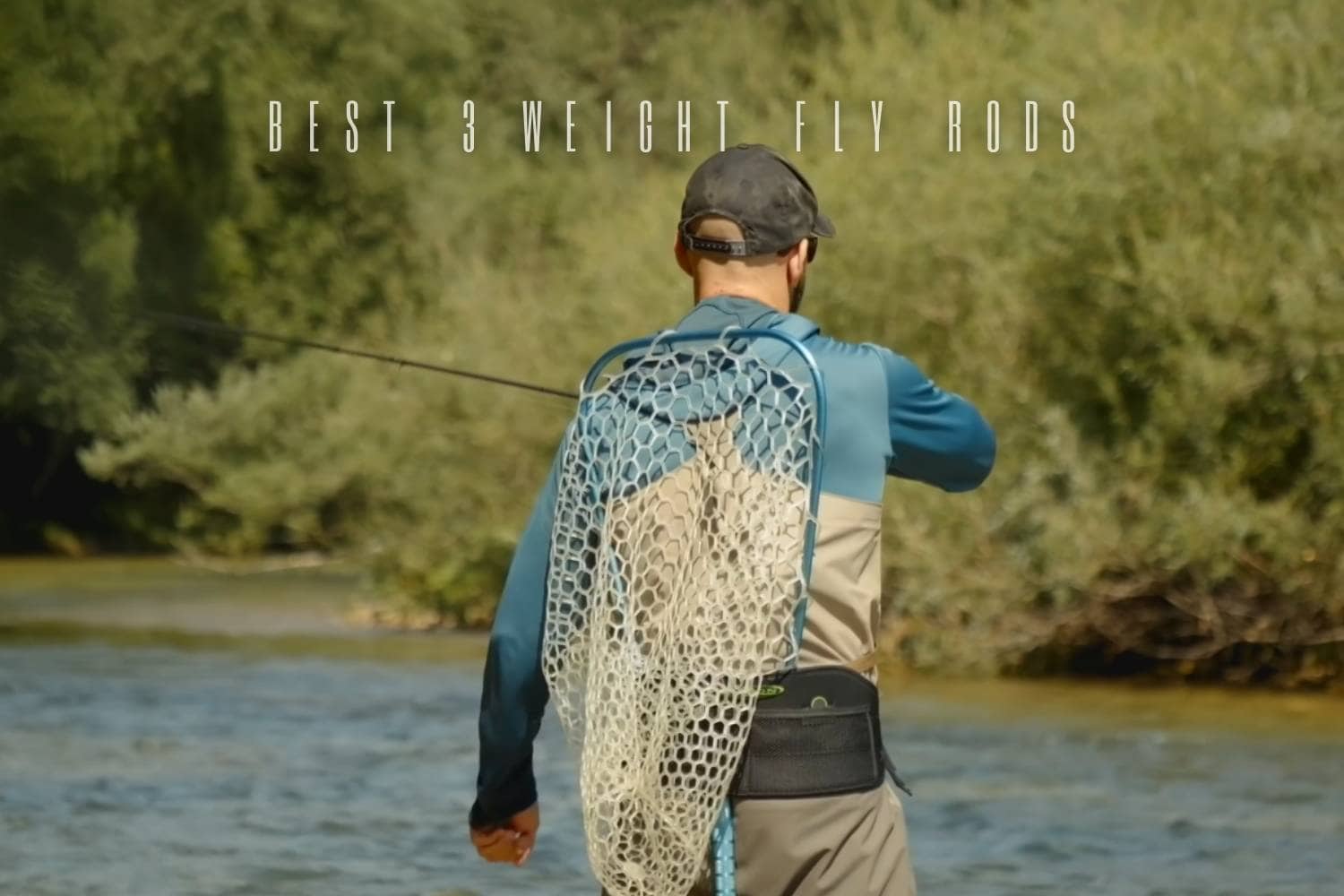
A three-weight does not make every trout delicate. It makes a specific kind of fishing more immediate: modest flies, short to medium casts, smaller water, and fish that would overpower the sensation of a heavier outfit. The reward is feel and precise presentation; the cost is reduced authority with bulky rigs, strong wind, and broad currents. Buy one when that exchange matches the places you return to.
Use a three-weight where lightness helps
Small streams and creeks are the natural home of the three-weight because casts are often short, flies are modest, and presentation matters more than payload. The lighter line can land quietly, while the rod gives smaller fish enough leverage to feel lively. A compact layout also moves through brush and packs well for foot travel.
The line number is not a guarantee of delicacy. A fast three-weight may demand high speed and feel surprisingly stiff close in. A medium or medium-fast rod can provide clearer loading feedback, though an overly soft tip may struggle with wind or a weighted rig. Decide whether the outfit is mainly for tiny dries, light dry-dropper work, or an occasional small nymph before choosing action.
Know the boundary. A three-weight is a poor default for large streamers, heavy indicators, sustained wind, or water where stronger fish must be controlled quickly. It can be a useful specialist beside a five-weight, but it should not be bought as a universal freshwater answer. Match tippet, hook size, and fish-handling choices to local conditions and regulations.
Pick the ultralight personality
| Ultralight job | Character to inspect | Limit to respect | Article-era examples |
|---|---|---|---|
| Close dry flies | Progressive load with little line beyond the tip | Less reserve for wind and weighted rigs | Moonshine Rod Co. Drifter three-weight |
| Learning light-line timing | Medium-fast feedback and a comfortable grip | A stiff blank can hide the load from a beginner | Orvis Clearwater three-weight; Echo Base three-weight |
| Open-water accuracy | Quicker recovery that still works at ordinary range | Speed can reduce delicacy and widen timing errors | Redington Vice three-weight |
| Low-cost technique trial | Sound ferrules, useful line match, and protective case | Finish claims do not establish casting quality | Maxcatch Premier IM8 |
Length should follow cover. Shorter rods simplify bow casts and movement under branches. More length helps reach across currents and manage line, but it also catches foliage and adds leverage at the tip. Packed dimensions and section protection matter for hiking; an ultralight label is less useful if the tube does not fit the route.
Article-era examples, not current rankings
Orvis Clearwater three-weight
The writer personally fished the article-era three-weight Clearwater and judged its performance very highly against expensive rods he had tested. Keep that first-hand statement with this exact model section. It cannot establish the behavior of another Clearwater generation or any current configuration. The practical test is whether the rod balances power and precision on your short cast.
Moonshine Rod Co. Drifter three-weight
The historical Drifter section described a medium-action tool with a travel-oriented multi-piece format and a distinctive finish. Its praise was broad rather than a clearly bounded field test, so treat the name as an example of the deeper-loading ultralight category. Check the actual rod for close-range recovery and ferrule integrity.
Echo Base three-weight
The article-era Base represented a lending, backup, or entry role. Historical price and service language is not carried forward. For a present decision, the useful questions are whether the rod communicates load to a new caster and whether the complete outfit remains pleasant with a good three-weight line.
Redington Vice three-weight
This historical example occupied the faster, distance-oriented side of the shortlist. A quick three-weight can suit open water and an experienced stroke, but it may erase the very close-range feel that motivates an ultralight purchase. Accuracy at your real distance matters more than a claim about maximum range.
Maxcatch Premier IM8
The article-era Premier IM8 section contained conflicting feel language, calling the rod fast in one place and slow-feeling in another. Do not resolve that contradiction by guesswork. It demonstrates why action labels and enthusiastic prose must yield to a controlled cast of the exact rod.
Give an ultralight rod a fair but demanding test
- Use a true three-weight line intended for the fishing style, not an unknown shop spool.
- Begin with only enough line for a short creek cast and feel where the blank loads.
- Cast a small dry, then the heaviest light rig you honestly expect to fish.
- Try an off-shoulder cast, roll cast, and bow cast if cover makes them relevant.
- Watch tip recovery after the stop and check whether the leader lands under control.
- Assess grip size, reel balance, ferrules, case, and packed length for the hike.
Light tips and thin sections need ordinary care. Assemble without grinding grit into ferrules, avoid moving through brush with an exposed tip, and store the rod dry in its protection. Follow the instructions for the exact finish and service program; historical warranty claims should never decide a current purchase.
Choose lightness on purpose
A three-weight is at its best when it transforms familiar small water rather than pretending to cover every freshwater task. Select the creek, fly, typical wind, and casting corridor first. Then decide whether you want a deep, communicative bend or quicker recovery for open shots. Historical models map those choices, but they do not settle them. The right outfit will load at the distance where fish actually rise, deliver the leader without drama, and preserve enough control to handle the fish responsibly.

I use a sage esn 10’6” 3wt best rod I ever fished.
Thanks for this list! I grew up fly fishing but haven’t tried for more than a decade. I was delighted to see these economical 3 weight rods that will allow me to get lots of practice on my small backyard creek before I go anywhere. Besides, I’ve always enjoyed finessing small streams, it just looks like the equipment to do it is better now.