
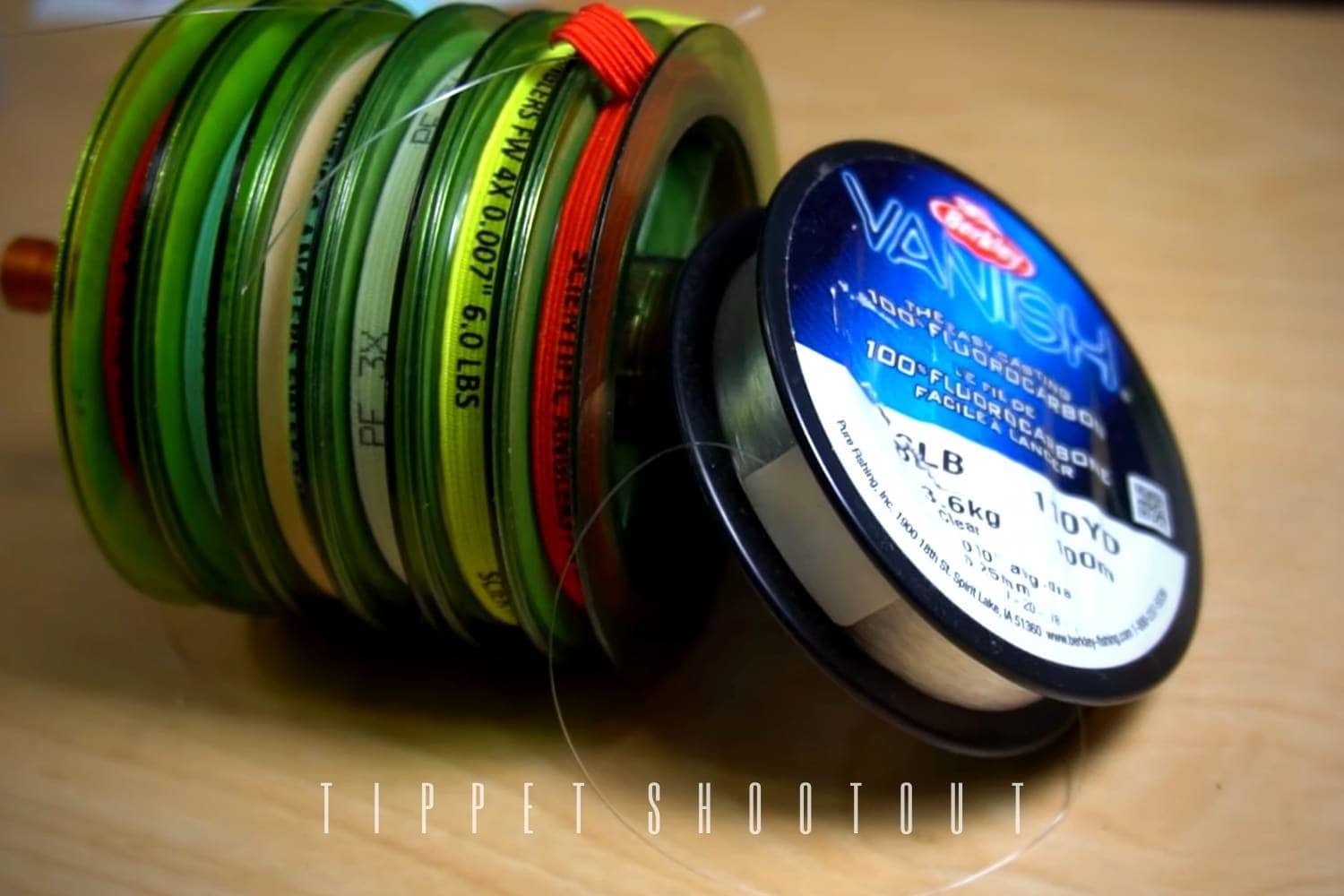
Quick answer: choose trout tippet by the fly first, then adjust for the fish, current, cover, water clarity and the presentation you need. Use the thickest diameter that still passes through the hook eye, lets the fly move properly and delivers it without unnecessary disturbance. Nylon is often the practical starting point for dry flies; fluorocarbon is often considered for subsurface work. Neither material is a universal winner, and the exact formulation and diameter matter more than the category name alone.
If you need the full sequence from fly line to fly, start with our leader and tippet guide. This guide stays focused on selecting the replaceable terminal material for trout.
What tippet does in a trout leader
Tippet is the fine terminal material between the rest of the leader and the fly. It may be the thin end already built into a new tapered leader, or a separate section added from a spool. Separate tippet becomes useful when the original tip has shortened, when you need a different diameter or material, or when you want a replaceable section that preserves the leader’s taper.
The goal is not to use the finest possible material. Tippet has to do several jobs at once: fit the hook eye, help the fly turn over, allow the intended movement or drift, withstand the expected fish and current, and survive contact with rocks, wood, weeds or a trout’s teeth. Going finer may reduce bulk, but it also reduces your margin for knots, abrasion and landing pressure.
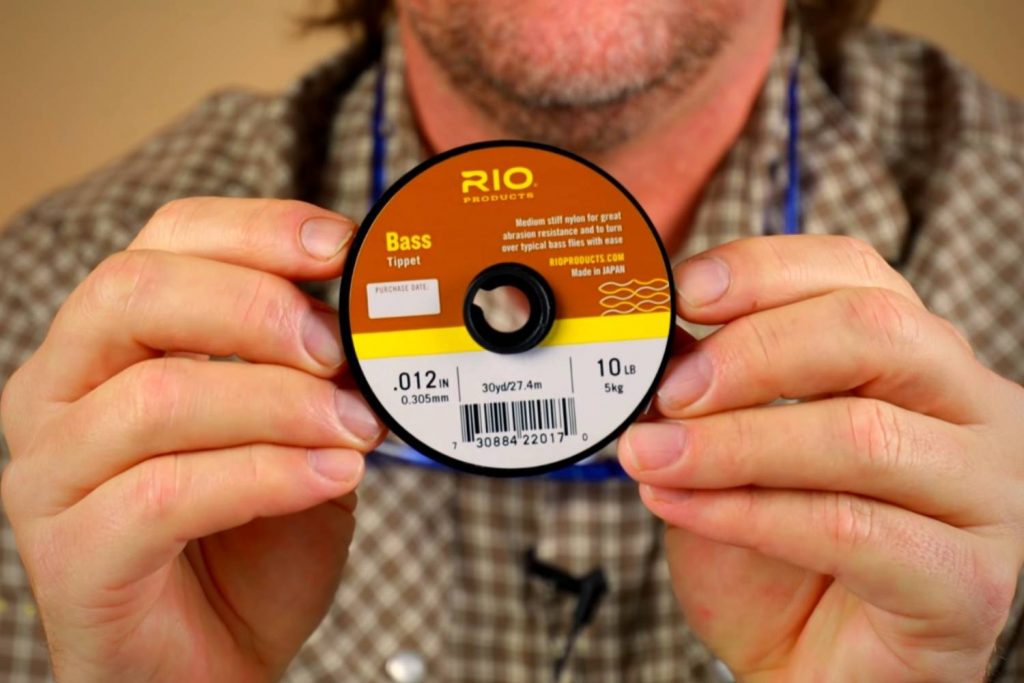
Nylon versus fluorocarbon tippet
Material choice is a trade-off, not a brand-independent verdict. Nylon and fluorocarbon formulations can differ in diameter, stiffness, surface finish, straight-pull strength, knot strength and abrasion behavior. Compare the exact spool and size you plan to use rather than assuming that every product made from one material behaves alike.
| Factor | Nylon | Fluorocarbon |
|---|---|---|
| Handling | Often more supple and easier to straighten or knot | Often firmer; careful knot seating can matter more |
| Density and presentation | Often easier to keep near the surface in a dry-fly system | Generally denser and often chosen for subsurface presentations, though the whole rig controls depth |
| Water absorption | Can absorb some water over time, which may alter handling | Typically absorbs less water; that does not determine every other performance trait |
| Underwater visibility | Depends on diameter, finish, light, water and background | Often chosen for lower underwater visibility, but it is not invisible |
| Abrasion and strength | Neither material wins universally. Compare like-for-like diameters, inspect frequently and test the finished knot. | |

A simple material decision
- Start with nylon when a dry fly must remain in or close to the surface film, when supple handling helps, or when you are building an economical range of sizes.
- Consider fluorocarbon for nymphs, streamers and other subsurface presentations when its density or handling benefits the rig.
- Change the decision when the exact material knots poorly, is too stiff or soft for the fly, abrades in the water you are fishing, or produces the wrong presentation.
Fluorocarbon is not automatically stronger, stiffer or more abrasion-resistant in every comparison. Nylon is not automatically weak or unsuitable below the surface. Diameter and formulation can reverse a broad material tendency.
Choose tippet by X size, diameter and strength
On common trout tippet, a higher X number means a smaller diameter: 3X is thicker than 5X, and 5X is thicker than 7X. A lower-X section is usually better able to turn over a large or wind-resistant fly and gives more margin around current and cover. A higher-X section creates a finer connection for small flies, but asks more of the knot and the angler.
The X label is primarily a diameter convention, not a universal breaking-strength rating. Two spools marked 5X can have different stated strength and different real knot behavior. Read the exact spool, compare diameter as well as stated strength, and never treat a laboratory number as the strength of a hurried streamside knot.
| Typical fly size | Initial X range | Reasons to use the thicker end | Reasons to consider the finer end |
|---|---|---|---|
| 6–8 | 2X–3X | Bulky fly, wind, strong current or cover | Sparse fly and controlled open water |
| 10–12 | 3X–4X | Weighted or bushy pattern, aggressive turnover | Gentler delivery with adequate landing strength |
| 14–16 | 4X–5X | Fast water, larger fish or repeated abrasion | Calm, clear water and a light, sparse pattern |
| 18–20 | 5X–6X | Current, vegetation or a fish that must be landed promptly | Tiny eye and a delicate presentation in open water |
| 22 and smaller | 6X–7X as a specialist starting range | Use the strongest diameter the eye and presentation permit | Only when the fly and conditions genuinely require it |
The familiar rule of three—divide the hook size by three to estimate an X size—gets you into the right neighborhood. A size 12 points toward 4X and a size 18 toward 6X. It does not account for a foam body, bead, multiple hooks, unusual eye size, wind, a heavy fish or abrasive cover, so treat it as the first question rather than the answer.
Adjust in the right order
- Fit the fly. The material must pass through the eye and allow a sound knot.
- Check turnover. If the leader collapses, the terminal section may be too fine or long for the fly.
- Protect the fish. Use enough strength to land it promptly in the expected current and cover.
- Refine presentation. In clear, calm water, try a slightly longer or finer terminal section only while turnover and landing strength remain reliable.
- Inspect contact points. Around rock, timber, weed or sharp structure, fresh thicker material may be a better answer than changing material category.
Match tippet to the way you are fishing
Dry flies
Begin with nylon in an X size that turns over the actual fly. A size 16 sparse dry may point toward 5X, while a bulky terrestrial on the same hook size may need thicker material. If the fly drags, first check the cast, leader layout and tippet length; simply going finer can create weak knots without fixing the real problem.
Nymphs
Fluorocarbon is often considered because it is denser, but it is not mandatory. Match diameter to fly weight, current, depth, indicator or tight-line setup, and the likelihood of contacting rock. A pair of weighted flies generally asks more of the terminal section than one light nymph. If snags or rough stone leave marks, replace the section rather than trusting a material-category claim.
Streamers
Use a lower-X, stronger terminal section that can turn over the streamer and cope with hard takes, cover and repeated casting. Water clarity alone is not a reason to use tippet too fine for the fly. Nylon or fluorocarbon can work; handling, abrasion, fly movement and knot reliability should decide.
Stillwater
Choose material and length around the presentation: dry flies near the surface, nymphs at a controlled depth, or moving flies on a retrieve. Clear water may reward a finer or longer terminal section, but wind, weed and fish size may point the other way. Make one change at a time so you can tell whether diameter, length or material improved the rig.
Euro nymphing
In a tight-line system, tippet diameter influences depth, contact and sag as well as strength. Select it around fly weight, current speed, depth and abrasion. A very fine section may help light flies descend, but it also reduces the margin around knots and fast water. Keep the leader and sighter construction on the system side of the junction; this page’s job is choosing the terminal material.
Direct connection or tippet ring?
A direct line-to-line knot is the simplest junction and works well when you change tippet infrequently or want the least hardware in a delicate dry-fly leader. A tippet ring can preserve the leader, mark the replaceable junction and speed frequent changes, especially in nymphing systems. It also adds two knots and another component to inspect.
If a ring solves a real rigging problem, match it to the exact leader and tippet rather than assuming every ring has the same size or strength. See how to use tippet rings for placement and tying steps. For building the taper itself, use the separate guide to make a tapered leader.
Knot behavior matters more than the knot’s name
A surgeon’s knot or blood knot can join leader to tippet when it suits the two diameters and materials. The connection to the fly needs a knot appropriate to the hook eye, material and desired movement. Whichever knots you choose:
- Use clean, undamaged material.
- Follow the maker’s guidance for the exact tippet when available.
- Moisten where appropriate and tighten smoothly so wraps do not cross.
- Inspect the seated knot and trim the tag without nicking it.
- Pull-test every knot before casting and retest after a snag or hard pull.
If a knot slips, whitens, distorts or cuts into the other material, retie it. Do not solve a compatibility problem by adding more force to a badly seated knot.
How many tippet spools does a beginner need?
Most beginners do not need every X size. Start with the flies and water you actually fish. For common trout dries and nymphs, three adjacent sizes such as 4X, 5X and 6X cover useful steps without turning the pack into a spool collection. Add a stronger 2X or 3X only if you regularly fish streamers, large terrestrials, heavy nymph rigs, stronger current or cover.
Material choice can stay simple too. A practical first kit is nylon in the sizes used for dry flies and general work, with one fluorocarbon size for a recurring subsurface job if it produces a clear benefit. Expand only when a hook eye, fly design, fish or water repeatedly falls outside that range. A beginner who fishes mostly larger streamers needs a very different kit from one who fishes tiny dry flies.

When to replace tippet
Run the terminal section between your fingers regularly and replace it when you find nicks, flat spots, roughness, clouding, wind knots or abrasion. Retie after a hard snag, a sharp rock contact or any pull that leaves the knot deformed. Material that has become difficult to knot reliably also belongs out of the rig.
Store spools away from prolonged heat and direct sunlight, keep them clean, and do not leave loose coils crushed under gear. Age alone does not set one universal replacement date, but unknown old material or badly stored tippet deserves a careful knot test before use. Collect every clipping in a closed pocket or line-waste container and take it home.
Trout tippet FAQs
Is fluorocarbon invisible underwater?
No. It is often selected for lower underwater visibility, but fish can still encounter the material and its appearance changes with diameter, finish, light, water and background.
Is fluorocarbon always stronger or more abrasion-resistant?
No. Those properties vary by exact formulation and diameter. Compare like-for-like sizes, include knot performance in the decision and inspect the terminal section during fishing.
Should clear water always make me use finer tippet?
No. Clarity is one factor. Fly turnover, fish size, current, cover and responsible landing strength can justify thicker material. Try extra length or a more careful presentation before dropping to a diameter that compromises control.
Can nylon be used for nymphs?
Yes. Fluorocarbon is often considered for subsurface work, but nylon can be entirely workable when it gives the required depth, drift and knot reliability.
Do I need a tippet ring?
No. Use one when preserving leader length or making frequent changes outweighs the added knots and hardware. A direct line-to-line connection remains a sound, simple option.
Choose for the whole rig
Start with fly size, then choose enough diameter and strength for the fish, current and cover. Treat nylon and fluorocarbon as different starting categories rather than winners and losers. Clear water may influence the final adjustment, but knot quality, turnover, abrasion and responsible landing strength still set the limits. Carry only the adjacent sizes your fishing actually uses, inspect them often and pull-test every new connection.

I really think you’ve missed the best tippet on the market. If you’re not comparing everything to Cortland Ultra Premium Fluoro tippet, you may have missed the boat (pun intended).