
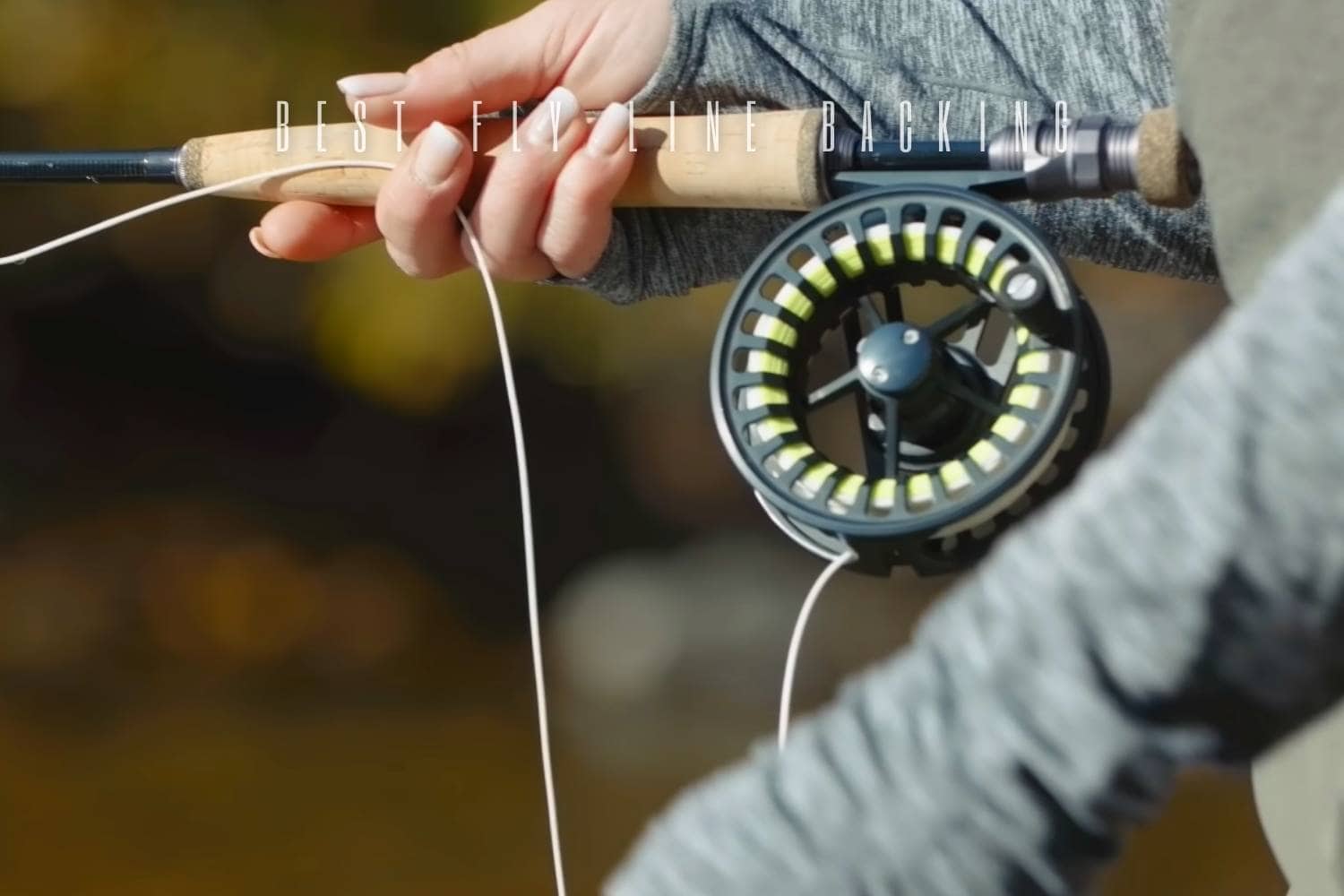
Fly line backing sits between the reel arbor and the running-line end of the fly line. It gives a fish reserve line after the fly line has left the reel, and it builds the spool to a useful diameter so the fly line is not wound in tight coils around a bare arbor.
There is no universal backing length or strength for a rod weight. Choose it from the exact reel capacity, the volume of the fly line, the backing material and diameter, and the fish and water you expect. The finished spool needs clear space below the reel frame so the line can turn without rubbing or binding.
The quick answer
For an ordinary freshwater trout reel, braided Dacron or polyester backing is the straightforward starting material when the reel has enough room for the full fly line and the reel maker’s specified backing allowance. A thinner gel-spun or braided polyethylene backing becomes relevant when capacity is limited or the fishing can demand substantially more reserve line, but its smaller diameter and slippery surface make careful knot choice and inspection more important.
Small-water trout may rarely show you the backing. I’ve even been down to the backing on a number of occasions in fast-flowing trout streams, though, so it still needs to be loaded and connected correctly. Larger freshwater fish and saltwater species make capacity, connection security and post-trip care more consequential.
If you are assembling an entire first outfit, start with the beginner fly line guide. For the parts in front of the fly line, use the separate guide to fly fishing leaders and tippet.
What backing does on a fly reel
It provides reserve line
A fly line has a finite length. When a strong fish runs beyond it, backing keeps the reel connected to the fly line and gives the angler more line with which to manage the fish. Backing is not chosen as a casting line; it stays behind the fly line until a fish or a setup check pulls the fly line off the reel.
It fills the arbor
Backing also creates a bed under the fly line. Building the spool diameter means each turn of the reel can recover more line than it would around a nearly bare arbor, and it reduces the tight coils created when fly line is stored around a small center. Wind the backing in level, orderly wraps so loose crossings do not bury or tangle.

Dacron/polyester versus gel-spun polyethylene
Material names are only the start of the decision. Diameter, strength class, braid and spool length can differ between exact products, so compare the label on the spool with the reel maker’s capacity information rather than assuming every backing made from one material is equivalent.
| Material family | Useful when | Main trade-off | Setup priority |
|---|---|---|---|
| Braided Dacron or polyester | A conventional freshwater setup has enough spool volume for the required reserve | It generally occupies more spool space than a thinner gel-spun option in a comparable strength class | Confirm the exact diameter and capacity, then wind it evenly without overfilling |
| Gel-spun or braided polyethylene | A capacity-limited reel or larger-fish setup needs more reserve line in the available spool volume | Its thin, slippery construction can make knots more prone to slipping if the connection is not compatible and carefully tied | Use the exact backing and fly-line makers’ connection instructions and test every knot firmly |
Choose strength and diameter together
A higher strength label does not by itself tell you how much backing will fit. The same nominal strength can come in different diameters, and a thinner material can change both capacity and how the line handles in a knot. Start with the reel maker’s listed combination, then check that the exact fly line and exact backing match the available spool volume.
Choose color for useful visibility
Backing color is secondary to fit, material and connection security. A visible color can make it easier to see how much line a fish has taken and to spot uneven winding or damaged sections. It does not change the need to inspect the full setup.
How much backing belongs on the reel?
The controlling reference is the reel maker’s capacity for the exact reel size and fly-line class. The fly line itself also occupies spool volume, and two lines carrying the same weight designation may not fill the reel identically. Backing diameter then determines how much reserve can fit beneath that line.
Freshwater trout
On a small-stream trout outfit, backing may spend nearly all its time filling the arbor. Do not add an oversized reserve simply because a generic species chart gives a yardage. Load the amount that fits behind the exact line while leaving working clearance.
Larger freshwater fish
Salmon, steelhead, large trout, carp and other strong freshwater fish can make reserve capacity more important. Match the reel, backing strength class and amount to the specific target and water rather than assuming one freshwater figure covers every fish or current.
Saltwater
Saltwater setups often place greater demands on reserve capacity. Begin with the reel maker’s line-and-backing specification for the exact reel, then account for the target species and expected run length. A thinner gel-spun polyethylene backing may create useful capacity where spool volume is limited, but only if its knot and handling requirements suit the complete system.
Stop before the spool is crowded
After both backing and fly line are installed, turn the reel and check the entire rim. The fly line must not touch the frame, pile against one side, or bind as it is wound. If it does, remove backing and rebuild the spool with less. Visible operating clearance matters more than forcing in a nominal yardage.

Use the right connection at each end
The two backing connections do different jobs. The arbor connection anchors the backing to the reel. The fly-line connection must hold securely and pass through the rod guides when a fish reaches the backing. Treating them as the same knot can create a weak or bulky setup.
Backing to reel: an arbor connection
Attach the backing directly to the reel arbor with an arbor knot or the exact attachment specified by the reel maker. A practical setup uses two wraps around the arbor before the knot to resist slipping. Seat the knot fully, trim it cleanly, and confirm that the first wraps hold before loading the rest of the spool. Slippery gel-spun polyethylene deserves particular care at this point.
Backing to fly line: match the line-end construction
First inspect the running-line end of the fly line. If it has a factory rear loop and the line maker permits a loop connection, use a secure backing loop and connect the two loops cleanly. If it has a bare or coated end without a loop, an Albright-style or nail-knot connection may be appropriate, but only when the fly-line construction allows it.
A nail knot is compact, yet its constriction can damage the coating on some lines. I never had one of my nail knots break, but I switched after seeing floating-line coating crack near the connection. Do not treat a nail knot as universal for sinking or monofilament-core lines. An Albright-style knot avoids some of that constriction but is bulkier, so dress and trim it carefully and make sure it passes the guides smoothly.
Gel-spun backing is thin and slippery. Do not reuse a knot recipe merely because it worked with thicker Dacron. Follow the instructions for the exact backing and fly line, pull-test the completed connection firmly, and inspect it again after winding.
Load the reel in this order
- Confirm capacity. Identify the reel size, fly-line class and backing material before winding.
- Attach backing to the arbor. Seat and test the arbor connection before covering it.
- Wind the backing evenly. Keep orderly wraps across the spool and avoid loose overlaps.
- Connect backing to the running-line end. Use the factory-loop, Albright-style or permitted nail-knot method that matches the exact line construction.
- Wind on the fly line in the correct direction. The running line goes on first; the front end remains available for the leader.
- Check spool clearance. Remove backing if the completed line touches the frame or binds.
- Add the leader and tippet last. These are the forward parts of the system, not substitutes for backing.
Inspect backing and replace it by condition
Backing does not need an invented calendar replacement interval. Its condition, connections and storage history determine whether it remains suitable. A section that has never left the reel can still hide damage, salt or dampness beneath the fly line.
- Cuts, fraying or abrasion: replace damaged backing rather than burying the weak section on the spool.
- Connection wear: retie a knot that has slipped, loosened, flattened or begun to damage the fly-line end.
- Salt contamination: after saltwater use, clean the reel and backing as the makers direct and let the backing dry fully before storage.
- Mildew or persistent dampness: do not keep compromised backing simply because it has not reached a set age.
- Poor storage: inspect backing closely after it has been stored wet, dirty or for a long period without being unwound.
Before a demanding trip, pull off the fly line, examine the backing-to-line connection and inspect enough backing to assess the working reserve. Rewind it evenly only after it is clean and dry. Replace any questionable section or connection before it is hidden under the fly line again.
Concise backing checklist
- Match the exact reel, fly-line class and available spool volume.
- Choose Dacron/polyester or gel-spun polyethylene from the capacity and handling trade-off.
- Confirm the exact backing diameter and strength class instead of relying on a generic species number.
- Attach backing securely to the arbor and test the knot.
- Match the backing-to-line connection to the fly line’s rear-end construction.
- Wind backing first, fly line second, leader third and tippet last.
- Leave enough clearance that the fly line cannot rub the reel frame.
- Inspect for cuts, abrasion, salt, mildew, damp storage and connection wear.
Fly line backing questions
Do all trout reels need a large reserve?
No single amount fits every trout reel. Small-water fishing may rarely expose the backing, while fast current and larger fish can. Use the reel’s exact capacity and the intended water rather than a universal yardage.
Is gel-spun backing always better because it is thinner?
No. Its smaller diameter can add capacity, but its slippery handling and knot demands are real trade-offs. Dacron or polyester remains the simpler choice when it provides enough reserve without crowding the spool.
Which knot joins backing to fly line?
Use the connection specified for the fly line’s rear end. A factory loop calls for a compatible loop connection; a bare or coated end may accept an Albright-style knot or a nail knot only when the line construction permits it. Test the finished connection and make sure it passes through the guides.
When should backing be replaced?
Replace it when cuts, abrasion, fraying, slipping knots, salt contamination, mildew or poor storage make its condition doubtful. A fixed calendar interval cannot account for how the reel was fished, cleaned and stored.

There can be quite a large number of quality types of backing to pick from. How do you know which is the right one?
Do you need this for Tenkara Fishing? I saw your article here https://staging.flyfisherpro.com/lessons/tenkara-fishing/
Hardest part about Tenkara fishing is admitting to your buddies that you are gay 😂