
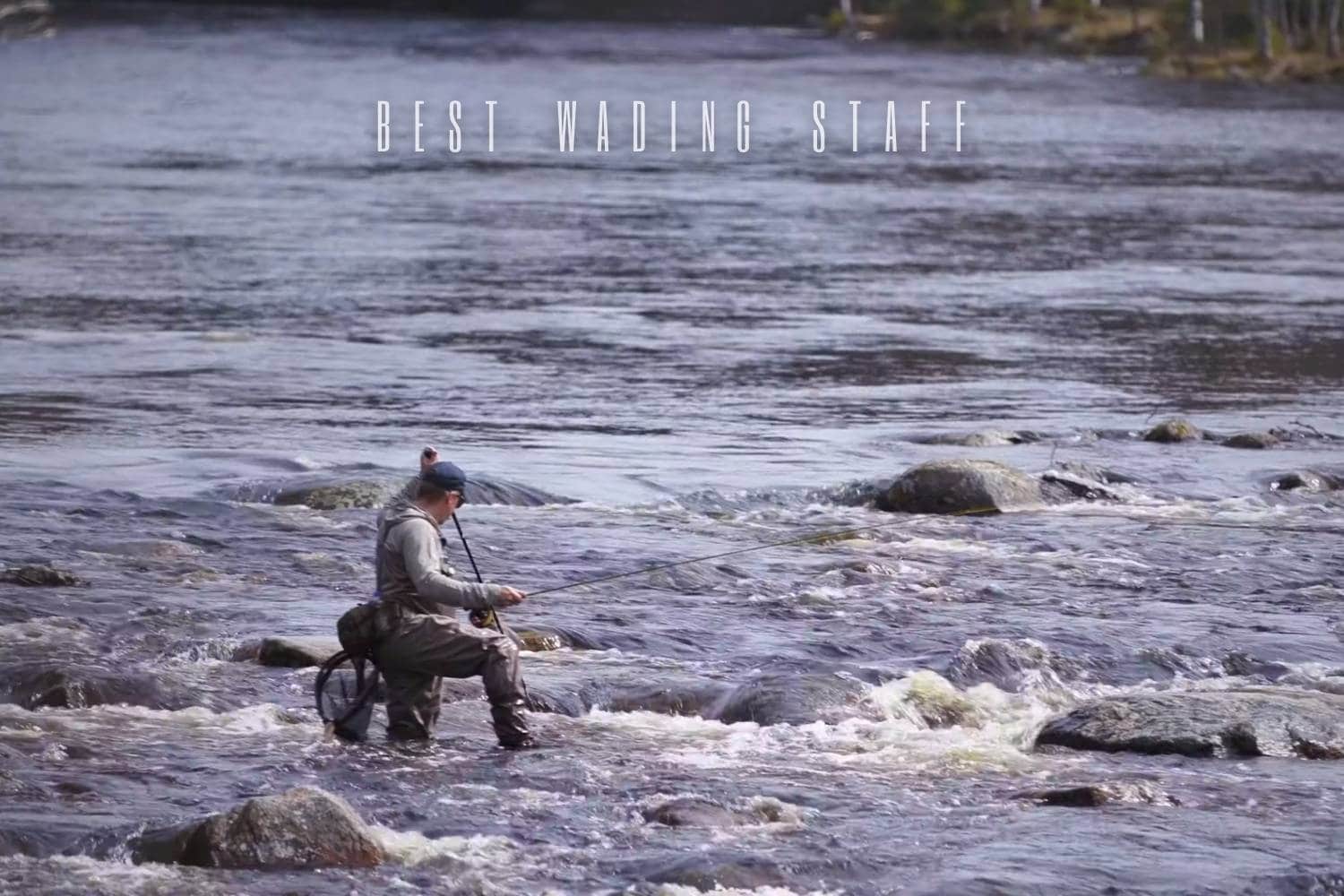
Quick answer: A wading staff is a third point of contact, not permission to wade water that is too deep or fast. The best one is long enough for your posture, deploys reliably with cold hands, plants securely on the bottom you fish and can be carried without becoming a nuisance. The five named models below are article-era products.
Wading staffs at a glance
| Staff | Article-era role | Buying status | Decision note |
|---|---|---|---|
| Orvis Sure Step Folding Wading Staff | All-round folding staff | Treat as an article-era model. | A similarly named staff may use a different construction. |
| Fishpond Lost Trail Wading Staff | Value-oriented folding staff | Treat as an article-era model. | Treat as an article-era or second-hand product. |
| Hammers Collapsible Wading Staff | Budget collapsible option | Treat as an article-era model unless the exact maker and model are confirmed. | Verify maker, length and locking method on the exact item. |
| Folstaf Original Folding Staff | Compact folding design | Treat as an article-era model and confirm the exact length and included parts. | Confirm specifications and support on the exact item. |
| Creative Angler Folding Wading Staff | Staff with camera-seat feature | Treat as an article-era model. | Confirm the maker, parts and support terms before relying on one. |
What the article-era models offered
Use these notes to identify older gear and compare designs. A similarly named staff may use different sections, locks, tips or accessories.
Orvis Sure Step Folding Wading Staff

The article described an aluminum folding staff with a tether and storage sheath. Its favorable points were manageable weight, useful length and straightforward folding. The cautions were slower assembly and elastic cords that the article said could stretch after use.
Apply those folding and cord notes only to the pictured Sure Step. Compare any similarly named staff by its exact section material, deployed length, packed length, tip, strap and retractor.
Fishpond Lost Trail Wading Staff

The article described a lightweight aluminum staff joined by stranded metal cable and supplied with a belt pouch. It also called the folded 16-inch package bulky. Use those details to identify and inspect an article-era or used example.
Hammers Collapsible Wading Staff

The article presented this as a compact option, folding to about 12 inches, with a contoured grip and wrist strap. It warned that the case felt less substantial and the sections could be stiff to pull apart. For a used example, inspect every joint, ferrule, cord and tip.
Folstaf Original Folding Staff

The original article liked its compact, light format and cork flotation grip, while noting that deployment behavior might not suit every beginner. On any example, confirm the length, included case, tip and support terms.
Creative Angler Folding Wading Staff

The article described a 55-inch aluminum staff with a neoprene case, lanyard, foam grip and camera-seat attachment. Fixed height was the main fit limitation. Confirm those details on the exact item before relying on it.
How to choose a wading staff

Length and posture
Your elbow should remain comfortably bent when the tip is planted near your upstream side. A fixed 55-inch staff may be awkward for a shorter angler, while a short staff can force a tall angler to lean. Adjustable designs solve that fit problem, but their locks must be simple enough to operate when wet and cold.
Folding versus telescoping
A folding staff packs small and often deploys quickly when its internal tension system is healthy. Check that every section seats fully; mud or a stretched cord can prevent a solid connection. A telescoping staff offers height adjustment and can feel rigid, but the locks require inspection and cleaning. A fixed staff has the fewest moving parts but is the least convenient in brush or while casting.
Tip, grip and tether
Carbide bites hard rock but can be noisy. A rubber cap is quieter and can grip some smooth surfaces, yet it may skid on algae. A secure wrist strap or retractor keeps the staff close without tying you into a hazardous position. The pouch must sit where you can deploy the staff before entering difficult water.
A safer way to use a staff
- Deploy and lock it on dry ground; pull firmly on every section.
- Enter with the staff upstream, where water pressure helps plant it.
- Keep two points of contact before moving the third.
- Probe ahead for holes, ledges and loose rocks before committing weight.
- Use short, diagonal steps and turn back early if the flow changes your balance.
A staff does not define safe depth. Flow, temperature, footing, visibility, fatigue and an escape route matter more than a number on the shaft.
Bottom line: These article-era staffs illustrate the trade-offs among folding, collapsible and fixed-length designs. When shopping, verify the exact maker and model, choose the right length, and test deployment repeatedly before relying on it in moving water.

Thank you!
I completely disagree with your dismissal of one piece wading staffs. Telescopic and folding staffs can collapse – and they fail when you need to rely on them, in my view both types are dangerous. You seem to regard folding sticks coming apart as merely inconvenient rather than potentially lethal.
Far from being a hindrance on the bank one piece wading staffs can beat down vegetation and securely take your weight when getting in and out – you can have complete confidence in a one piece staff.
Thanks for the review… One of the major concerns I have about wading-staffs is the tendency to come apart when traversing through mud, sand, or stuck between rocks…. It is the number-1 complaint I see in most reviews (on retail websites). I wish you would have addressed this matter in your review of each staff… I’m seeking one that will not come apart. Secondly, I would like to know how the staff performs when you truly have to put some weight on it -as when you are falling and need to put your real weight on the staff for support. As a person whose used hiking staffs for more than 20-yrs I am very cautious about staffs to depend on…. Interestingly, I see no one doing reviews on this most critical factor – most reviews seem to suggest that because the staff ‘snaps in place’ is the most important factor, when to me it is the most detrimental factor – i.e. breaking points; which brings up the question of “which material (aluminum, carbon, or other) holds up best under weight stress”? I find these reviews ‘too simple’ and not critical enough to fully address the matter of safety the staffs are allegedly supposed to provide.
How do you feel about one piece wooden wading staffs? I have tried the multi-piece units you mention, but find they get stuck in the mud / rocks and come apart when they are most needed….
They require that you be aware of their location, but they never sink, come apart and are durable. Thoughts?