
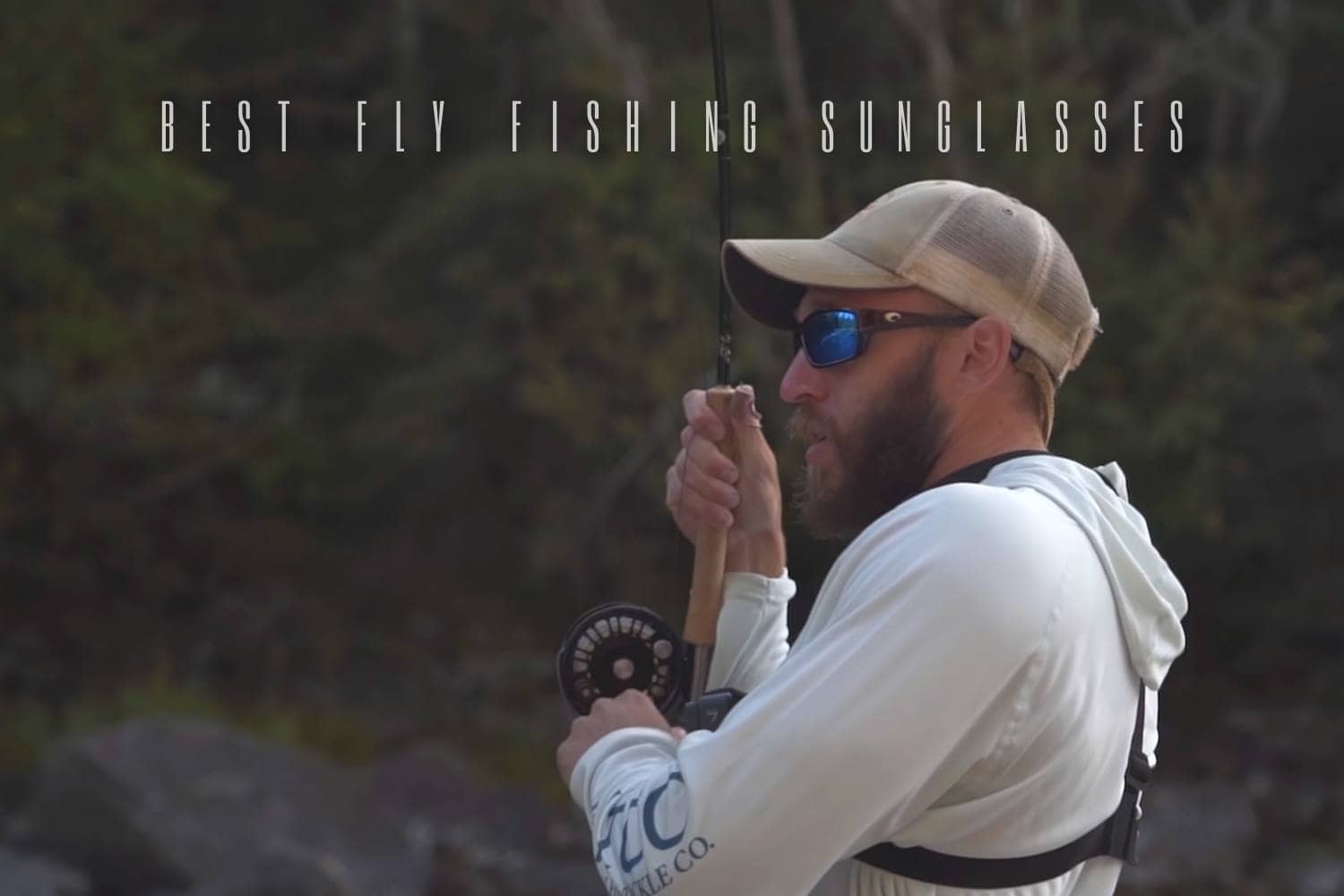
Polarized sunglasses are fishing equipment, not just sunwear. The useful pair is the one that fits securely, reduces surface glare and uses a lens tint suited to the light and water you fish most often.
The author’s Costa guide experience and lens-color observations remain useful for choosing polarization and tint. They do not establish the lifecycle, frame generation or lens configuration of any present-day Costa model.
Quick answer
Best starting setup: Choose a secure wraparound frame with polarized lenses. Copper, brown or amber is the versatile starting range for mixed inland light; darker gray or mirrored options suit stronger open-water glare, while low-light lenses are specialized tools rather than all-day defaults.
Current models to compare
Smith Guide’s Choice is included as a current high-coverage frame to compare. Costa Fantail and Tuna Alley remain lifecycle and configuration unresolved, so neither is presented as a current model or buying recommendation.
| Product | Best starting job | Manufacturer-stated points | Buying boundary |
|---|---|---|---|
| Smith Guide’s Choice | High-coverage fishing frame | Medium-large wrap, ChromaPop options, polarized glass choices, non-slip pads, spring hinges and a detachable leash. | Manufacturer specifications only; the author did not report using this exact current generation. |
Model and lifecycle guide
A model can keep a familiar name while its frame, lens menu or materials change. Treat exact lens and frame configuration as part of the identity.
| Named product | Classification | What that means for readers |
|---|---|---|
| Costa Fantail | Lifecycle and configuration unresolved | Confirm the exact current frame and lens configuration directly with Costa before buying; the older experience does not identify a present-day version. |
| Costa Tuna Alley | Earlier model; current lifecycle unresolved | Confirm the exact current frame and lens configuration directly with Costa before buying; lifecycle remains unresolved. |
| Maui Jim Peahi | Earlier model; current lifecycle unresolved | Current exact model details remain unresolved; confirm the exact model before buying. |
| Maui Jim World Cup | Earlier model; current lifecycle unresolved | Current exact model details remain unresolved; confirm the exact model before buying. |
| Smith Optics Basecamp ChromaPop | Earlier model; current exact counterpart unresolved | Do not replace it with a different Smith frame. |
| Smith Guide’s Choice | Current exact name; use current specifications | Use the current product page for specifications; do not apply earlier commentary to this generation. |
How to choose
Choose lens color by conditions
Tint changes contrast and comfort. A versatile lens is more useful than collecting colors that do not match your water.
- Copper, brown or amber: mixed light and many freshwater situations.
- Gray or dark mirror: bright open water where light reduction matters.
- Yellow or low-light tint: dawn, dusk and heavy cloud, not strong midday sun.
Prioritize fit before optics upgrades
A frame that slides during casting or admits strong side light will frustrate you even with premium lenses. Check temple pressure, nose grip, coverage and hat compatibility.
Use a retainer and hard case
A leash reduces loss risk around boats and moving water; a hard case protects lenses in a fishing bag. Rinse salt and grit before wiping.
What the author experienced
The author’s Costa experience was brand- and use-specific, not tied to an exact current frame generation.
- The author reported years guiding on flats and offshore in Seychelles and Kenya and said Costa eyewear was the guide-team norm at that time.
- The author found a yellow lens useful for spotting irregularities in grass while shallow fishing.
- The author bought blue lenses for offshore use. These lens-color notes do not establish a current frame winner.
Questions anglers ask
Do polarized lenses help you see fish?
They reduce reflected glare from the surface, which can make subsurface detail easier to read. Water clarity, sun angle and lens tint still matter.
Are glass lenses always better?
Glass can deliver excellent clarity and scratch resistance but adds weight. Polycarbonate is lighter and more impact resistant. Fit and use matter more than a blanket material winner.
What lens should a first-time buyer choose?
A polarized copper, brown or amber lens is the practical all-round starting point for many freshwater anglers; choose darker protection if most fishing is in bright open water.
Bottom line
Buy the fit and lens for your dominant conditions, then protect them with a leash and case. The author’s guide experience supports polarization and sensible tint choice, not an automatic verdict on any present-day model.

Fantastic! I got a pair of Oakleys on your recommendation. They fit well and look great!
Thnkx for spending the time to write this, I feel strongly about it and love reading more on this topic.
Thank you for sharing this excellent information. Best Fly Fishing Sunglasses this article is very excellent. These all glasses frames are fabulous, and I found some information about color blindness, nowadays many people have color blindness problems so if any have color blindness problem then go here.