
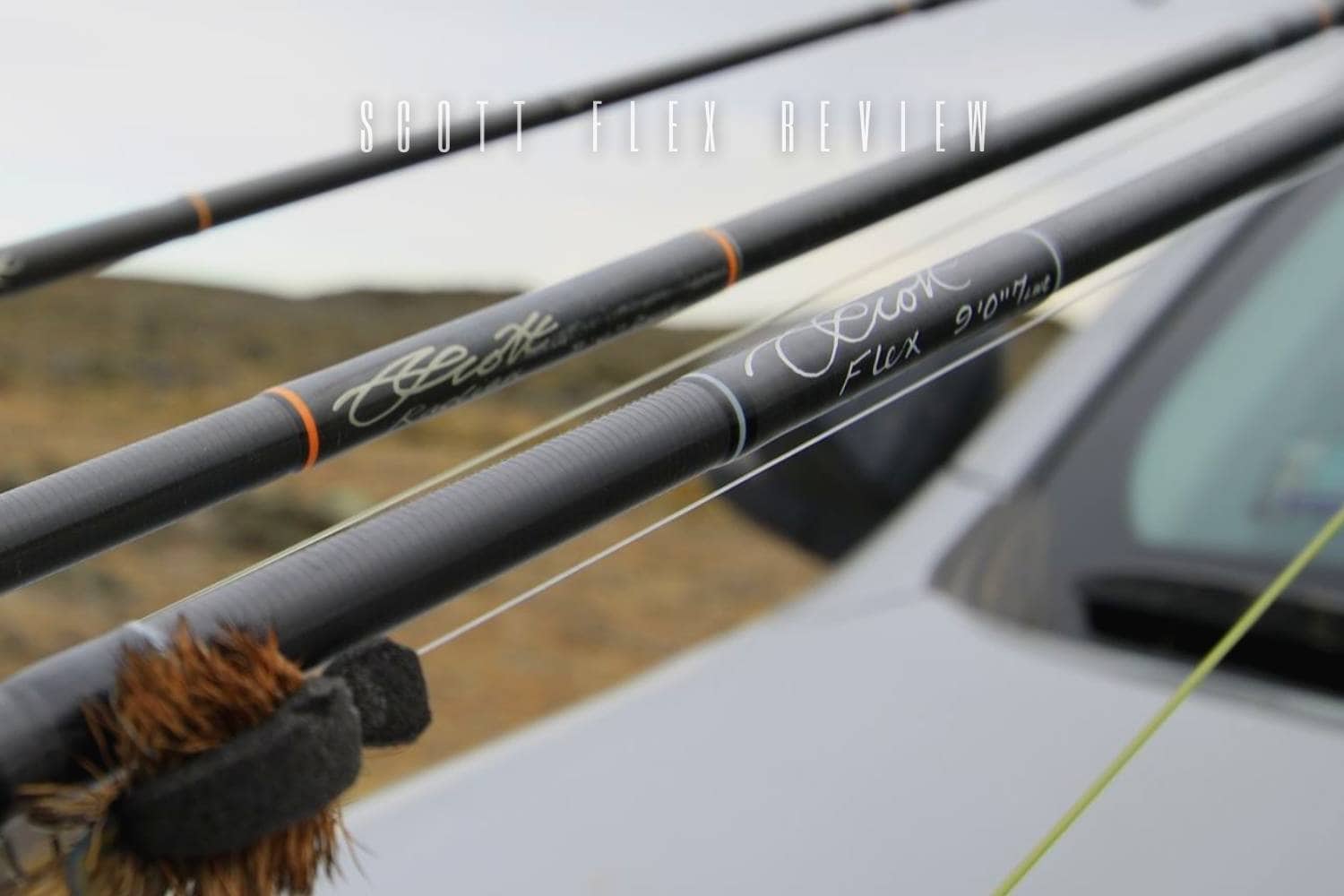
In brief: Scott Flex is a practical middle-distance rod. The earlier-generation family blended a softer tip with support below it, making thirty to forty-five feet more informative than a dramatic distance cast.
Earlier-generation Scott Flex at a glance
- Casting range and feel
- The Flex was most persuasive around forty-five feet, where line speed and feedback met cleanly. The wraps, seat, and blank finish showed careful construction without decorative excess.
- Earlier-generation components
- An unsanded graphite blank, anodized aluminum reel seat, SiC stripping guides, carbon-fiber insert, and Cordura tube; the earlier-generation family included 3- through 8-weight models and lengths from 7 to 10 feet.
- Best fit
- Scott Flex is best considered for a trout angler seeking a smooth mid-range rod with careful domestic construction, especially on typical trout rivers where most casts fall near thirty to forty-five feet.
The forty-five-foot sweet spot
The clearest reason to remember Scott Flex is its practical sweet spot. The Flex was most persuasive around forty-five feet, where line speed and feedback met cleanly. Many trout casts happen in that zone, so the behavior matters more than a theoretical maximum. Scott Flex feels coherent when the caster lets the softer tip and firmer lower blank share the work.
Craft over decoration
The earlier-generation Scott Flex used an unsanded graphite blank, anodized aluminum reel seat, SiC stripping guides, carbon-fiber insert, and Cordura tube. Finish quality supported confidence without changing the basic casting result. On an older Scott Flex, straight sections, secure ferrules, intact guides, and a sound grip are now more important than the original appearance.
How the blank communicates
The earlier-generation Scott Flex combined medium-fast action with a softer tip than stiffer Scott tapers. The softer tip communicated load without making the whole blank feel loose. That balance gives a caster enough information to adjust loop shape without turning every stroke into a test of strength. The result favors composure through the middle range.
When the weather pushes back
Wind shows where Scott Flex stops being the easy choice. At close range, the earlier-generation Flex gave away some precision; at long range, it lacked the force of a stiffer design. An angler can tighten timing and choose a suitable line, but technique cannot erase the taper's limits. Frequent exposed-water use points toward a rod with more reserve.
The progression question
Scott Flex suits a trout angler seeking a smooth mid-range rod with careful domestic construction. The blank gives developing timing a clear target without feeling as forgiving as a slow beginner rod. A new caster can use Scott Flex, but an improving caster is more likely to understand why its mid-range speed matters.
The decision in practical terms
Flex is easiest to understand as a practical mid-range rod. The earlier-generation Flex performed best around thirty to forty-five feet, where it combined accuracy, line speed, and visible loading. It was less convincing very close, at extended range, or in hard wind. An angler whose normal cast lives in that middle zone may appreciate the balance; a distance specialist or tiny-creek caster should start elsewhere.
How to assess this exact rod
A meaningful Flex trial should cover the range where the earlier-generation rod behaved most clearly. First verify line weight, length, and four-piece alignment. Look closely at the glossy blank for impacts, inspect guide wraps, and confirm the machined seat remains secure. Use a known line and begin with a short cast to see whether the rod loads with little carry. Move to thirty feet, then forty-five, noting accuracy, feedback, and swing feel. Finish with one longer shot and, if possible, a safe crosswind comparison. The differences matter more than a single longest cast because the rod’s appeal is balance inside its working window.
Accuracy arrives in the rod’s natural window
The earlier-generation Flex paired a softer tip with power lower in the blank, giving it a fast feel without the severity of a rigid taper. It supported larger flies and weighted rigs within reason, but it was not the preferred choice for hard wind. The point is controlled utility, not overpowering reserve.
Choose the exact earlier-generation Scott Flex configuration by line weight, length, casting range, technique, water type, grip fit, balance, and overall condition
| Decision point | Earlier-generation performance | Reader use |
|---|---|---|
| Close presentations | The earlier-generation Flex lost some precision at very short distance. | Test with little line out if compact streams make up most of your fishing. |
| Thirty to forty-five feet | The earlier-generation Flex showed its clearest accuracy and feedback from thirty to forty-five feet. | Use this range for a meaningful side-by-side cast. |
| Wind and distance | Other tapers suited stronger wind and longer work better than the earlier-generation Flex. | Choose power by actual conditions rather than by the Scott name. |
Who should choose this Scott Flex
The earlier-generation Scott Flex is a sensible match for anglers whose normal fishing lives around practical mid-range presentations. Accuracy and detectable loading there are stronger reasons to choose it than brand status or maximum power. Very short work, long carries, and hard wind reveal the earlier-generation Flex’s practical boundaries. A buyer who accepts those limits can find a composed trout tool; anyone whose water sits outside them should select a different taper.
These casting and handling traits belong to the earlier-generation Scott Flex. Another Scott series, later rod, or nominal successor must be compared on its own taper and configuration.
