
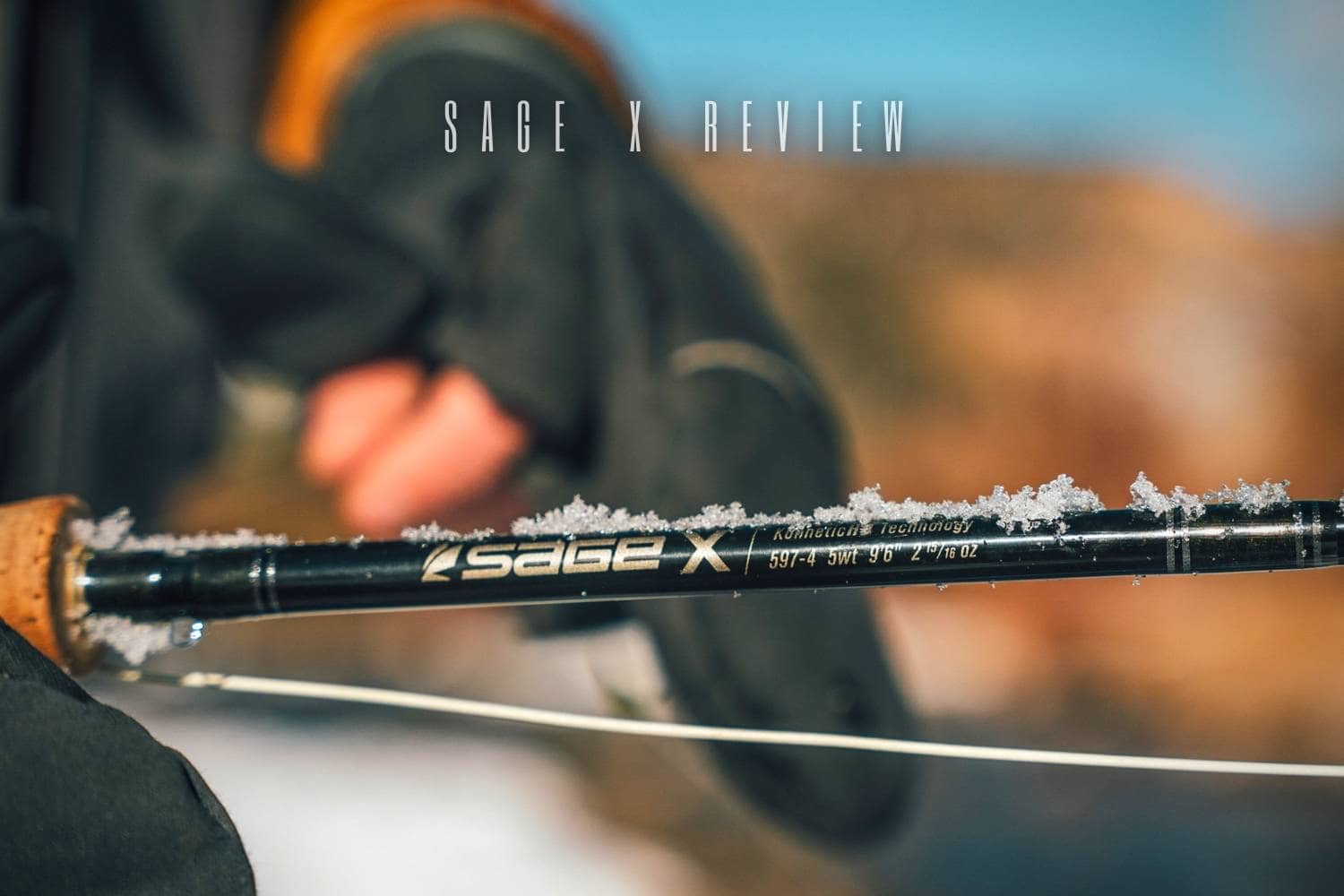
The earlier-generation Sage X was defined by recovery, not by a promise to improve every cast. The earlier-generation Sage X emphasized tight loops, high line speed, and useful feedback across a broad family. The honest question is whether the exact X configuration complements your stroke and fishing distance.
Keep this Sage X generation distinct
The earlier-generation Sage X family included single-hand rods in several line weights and lengths as well as longer two-handed models. Earlier-generation Sage X details included fast action, four-piece construction, KonneticHD blank technology, ceramic stripping guides, chrome snake guides, a dark finish, an anodized reel seat, and an aluminum tube. Those details describe the period discussed, not every rod later positioned in the same slot.
A broad Sage X reputation cannot replace exact identity. Confirm the model inscription, line designation, length, section count, and handle arrangement. A trout 5-weight and a long Spey model do not share one useful casting verdict merely because both carry an X.
Hands-on scope, model details, and buyer fit
- Hands-on scope
- No exact Sage X configuration has a completed hands-on finding here. Treat the performance points as earlier-generation attributed characteristics and verify them with the marked rod, intended line, and representative fly.
- Earlier-generation specifications
- Fast action, KonneticHD construction, four sections, low swing-weight emphasis, configuration-specific handles, dark hardware, guide sets, and protective tube details came from the period description.
- Buyer fit
- An earlier-generation X suits a caster who can use quick recovery and wants line speed without surrendering all tip communication, provided the exact rod works at the distances and fly sizes that matter.
Recovery changes timing
A blank that straightens quickly can reduce lingering tip movement and help form narrow loops. It also makes a mistimed stop visible. The earlier-generation X combined a crisp profile with enough flex to maintain connection while producing rapid recovery. Treat that as a character to examine through repeated casts, not as a guarantee of automatic accuracy.
Begin with a comfortable amount of line, accelerate smoothly, and stop without punching. Watch whether the tip settles or sends waves down the line. Add distance only while loop shape remains controlled. If accuracy vanishes when more power enters the stroke, the caster and setup have reached their practical boundary regardless of the rod’s theoretical reserve.
Close-range feel deserves its own test
Despite its broad-range reputation, some casters may find the tip firm and close-range feedback uneven. That is a meaningful caution for small streams. With little line beyond the guide, a fast rod may not bend enough to announce the load, especially with a long leader and tiny fly.
Try short presentations, roll casts, and quick pickups before deciding that the X is an all-water answer. A rod that excels from the middle distance outward may still be awkward beneath overhanging branches. If compact water dominates, choose on close control rather than on loop speed observed farther away.
Line choice should reveal, not disguise
Start at the marked line weight. Compare a conventional taper with any technique-specific option in the same designation, paying attention to how much line is outside the tip during real fishing. A concentrated head can help load close, but an overly aggressive choice may make a quick rod feel clubby and conceal its natural recovery.
Match leader and fly to the configuration. A trout X should not be judged using a payload intended for a much heavier model. Likewise, a larger X built to move bigger flies should not be condemned for lacking the delicacy of a lighter specialist. The family span only becomes useful after each tool stays inside its own line-weight job.
Low swing weight is a system result
The earlier-generation Sage X emphasized a light, quick feel, while reel choice could still affect balance. A bare rod’s mass does not tell the whole story. Reel weight, line, backing, grip dimensions, and where the hand sits all alter leverage.
Mount the actual reel, hold the setup horizontally, then repeat mends and pickups. Notice wrist effort rather than chasing a perfectly level balance point. Some anglers prefer slight tip presence because it helps track the cast; others want the center closer to the hand. Comfort over a fishing session matters more than a showroom number.
What to inspect on an older X
Check every ferrule under strong light, inspect the blank near guide feet, and look for cracked finish or impact marks. Turn the reel-seat hardware slowly and verify that it holds the intended reel. Examine cork around the narrower grip profile, where wear may affect comfort. Make sure all sections share consistent markings and finish.
The protective tube and sleek cosmetics are welcome, but they do not establish structural condition. Assemble the rod, make several controlled casts, and recheck section alignment. Any ferrule that rotates or works loose deserves attention before the rod reaches the water.
Performance questions
| Area | Earlier-generation character | Decision test |
|---|---|---|
| Loop formation | Fast recovery and line-speed emphasis | Repeat accurate loops without forcing the stop |
| Close work | Potentially firmer feedback with little line out | Cast beneath normal small-water constraints |
| Balance | Light blank with reel-dependent feel | Use the actual reel for mends and pickups |
| Family breadth | Single-hand and longer configurations | Keep conclusions tied to the marked model |
The caster matters as much as the blank
An improving angler can grow into the X, but a quick rod will not repair an inconsistent stroke by itself. It may reward a compact, progressive acceleration while exposing an early forward move or an abrupt application of power. Cast beside a more moderate rod and compare repeatability, not the single longest delivery.
For an experienced caster, the X’s earlier-generation promise is clearer: speed and tracking with enough connection to fish rather than merely shoot line. Even then, line, leader, reel, and exact model decide whether the setup feels coherent. Reputation should start the trial, never end it.
Final verdict on the earlier-generation Sage X
The X earned attention through a demanding combination: quick recovery, powerful line movement, and a measure of feel. Its broad family offered tools for very different settings, which is precisely why one blanket verdict is unsafe. The right X is the exact configuration that remains accurate and comfortable through your ordinary fishing range.
Confirm the rod, build a balanced setup, and test close as carefully as far. These conclusions stop with this earlier-generation Sage X family. A replacement, sibling, or later rod must prove its own taper, components, and behavior instead of inheriting the X findings.
