
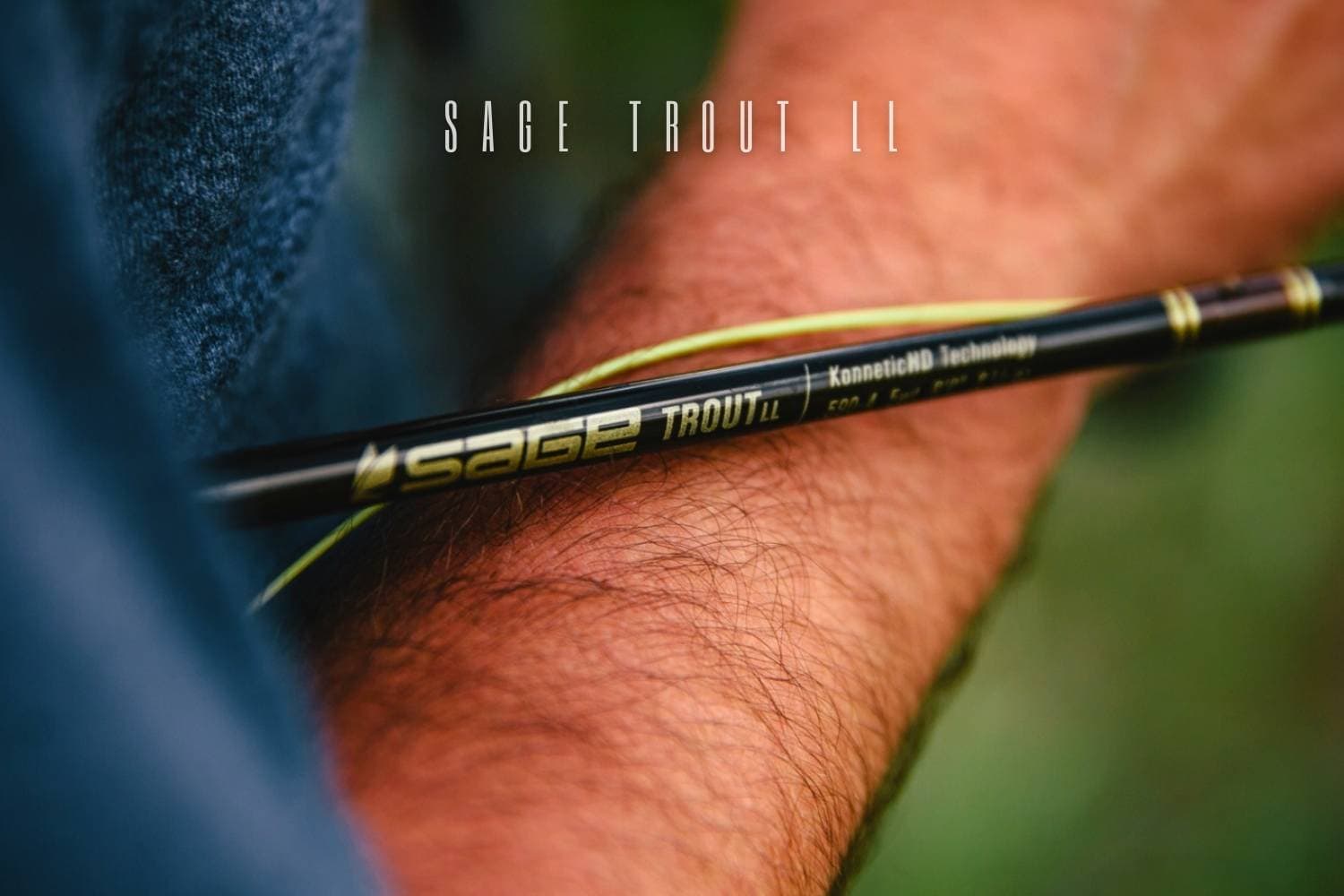
In brief: Sage TROUT LL puts a quiet dry-fly delivery ahead of brute reserve. The earlier-generation family favored relaxed timing and a compatible line, especially from about twenty to fifty feet.
Earlier-generation TROUT LL at a glance
- Casting behavior
- The TROUT LL loaded with a gentle stroke and did not require the caster to force the blank. Heavier flies and aggressive lines reduced the delicacy that made the earlier-generation rod distinctive.
- Earlier-generation components
- KonneticHD graphite construction, a supple tip, walnut reel-seat insert, bronze uplocking hardware, classic wraps, and an aluminum tube; the earlier-generation family offered 3- through 6-weight models from 7 feet 9 inches to 9 feet.
- Best fit for the specialist role
- Sage TROUT LL is best considered for a dry-fly angler who wants relaxed timing, light-tippet protection, and precise presentation, especially on spring creeks, smaller rivers, lakes with rising trout, and measured dry-fly distances.
Presentation before power
The core promise of Sage TROUT LL is controlled presentation. At ordinary dry-fly range, the rod delivered small flies accurately while preserving a quiet turnover. The rod gives the caster time to shape the loop and protect a light leader. That benefit is most visible with dry flies, not with rigs that overwhelm the supple tip.
Relaxed timing
Sage TROUT LL favors an open, relaxed stroke. The TROUT LL loaded with a gentle stroke and did not require the caster to force the blank. Rushing the cast wastes the feedback built into the medium action. Waiting for Sage TROUT LL to load turns a gentle movement into useful line speed without making the delivery noisy.
Protection at the tip
Fine tippet benefits from the softer upper section of Sage TROUT LL. The supple tip protected fine tippet and made roll casts useful when rear clearance disappeared. The same softness that cushions a fish also limits authority with bulky flies. That is a design exchange, not a contradiction in the rod's purpose.
Keep the line in character
A compatible line keeps Sage TROUT LL inside its intended character. Heavier flies and aggressive lines reduced the delicacy that made the earlier-generation rod distinctive. Long, refined front tapers support delicacy; aggressive heavy tapers risk obscuring the feedback. The heavier models can accept more authority, but they remain part of a presentation-led family.
The decision in practical terms
TROUT LL favors presentation, relaxed timing, and light-tippet protection. The earlier-generation TROUT LL worked most naturally from about twenty to fifty feet, with a gentle stroke, tight-loop control, and a supple tip. That makes the rod coherent for spring creeks, smaller rivers, and rising trout on lakes. Bulky rigs and aggressive lines work against the quality that defines it.
How to assess this exact rod
A TROUT LL trial should protect the delicacy being judged. Confirm the exact weight and length, assemble all four sections, and inspect the mahogany blank, classic wraps, slim grip, walnut insert, and uplocking hardware. Choose a refined line rather than an aggressively heavy front taper. Begin around twenty feet with a long leader, then extend toward fifty while watching turnover and loop shape. Try a roll cast where safe and notice how the tip cushions the leader. Only afterward add a larger practice fly; if it overwhelms the presentation, accept that result instead of compensating with force.
Protect delicacy through the whole setup
A presentation rod can lose its character when paired with an unnecessarily heavy front taper. The earlier-generation TROUT LL needed a line and leader matched to the model; dry flies, long leaders, fine tippet, and roll casts were central tasks. The rod’s softer upper section supports those jobs by cushioning sudden movement. It should not be mistaken for extra authority with a large payload.
Choose the exact earlier-generation Sage TROUT LL configuration by line weight, length, casting range, technique, water type, grip fit, balance, and overall condition
| Decision point | Earlier-generation performance | Reader use |
|---|---|---|
| Twenty to fifty feet | The earlier-generation family worked most naturally from twenty to fifty feet. | Compare accuracy and turnover at realistic rise-form distance. |
| Fine tippet | The supple tip protected light tippet during presentation and play. | Use a leader and drag setting consistent with that purpose. |
| Bulky flies | Larger payloads reduced the earlier-generation rod’s delicacy. | Select a stronger taper when heavy flies are routine rather than occasional. |
Who should choose this Sage TROUT LL
The earlier-generation TROUT LL is a coherent choice for dry-fly anglers who want timing, accuracy, and tippet protection to remain visible in the cast. Its softer upper section and measured range are strengths when the setup stays light. Bulky flies and aggressive tapers expose the specialist boundary. A later trout rod may share the job, but it cannot borrow this family’s feel without separate support.
These casting and handling traits belong to the earlier-generation Sage TROUT LL. A later Sage trout rod, adjacent model, or similar dry-fly specialist must establish its own action and configuration before being treated as equivalent. The decisive test is whether a small dry lands with control while the leader straightens quietly, not whether the blank can be driven like a faster design.
