
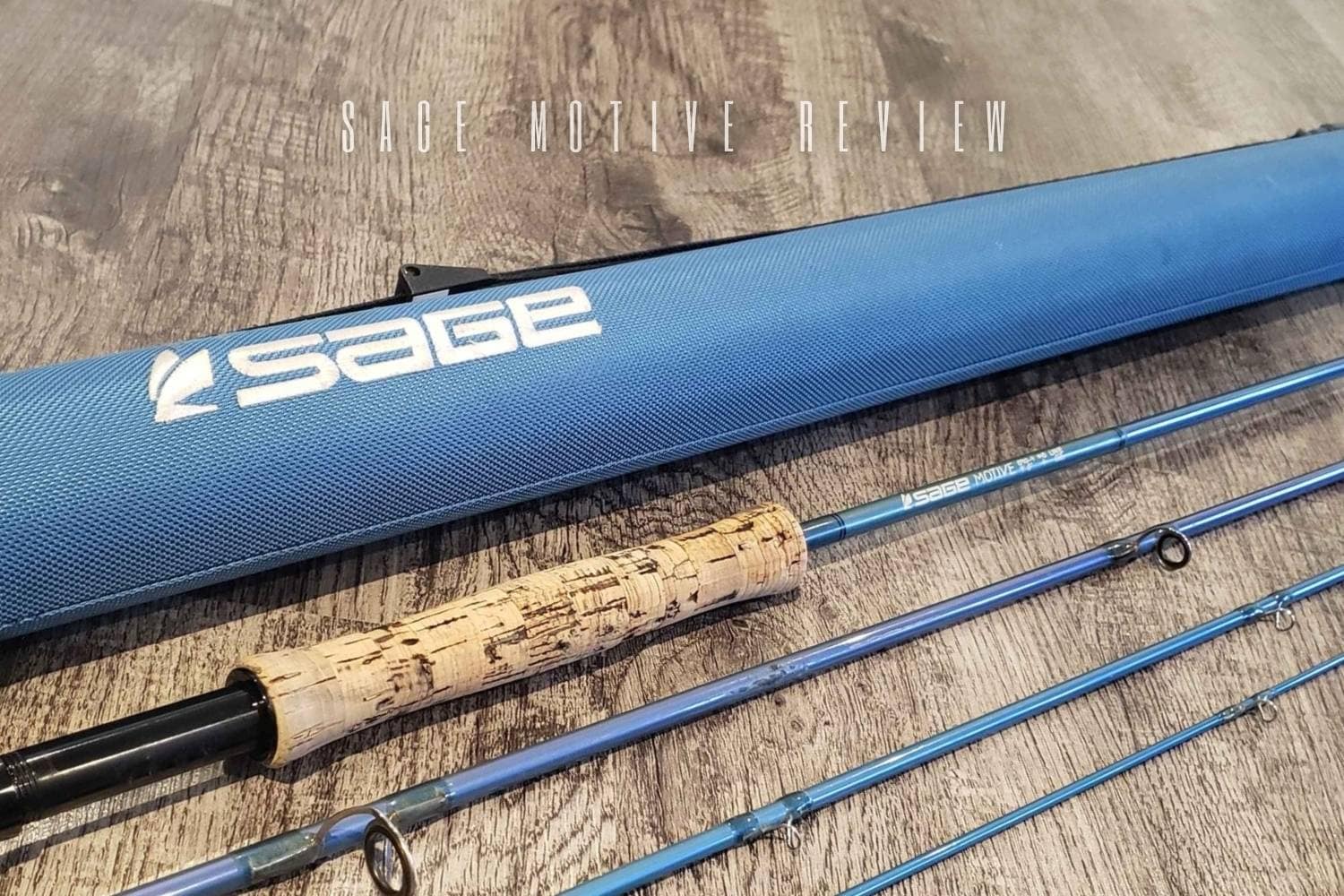
The earlier-generation Sage Motive was designed around saltwater practicality rather than minimal mass. Its blue blank, enlarged guides, fighting-butt hardware, and strong lower section served line speed and fish pressure, while weight was openly treated as the main compromise.
A defined saltwater role
Earlier-generation Motive specifications covered nine-foot rods across heavier line weights, with full-wells grips, fighting butts, large guides, anodized reel-seat hardware, fast-action labeling, and four-piece travel form. Those features point toward moving larger flies and managing stronger fish rather than producing the most delicate trout presentation.
Configuration still governs purpose. Bonefish, redfish, tarpon, and other saltwater targets do not share one ideal line weight. The fly, wind, fish, boat or shore setting, and required pressure should determine the model. The Motive name alone cannot answer those questions.
What this Motive generation can tell you
- Hands-on scope
- No exact Motive configuration has a completed hands-on finding here. Treat the performance discussion as earlier-generation attributed guidance and verify it with the marked rod, intended line, and representative fly.
- Earlier-generation model details
- Earlier-generation Motive details included a Bluefin Blue finish, Graphite IIIe construction, a fast-action label, enlarged guides, a full-wells grip, a rubber-capped fighting butt, an anodized reel seat, four sections, and a nylon tube.
- Buyer fit
- Motive makes sense for an angler who accepts more mass in exchange for practical saltwater hardware and a powerful, somewhat more accessible bend than the fastest rods.
Fast on paper, less abrupt in practice
Sage labeled Motive fast, though the earlier-generation rod felt closer to medium-fast beside the quicker Sage X. That comparison does not create a formal action measurement. It does suggest a rod that may load more visibly than an extremely stiff saltwater blank.
Test with the intended line and fly. A concentrated head can make a rod feel deeper and quicker to load, while a longer taper can reveal tracking during carry. Judge loop stability, pickup, and recovery in wind rather than choosing from the action word alone.
Weight is the honest trade
The earlier-generation Motive carried more mass and swing weight than lighter alternatives, making fatigue its main compromise. A heavier setup can feel stable and durable, yet repeated false casts and high rod angles can fatigue the forearm. The effect increases with line weight and reel choice.
Assemble the complete system and make realistic saltwater movements: quick pickup, one or two back casts, a haul, line management, and a sustained hold. A showroom wiggle will not reveal cumulative leverage. If fatigue appears early, a lighter model or different balance may produce better fishing despite giving up some perceived ruggedness.
Hardware serves knots and pressure
The earlier-generation Motive used large stripping and snake guides to pass substantial connections and line during saltwater work. The fighting butt and full-wells grip support leverage, while double uplocking hardware secures the reel. These are functional choices, not proof that condition remains sound.
Inspect guide interiors for grooves, wraps for cracks, and the reel seat for salt deposits or binding. Check the rubber cap and fighting butt for looseness. Run a clean cloth through contact areas; snagging can reveal damage that the eye misses.
Distance claims need context
The earlier-generation Motive offered accuracy across several ranges, with less feel close and diminishing distinction at extreme distance. Distance on open water depends on wind angle, fly resistance, line, leader, and casting skill. A number reached with a practice fly does not prove controlled presentation under fishing conditions.
Evaluate the rod at the first-shot distance that occurs most often. Saltwater opportunities can punish excessive false casting, so quick loading and stable turnover may matter more than maximum carry. If the rod only performs after several back casts, it may not fit the intended fishery.
Saltwater care remains mandatory
Anodized aluminum and salt-oriented guides help, but they do not eliminate corrosion or trapped salt. Rinse the rod and reel with fresh water after exposure, allow them to dry separately, and inspect joints and hardware before storage. Keep the nylon tube dry and clean.
Separate sections gently and avoid twisting against grit. Periodically check ferrule fit and guide alignment. A robust rod can still fail after impacts, loose joints, or neglected hardware; “saltwater” describes purpose, not immunity.
Motive decision table
| Priority | Fit | Reason to verify |
|---|---|---|
| Saltwater hardware | Strong | Large guides, fighting butt, and locking seat require condition checks |
| Large flies and wind | Configuration-dependent | Match line weight and taper to payload |
| Low all-day swing effort | Compromised | Weight was the recurring earlier-generation drawback |
| Close delicacy | Secondary | Saltwater-oriented family prioritized stronger work. |
Assessing the exact rod
Confirm line weight, length, and all four matching sections. Examine the blue blank for impact marks, especially near ferrules and the lower section. Operate both locking rings, mount the reel, and inspect the grip for deep wear. Cast with a representative fly in controlled space.
Decide whether the additional mass buys capability you actually use. If saltwater hardware, stronger line weights, and fish pressure are central, the compromise can be coherent. If the rod spends most days making light casts, its defining features may become needless burden.
Final verdict on the earlier-generation Sage Motive
Motive’s identity is practical and unambiguous: saltwater-oriented components, useful lower-blank authority, and a blue four-piece form built for demanding tackle. The counterweight to that purpose is literal weight. An angler who understands the target may accept it; an angler chasing effortless swing should compare alternatives.
Keep this verdict with the earlier-generation Motive generation. Sage X comparisons apply only to that earlier period, and no later Sage saltwater rod inherits Motive feel, construction, or performance conclusions.
