
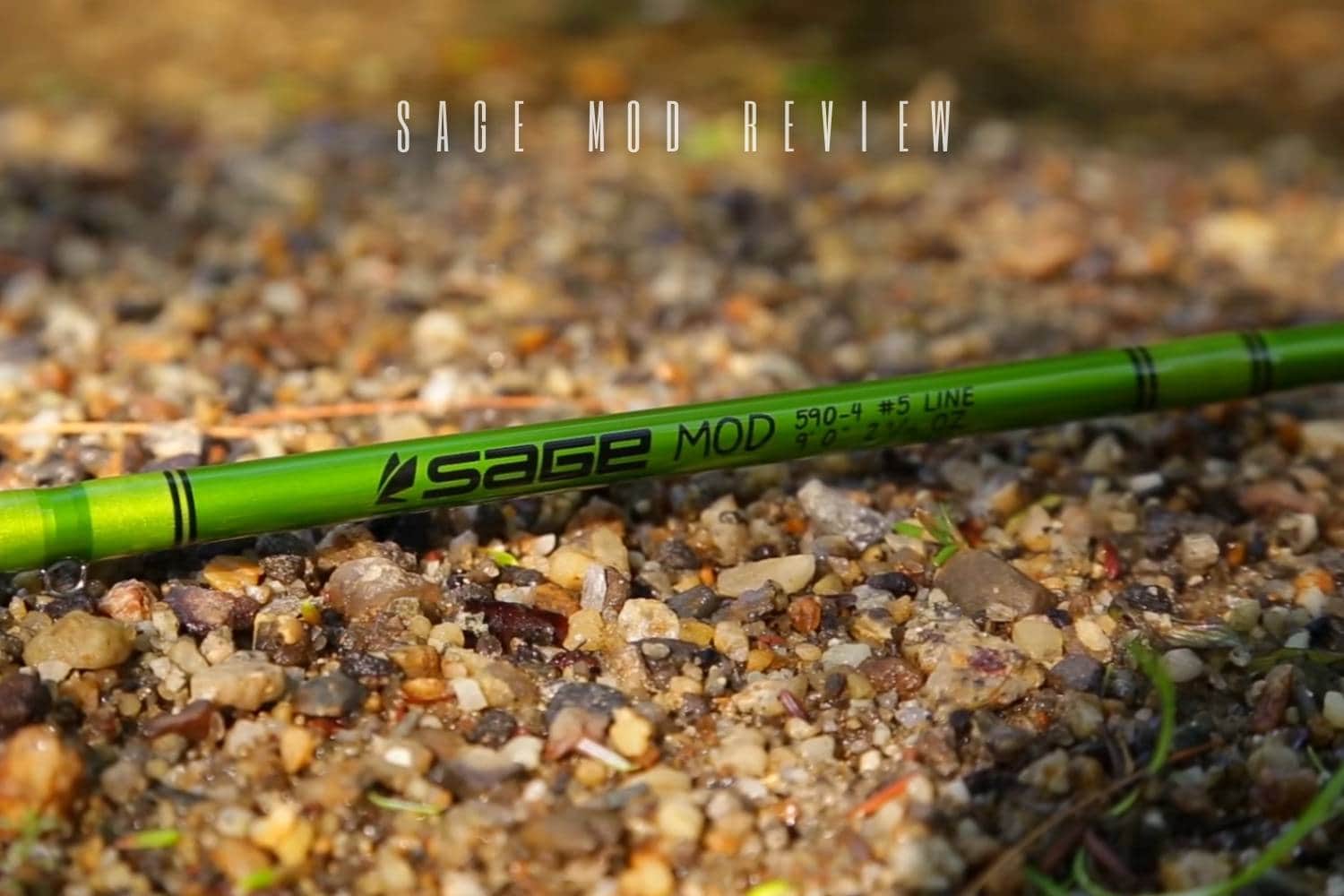
The Sage MOD was built around restraint. In its earlier-generation form, it was described as a moderate-action trout specialist for accurate, delicate work at short and middle distances. That focus is more useful than treating it as a universal Sage or applying its character to another generation.
A trout tool with a narrow brief
The MOD occupied a deliberate middle ground between quicker Sage rods and a slower presentation design. Its role was freshwater trout fishing where line control, mending, roll casts, and a controlled delivery mattered more than brute distance. The family description covered lighter line weights and mostly familiar trout lengths, all in a four-piece layout.
That role should shape the decision. A moderate trout rod is not defective because it lacks the authority of a heavy streamer or saltwater rod. It succeeds when it makes a modest cast repeatable, protects light tippet, and gives the angler time to feel the blank load. Anyone shopping for wind penetration or bulky weighted rigs should start with a different design instead of asking the MOD to abandon its defining strength.
Keep three kinds of statements separate
- Hands-on scope
- No exact MOD line weight is tied to a clearly identified hands-on session, so broad praise cannot be treated as a result for every configuration.
- Earlier-generation specifications
- Moderate action, four sections, lighter trout line weights, cork grips, an aluminum tube, and the jade-and-black visual treatment were associated with the MOD family described at the time.
- Buyer fit
- The MOD makes the most sense for an experienced trout angler who values tempo and presentation inside a practical fishing range, not for someone choosing by maximum line speed.
The cast begins with tempo
A moderate blank asks the caster to wait. Earlier-generation MOD descriptions emphasized comfort from close range through the middle distances, with the rod’s most convincing work occurring around ordinary trout presentations rather than at the edge of the field. If your stroke is abrupt, the rod may feel slow until timing settles. If your stroke follows the bend, that extra moment can turn into control.
Try it with a dry fly, a light nymph arrangement, and the leader length normally used. Watch how the loop forms after a relaxed stop. Then make a roll cast and a reach mend. These moves are more revealing than one heroic overhead cast because they test the exact line-management duties for which the MOD was described.
Presentation is more than softness
Delicacy does not come solely from a flexible tip. Leader design, fly mass, line speed, trajectory, and the caster’s stop all affect how a fly lands. The earlier-generation MOD was characterized by lively connection, accurate placement, and a tip intended to support controlled turnover. Treat that as a design character to test, not a guarantee that every cast arrives gently.
The same distinction applies while fighting fish. A bending rod can cushion lighter tippet, yet the angler still controls pressure through angle, reel drag, and movement. Do not turn a moderate action into a promise about fish size. Match the line weight to the water and likely trout, then let the taper supply feedback inside that appropriate job.
Calm water reveals the MOD; hard weather exposes it
This rod was intended for calmer conditions rather than service as a big-water launcher. That boundary is valuable. On a sheltered creek or measured river reach, a moderate rod can make mending and placement feel natural. In strong wind, the same timing and fuller bend may demand more line control than a faster tool.
Heavy split shot, large articulated streamers, very long carries, and forceful wind casts sit outside the clearest MOD use case described. An owner can experiment, but those tasks should not define the purchase. A specialist earns its place by making its chosen work better, not by surviving every possible assignment.
Earlier-generation component character
The MOD was associated with a jade blank, dark reel seat, wood insert, chrome guides, contrasting wraps, cork handle, and an aluminum tube. Those details explain its period identity, but condition is now decisive. Check the blank around ferrules, inspect every wrap in bright light, confirm that guides sit straight, and make sure reel-seat hardware moves cleanly.
Cork comfort is individual. The snub-nose or half-wells descriptions suggest a trout-focused grip, but hand size and casting style determine whether it actually fits. Mount the reel you intend to use and hold the rod at fishing angle. A beautifully finished handle that creates pressure points after repeated mends is still the wrong handle for you.
Fit matrix
| Task | Expected fit | Reason |
|---|---|---|
| Dry-fly placement | Strong | Moderate tempo and presentation-led earlier-generation role |
| Mending and roll casts | Strong | Line control was central to the described trout purpose |
| Wind and heavy rigs | Limited | Its design limits caution against big-water and forceful applications |
| Extreme distance | Poor priority | Its identity centered on short-to-middle-range precision |
How to assess an older MOD
Begin with identity. Confirm the exact line weight, length, and four-piece set. Look for inconsistent finish, an unmarked replacement section, or ferrules that seat differently. Then cast at a real trout distance with a conventional line before changing tapers. A line that is too aggressive can make the rod feel quicker while hiding the progressive rhythm that defines it.
Finally, decide whether its limitations are welcome. If you already own a forceful rod, the MOD may provide a contrasting presentation tool. If this would be your only rod and your fishing includes wind, heavy flies, and broad water, the specialization may feel restrictive. The answer depends on the rest of the quiver as much as the MOD itself.
Final verdict on the earlier-generation Sage MOD
The MOD’s clearest virtue is not that it does everything; it is that it invites a calmer cast and gives trout techniques room to breathe. Its moderate earlier-generation design aligns with dry-fly placement, mending, and measured presentations. The trade is reduced authority when conditions or rigs demand speed and force.
Choose this MOD only if that deliberate rhythm is the point. Confirm condition and configuration, cast it at the distances you fish, and leave later Sage models to earn their own conclusions. A successor, sibling, or similarly positioned trout rod does not inherit the MOD’s feel or its earlier-generation specifications.
