
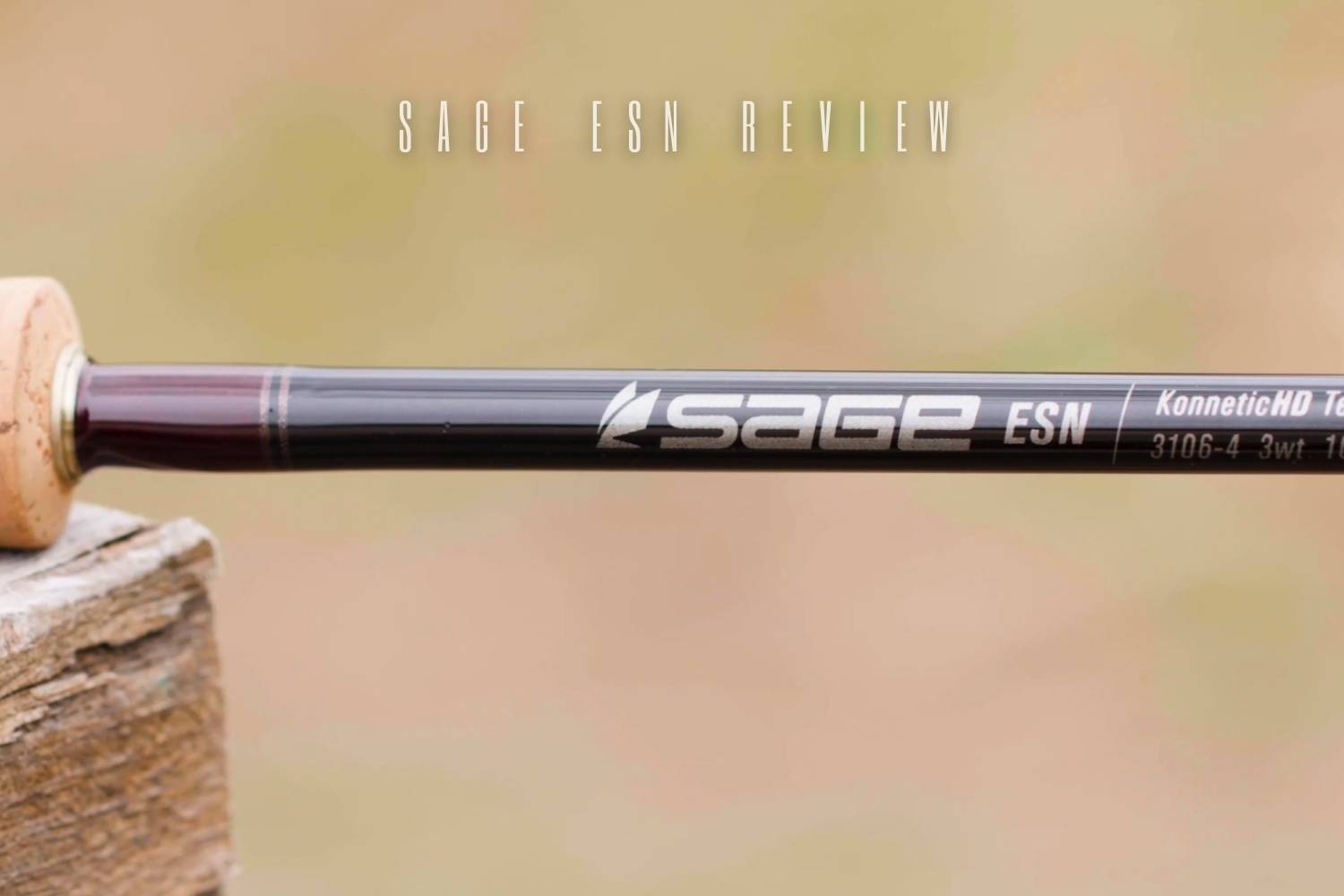
Sage ESN is a technique rod, not a general trout rod with extra length. The earlier-generation series was framed around tight-line and European-style nymphing, where reach, balance, recovery, and contact matter more than ordinary overhead-casting versatility. That specialist boundary should remain intact.
The job explains the shape
Earlier-generation ESN options included lighter line weights in ten-foot lengths, plus a longer 3-weight, all intended for short-line and long-line nymphing. A long, light rod extends reach and helps manage line off the water, but the benefit only appears when the angler uses a contact-nymphing system. Length alone does not make an ordinary rod “Euro.”
Think first about water size, likely fish, rig mass, and how often the rod stays elevated. A compact creek may make extra length awkward beneath branches. A broad run can reward reach. The correct ESN is the one that controls the intended drift without making the tip, wrist, or shoulder fight leverage all day.
Three limits that protect the buying decision
- Hands-on scope
- No specific ESN configuration is tied to a clearly identified hands-on session. General praise therefore cannot become an exact hands-on finding.
- Earlier-generation model details
- Medium action, four sections, KonneticHD blank construction, a down-locking aluminum reel seat, ceramic stripping guide, single-foot guides, dark finish, and an aluminum tube were tied to the ESN generation described.
- Buyer fit
- This ESN is best considered by an angler committed to contact nymphing who can evaluate balance with the reel, leader system, and flies actually used.
Contact without unnecessary force
The earlier-generation ESN was characterized by sensitivity, recovery, and shock absorption. In practice, contact depends on more than the blank. Leader diameter, sag, current speed, fly weight, rod angle, and the amount of line beyond the tip all influence what reaches the hand. A sensitive rod cannot rescue an uncontrolled leader.
Use enough fly weight to reach the intended lane, not enough to drag the rig unnaturally. Keep the rod angle comfortable and lead without pulling the flies. The ESN’s specialist form should help maintain a direct relationship with the rig; it should not encourage constant tension that removes natural drift.
Balance matters more on a long light rod
The period description placed the down-locking reel seat farther toward the butt to help counter tip leverage. That approach can alter the setup’s center of mass, but reel choice remains crucial. A featherweight reel is not automatically best if it leaves the long blank feeling tip-heavy.
Mount the actual reel, line, and leader. Hold the rod in the fishing position for several minutes, then make repeated lifts and reach changes. Pay attention to forearm tension and grip pressure. A slightly heavier reel may reduce perceived tip load; too much rear weight can create a different kind of fatigue. The useful balance is personal and dynamic.
Medium action with quick recovery
The ESN action was characterized as refined and medium, with an emphasis on blank recovery. Those qualities are not contradictory. Action describes where the rod bends; recovery describes how it returns. A rod can load through more of the blank and still settle efficiently after movement.
That combination can protect lighter tippet while preserving contact, provided the chosen configuration has enough authority for the rig and fish. Do not turn “shock absorption” into a promise about any fish size. Use side pressure, adjust reel drag, and choose tippet appropriate to the water. The rod participates in the system; it does not replace sound fish handling.
What it does not need to be
An ESN can make an overhead cast, but general dry-fly range is not the right purchasing standard. Long leaders, thin level sections, and weighted nymphs behave differently from a conventional fly line. If mixed dry-fly fishing dominates, a general trout rod may offer a simpler compromise.
Likewise, a specialist nymph rod should not be selected merely because it is long. Indicator rigs, heavy split shot, or repeated streamer casting may require a different taper and line system. Choose ESN when contact technique is the primary job, not when its dimensions happen to sound versatile.
Check the fragile places
Inspect every guide foot, wrap, and ferrule because a long light blank experiences leverage throughout its sections. Examine the tip carefully for impact damage and verify that all pieces share markings and finish. Operate the down-locking seat fully and make sure the reel remains secure when the rod points upward.
The earlier-generation protective tube helps in transit, but storage does not prove condition. Assemble the rod, align the guides, make controlled movements, and recheck the ferrules. Any section that rotates during a nymphing motion can disrupt both contact and durability.
Technique fit table
| Need | Why ESN may fit | What to test |
|---|---|---|
| Tight-line reach | Ten-foot and longer earlier-generation options | Branch clearance and lane control |
| Contact | Sensitivity and recovery emphasis | Leader sag with the normal rig |
| Tippet protection | Medium action and fuller bend | Pressure control with appropriate fish size |
| All-purpose trout work | Limited priority | Whether mixed techniques justify another rod |
Choosing between configurations
Lower line designations can emphasize finesse, while a longer or stronger option may help with reach, current, or larger flies. Those are tendencies to test, not universal rules. Compare exact rods with the same reel and representative leader so that balance and recovery, rather than setup changes, drive the judgment.
Do several fishing motions: tuck cast, controlled lift, lead, reach, and hook set. A lawn distance contest reveals almost nothing about an ESN rod. The winning configuration is the one that reduces unnecessary movement while preserving drift control.
Final verdict on the earlier-generation Sage ESN
This earlier ESN family has a clear reason to exist: long, balanced contact-nymphing control with a medium bend and quick recovery. Its specialist strengths become meaningful only with an appropriate leader, fly weight, reel, and technique. Judged as a universal trout rod, it answers the wrong question.
Choose the exact earlier-generation ESN after testing balance and drift motions, not because another Sage ESN generation shares the name. No successor or sibling automatically inherits these components, lengths, or conclusions.
