
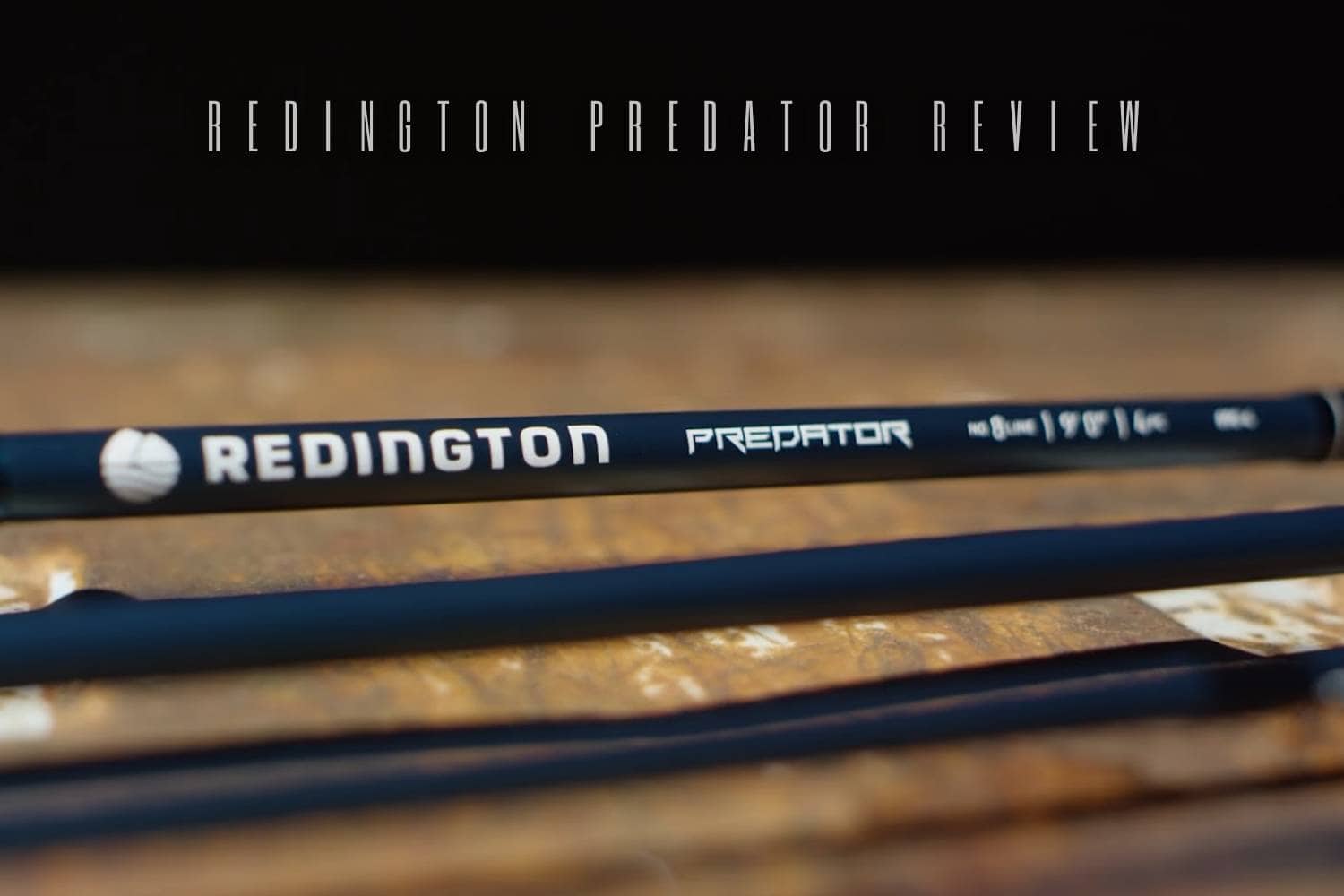
The earlier-generation Redington Predator was a payload-and-fish tool. Its earlier-generation purpose centered on large flies, heavier lines, wind, and strong fish, where butt authority and durable hardware matter more than delicate close-range feel. The family’s many configurations make exact identification essential.
Choose the target before choosing the Predator
Earlier-generation Predator specifications covered a wide span of line weights, several handle arrangements, four sections, fast action, corrosion-conscious hardware, and fighting butts on relevant versions. That breadth served different species and fly sizes. A lighter freshwater configuration and a double-digit saltwater or toothy-fish rod are not interchangeable.
Write down the largest fly used regularly, typical wind, line type, expected fish, and casting distance. Then select the line weight that handles that real load. Choosing the heaviest Predator “for versatility” can make ordinary fishing tiring and blunt. Choosing too light can compromise turnover and fish control.
Hands-on limits and buyer fit
- Hands-on scope
- Hands-on findings are unavailable for an exact Predator configuration. Treat the construction and performance points below as earlier-generation attributed characteristics, then cast the marked rod with its intended payload.
- Earlier-generation model details
- Earlier-generation Predator details included fast action, a powerful mid and butt section, anodized reel-seat and guide hardware, ceramic-insert stripping guides, alignment dots, fighting-butt options, four pieces, and a Cordura-style tube.
- Buyer fit
- An earlier-generation Predator makes sense when payload, weather, and fish pressure justify its mass and stiffness. It is a poor default for delicate close work.
Payload is the honest performance test
A large wind-resistant fly asks more of a rod than a small practice tuft. The earlier-generation Predator was fast and powerful, with the capacity to move heavier lines and flies at distance. Test that proposition with a safe representative fly, leader, and line. Watch whether the loop stays stable and whether the rod recovers without excessive vibration.
Do not chase distance by overpowering the stroke. Build line speed through a smooth acceleration, a firm stop, and an efficient haul. If the setup needs brute force to turn over the normal fly, either the line system is mismatched or the chosen weight is wrong. A purpose-built rod should make the required payload manageable, not merely possible once.
Close range is the deliberate compromise
The earlier-generation Predator prioritized longer-range authority over short-range feel and accuracy. That is consistent with a stout fast rod carrying heavy tackle. With little line out, the blank may not bend enough to announce the load, and a heavy setup can feel cumbersome.
If most shots arrive quickly and close, test pickups and single back-cast deliveries with the exact fly. A rod intended for distant carrying may be slower to organize in that setting. Choose a different taper if close reaction shots dominate; do not assume maximum power is automatically safest or easiest.
Butt strength is only part of fish control
The Predator’s period identity emphasized a strong lower blank and fighting-butt options. Those features can support pressure, but landing a fish still depends on line class, knots, drag, rod angle, and the angler’s movement. High-sticking can break a powerful rod because the tip is asked to absorb force the butt should carry.
Use side pressure and keep the bend distributed. A fighting butt helps brace heavier configurations, yet its presence does not mean every Predator is suitable for every large species. Exact line weight and the rest of the tackle system define the boundary.
Freshwater and saltwater require separate care
Earlier-generation anodized hardware and ceramic guide inserts were durable choices, but those materials do not make a rod maintenance-free. After exposure to salt, rinse with fresh water, allow components and tube to dry, and inspect crevices around guides and reel-seat hardware.
For freshwater predators, large flies and sinking lines may still demand the same payload authority without the corrosive environment. Choose configuration by fly and fish rather than by water label alone. A trout-size application should not inherit conclusions drawn from a heavier salt setup.
Condition checks for a high-load rod
Examine the blank around ferrules and the lower sections for impact marks. Inspect wraps at stripping guides, because those guides handle significant line forces. Turn both reel-seat rings, verify that the reel foot sits securely, and check the fighting butt for looseness or compression.
Alignment dots speed assembly but do not prove ferrule health. Seat each section, cast under controlled load, and confirm that nothing rotates. A tube is useful for travel, although trapped grit or moisture can still damage finish and hardware.
Predator suitability table
| Demand | Expected fit | Caution |
|---|---|---|
| Large or bulky flies | Core role | Match the exact weight and line taper |
| Wind and longer shots | Strong earlier-generation emphasis | Technique still matters; do not force |
| Close delicate casts | Weak priority | Stiffness and mass can reduce feedback |
| Strong fish | Configuration-dependent | Use correct tackle and side pressure |
Who benefits from the extra authority
An angler who already knows the payload and target can use Predator’s earlier-generation design purposefully. Someone seeking one vague “big fish rod” risks selecting too much tackle. The rod should solve a repeatable problem: turning over a particular fly, handling wind on a known fishery, or applying pressure within an appropriate line system.
Try the rod with the reel and line intended for it. Total setup weight matters during repeated false casts, retrieves, and boat-side holds. If fatigue encourages poor mechanics, a lighter or differently balanced configuration may fish better even when it gives up some reserve.
Final verdict on the earlier-generation Redington Predator
The Predator’s strongest case is straightforward: it was built for loads and fish that overwhelm a delicate trout rod. Its honest costs are weight, stiffness, and reduced close-range communication. Those compromises are rational when the job genuinely needs them.
Confirm the exact configuration and test a realistic payload before deciding. Keep every conclusion attached to this earlier-generation Predator family. A later Predator, adjacent Redington, or differently weighted sibling must establish its own casting and fighting behavior.
