
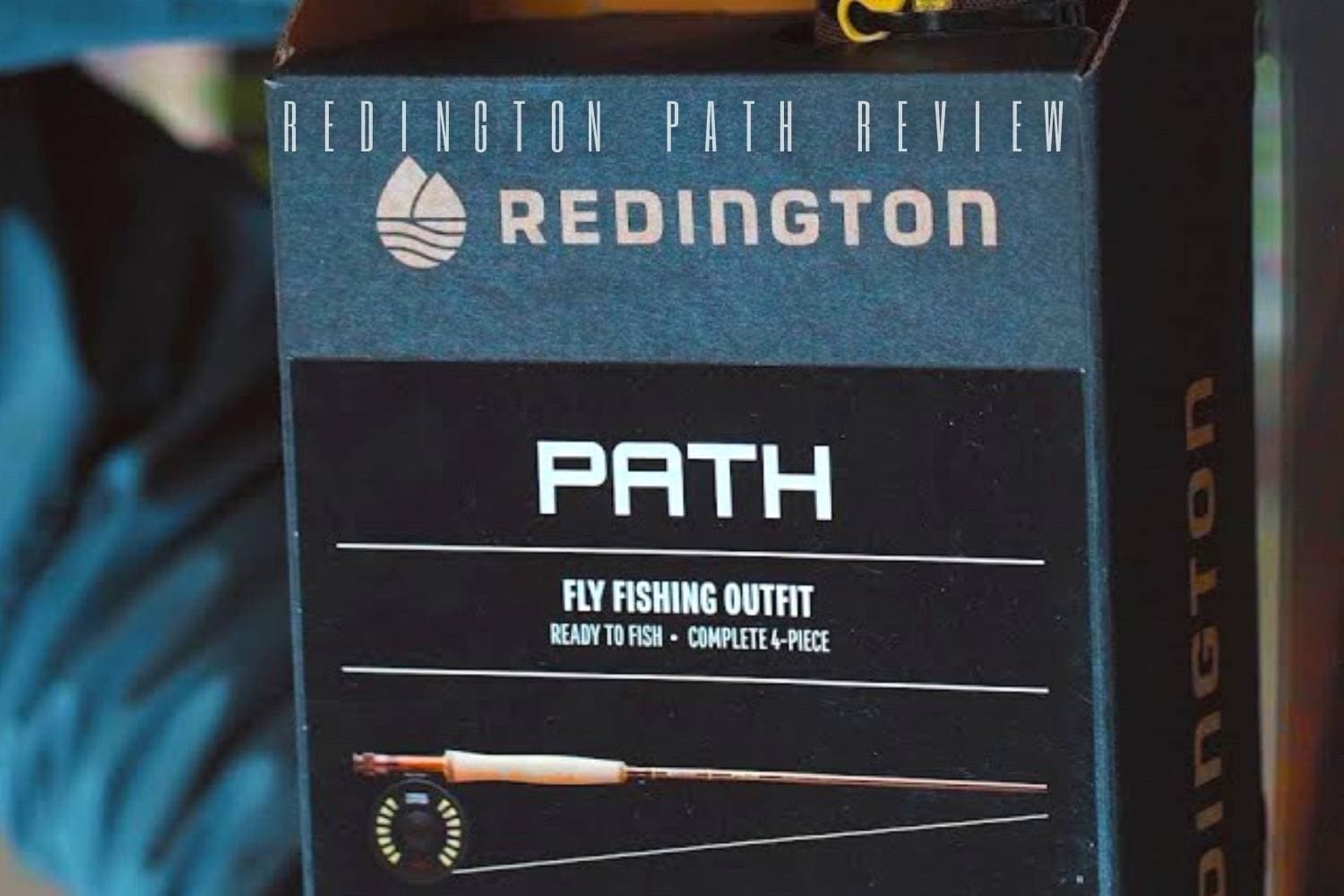
In brief: Path II is an outfit decision as much as a rod decision. The earlier-generation package joined a medium-fast blank, reel, line, and protective tube, so convenience has value only when those individual pieces still work together.
Earlier-generation Path II at a glance
- Casting and handling
- The Path II cast comfortably across ordinary fishing distances without demanding an aggressive stroke. Its grip, reel seat, and alignment marks made assembly and handling straightforward.
- Earlier-generation package components
- A four-piece graphite rod, alignment dots, configuration-specific reel seats, Crosswater reel, disc drag, and Cordura tube; the earlier-generation outfit family covered lighter trout weights through heavier configurations for larger fish.
- Best fit for the complete system
- Redington Path II is best considered for a new or budget-conscious angler who wants a coordinated outfit for varied water, especially on streams, rivers, lakes, and appropriately configured saltwater use.
What the outfit solves
The defining advantage of Redington Path II is coordination. The ready outfit included rod, reel, and line, reducing the number of early setup decisions. Redington Path II still requires correct assembly and a configuration suited to the target fish, but it removes avoidable mismatch for a first purchase.
A forgiving casting window
Redington Path II uses medium-fast action with a balance of flex and reserve power. The Path II cast comfortably across ordinary fishing distances without demanding an aggressive stroke. The blank gives enough feedback to teach timing across ordinary fishing distances. That middle ground explains why Redington Path II worked as an entry outfit rather than a one-technique specialist.
Choose the configuration first
The Redington Path II label covered materially different setups. The earlier-generation outfit family covered lighter trout weights through heavier configurations for larger fish. A light trout configuration and a heavier saltwater configuration should not be treated as interchangeable. The chosen weight, grip, seat, reel, and line determine what the outfit can reasonably do.
Care and ownership
The earlier-generation Redington Path II used a four-piece graphite rod, alignment dots, configuration-specific reel seats, Crosswater reel, disc drag, and Cordura tube. The rod tip remains vulnerable to doors, branches, and high-stick angles, whatever the condition of the other components. The reel and rod also had different service implications, so a used Redington Path II outfit deserves separate inspection of each component.
Water that suits the rod
The best setting for Redington Path II is streams, rivers, lakes, and appropriately configured saltwater use. In those places, line management and landing angle matter more than maximum carry. On lighter outfits, ordinary trout distances reveal control; heavier outfits need to be cast with their intended line, flies, reel, and water in mind.
The decision in practical terms
Path II makes most sense for someone who values an assembled outfit and a familiar medium-fast response. The earlier-generation Path II family covered freshwater and saltwater configurations, but line weight, grip, seat, reel, and line determine the exact job. Lighter and heavier versions used different seats and grips for different jobs. Choose the line weight for the fish and flies first; convenience comes second.
How to assess this exact rod
Lay out every Path II component before casting. Confirm that all four rod pieces share the same line designation, that ferrules seat correctly, and that no tip repair changes the length. Inspect the configuration-dependent seat and grip, then turn the reel and test its drag under light load. Examine the line for cracks, memory, or an unknown replacement profile. After assembly, note where the outfit balances in the hand and whether the reel shifts under load. Cast the actual fishing leader at ordinary distance before testing the longer casts required by your own fishing. A combo earns trust only when blank, reel, and line all pass.
Judge the outfit as several matched parts
A combo is more than its blank. The earlier-generation Path II outfit paired its rod with a Crosswater reel, disc drag, large arbor, and Cordura tube. The rod, line, reel balance, and drag should therefore be checked as one system. A comfortable cast does not prove the reel is correctly maintained, and a smooth reel does not show that ferrules or the rod tip are sound.
Choose the exact earlier-generation Redington Path II outfit configuration by line weight, length, casting range, technique, water type, grip fit, balance, and overall condition
| Decision point | Earlier-generation performance | Reader use |
|---|---|---|
| Trout configuration | The lighter side of the earlier-generation range used a wood reel-seat treatment. | Confirm line weight and balance before assuming every Path II feels alike. |
| Heavier configuration | Heavier earlier-generation versions used anodized aluminum hardware. | Inspect corrosion, seat threads, and fighting-butt condition on older outfits. |
| Travel and storage | A Cordura tube was part of the earlier-generation package. | Check that all sections fit, align, and return safely to the case. |
Who should choose this Path II outfit
The earlier-generation Path II makes sense for an angler who values a coordinated entry into several fishing situations. Its medium-fast character and matched-outfit convenience are the core benefits. The main limitation is that a family spanning lighter and heavier jobs cannot be reduced to one feel, and an aging reel or line can undermine a sound rod. Judge the exact outfit as a system; do not transfer those system-level traits to another Path generation or to a rod sold with different supporting parts.
These system-level traits belong to the earlier-generation Path II outfit. Another Path generation or a rod sold without the same reel and line must be judged separately.
