
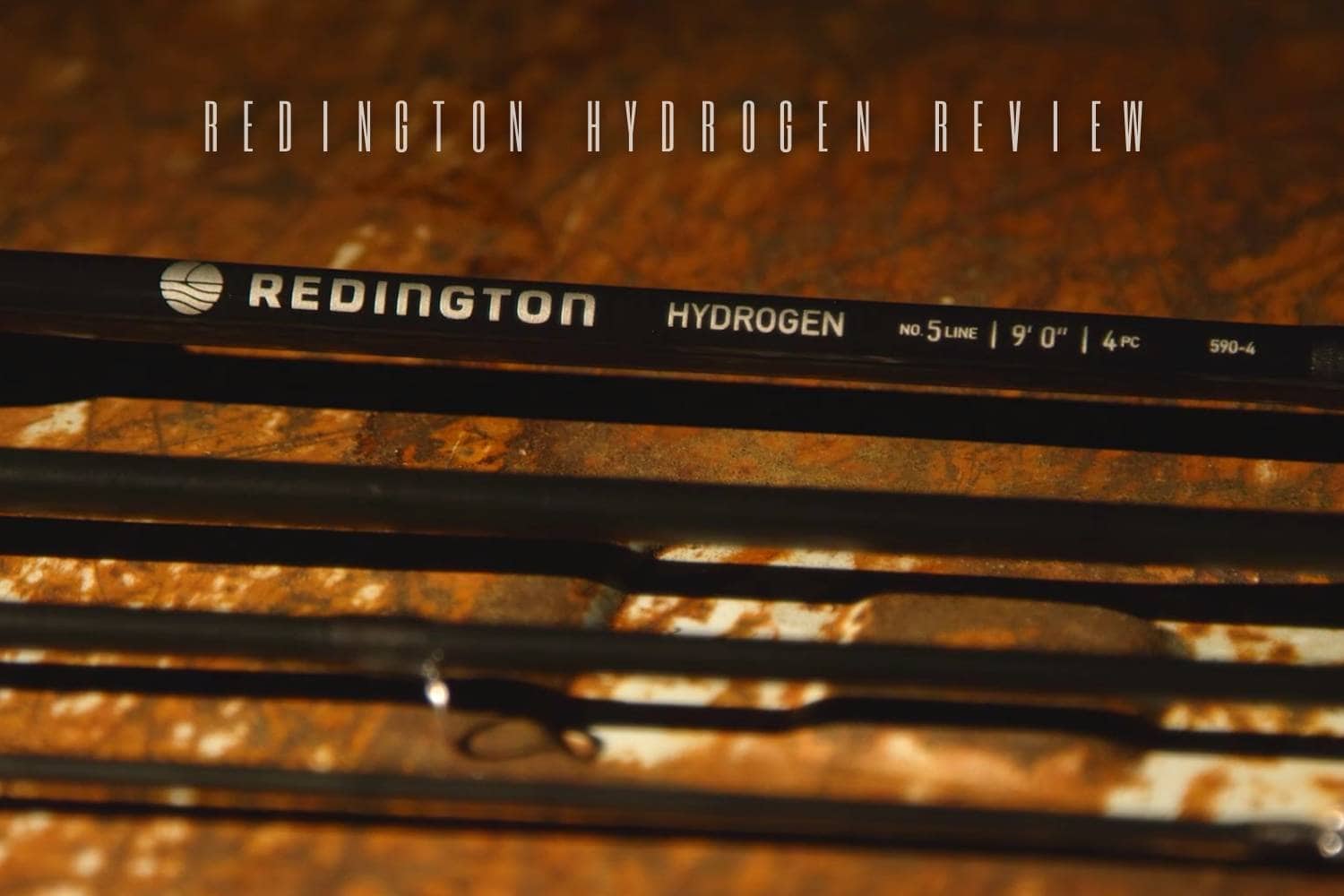
In brief: The earlier-generation Redington Hydrogen made low mass a practical trout feature rather than a slogan. It favored restrained presentations and repeated casting over bulky rigs or specialized-reach techniques.
Earlier-generation trout Hydrogen at a glance
- Casting weight and feel
- The Hydrogen felt unusually light during repeated casts and reduced the sense of arm fatigue. The earlier-generation Hydrogen handled dries and modest weighted flies, but its best character appeared with lighter work.
- Earlier-generation components and sizes
- A four-piece blank, skeletonized anodized reel seat, single-foot guides, premium cork grip, and Cordura tube; the configurations covered here included 2- through 4-weight rods in lengths from 7 to 10 feet.
- Best fit for light-line work
- Redington Hydrogen is best considered for a trout angler who prizes very low in-hand weight and controlled presentations on smaller water, especially on creeks, compact rivers, dry-fly lanes, and light nymphing situations.
Lightness as a functional choice
Low mass is the first meaningful trait of Redington Hydrogen. The Hydrogen felt unusually light during repeated casts and reduced the sense of arm fatigue. Lightness helped repeated casting, but it did not eliminate the need to balance reel and line. A poorly matched reel can make even Redington Hydrogen feel tip-heavy or awkward.
Built around compact water
Redington Hydrogen is easiest to understand on creeks, compact rivers, dry-fly lanes, and light nymphing situations. Its blank loaded smoothly rather than snapping abruptly, which helped restrained presentations on narrow water. That setting rewards a rod that can load without excessive line outside the tip. It also exposes whether the grip and action remain comfortable through repeated short presentations.
Low-mass hardware choices
Redington Hydrogen used a four-piece blank, premium cork grip, and Cordura tube; its skeletonized anodized reel seat and single-foot guides reduced hardware mass without changing the original four-piece layout. Single-foot guides and the skeletonized seat kept hardware mass from overwhelming the trout-oriented design. The minimalist hardware served the design, although buyers should still inspect guide alignment, seat threads, cork condition, and ferrule fit on an older rod.
Technique range
The technique case for Redington Hydrogen begins with low mass, smooth loading, and light-line control. Its blank loaded smoothly rather than snapping abruptly, which helped restrained presentations on narrow water. That makes Redington Hydrogen useful when an angler changes flies during a day but stays inside the rod's credible load range. A heavier rig still asks more of timing, line choice, and open space.
The decision in practical terms
Hydrogen is compelling when low in-hand mass and trout presentation matter more than heavy-water authority. The earlier-generation Hydrogen felt light, smooth, and accurate, with medium-fast behavior that allowed a deeper bend than a stiffer rod. Its relatively small grip and trout-centered design still require an exact fit check. Anglers with large hands or bulky rigs should test that fit rather than assuming lightness solves every problem.
How to assess this exact rod
A Hydrogen should be judged as a balanced outfit, not weighed in isolation. Verify the exact line and length, inspect the four blank sections, and look carefully around single-foot guide wraps where small damage can hide. Check the skeletonized seat, cork diameter, and ferrule fit. Mount the reel intended for use and notice whether the tip drops or the grip remains neutral. Cast a dry-fly leader and a modest nymph at the distances found on compact trout water. If dedicated long-line nymphing is the goal, compare reach and contact against a purpose-built longer rod rather than forcing Hydrogen into that role.
Balance matters as much as the blank’s low mass
The earlier-generation Hydrogen used premium cork with lightweight stripping guides, a skeletonized anodized seat, and single-foot guides. The lightweight guides and skeletonized seat reduced hardware mass, but reel selection can still alter how the outfit rests in the hand. A slightly heavier reel may improve balance for one configuration; another can feel best with less mass. The complete setup should be assessed during repeated casts.
Choose the exact earlier-generation Redington Hydrogen configuration by line weight, length, casting range, technique, water type, grip fit, balance, and overall condition
| Decision point | Earlier-generation performance | Reader use |
|---|---|---|
| Dry-fly and light nymph work | The earlier-generation Hydrogen was best suited to controlled trout presentations. | Keep fly weight proportionate to the selected rod. |
| Grip and balance | The earlier-generation handle may feel small to some anglers. | Cast the assembled outfit long enough to assess hand comfort. |
| Dedicated long-line nymphing | Dedicated Euro-nymphing can benefit from a purpose-built rod; compare reach, balance, and contact against the exact Hydrogen configuration. | Choose a purpose-built length when reach and contact dominate. |
Who should choose this Redington Hydrogen
The earlier-generation Hydrogen is attractive for trout anglers who prize a light, smooth setup and do not need heavy-water authority. Its pared-back hardware and moderate-fast behavior support that role, while grip fit, reel balance, and limited specialist reach deserve attention. The rod should be selected as an exact configuration, not as proof that every light Redington behaves alike. These weight, balance, and handling traits stop at the earlier-generation Hydrogen series.
These Hydrogen traits are confined to the earlier-generation trout series. Another Redington, a later generation, or a different line-weight family needs separate identification and an on-water comparison.
