
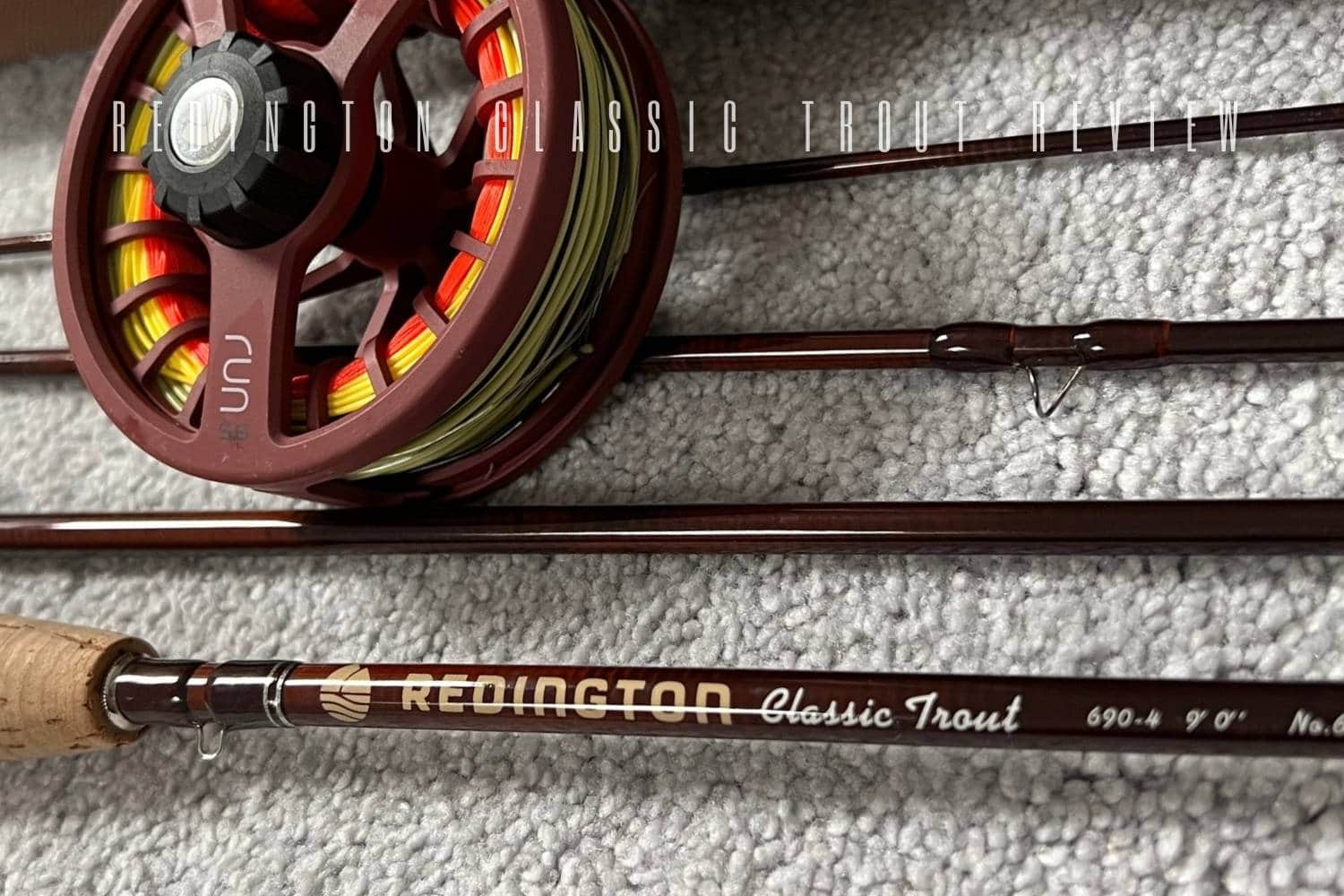
Short answer: A supple trout rod that favors readable loading and close-water presentation. Classic Trout earns its name through behavior rather than decoration. The reviewed rod bends progressively, tells the hand when the line is loading, and feels most settled at the ordinary distances of a small or medium trout stream. That makes it particularly inviting with a dry fly or a light dry-dropper, where timing and a quiet turnover matter more than raw line speed. It is a trout specialist with enough breadth for several light presentations, not a compact substitute for a wind rod.
Redington Classic Trout at a glance
| Category | What applies here |
|---|---|
| Original Classic Trout range | 2–6 line weights across the original configurations |
| Original Classic Trout lengths | 7 feet 6 inches through 9 feet |
| Original Classic Trout action | Described as medium and moderate-fast; cast the exact configuration because the label varied. |
| Original Classic Trout build | Intermediate-modulus graphite, cigar grip, alignment dots, titanium-oxide stripping guides |
| Observed emphasis | Smooth 30–40 foot casting, deep flex, dry-dropper usefulness |
The specifications and on-water behavior apply only to the clay-brown, four-section Classic Trout generation. Match the finish, length, and printed line weight, because each configuration changes how deeply the rod loads and how much authority it carries.
Casting character of this generation
In hand, the rod loaded smoothly at roughly 30 to 40 feet and made the load-and-unload phase easy to recognize. The blank flexed well down the rod under tension, giving light tippet a more forgiving connection than a rigid tip would provide. Its low mass was comfortable through repeated casts. With a dry-dropper setup it supplied useful control without turning the stroke into a hard punch, which is why the experience felt relevant beyond a first-time caster.
Classic Trout should be judged where it naturally loads. A calm sequence at creek distance reveals more than a forced maximum, especially when the intended dry-dropper and light tippet are part of the trial.
Blank, grip and hardware
The brown blank, silver accents, and wood seat insert give the rod an intentionally traditional appearance. The clay-brown Classic Trout used intermediate-modulus graphite, a cigar-shaped cork grip, alignment dots, and titanium-oxide stripping guides. Those elements suit the central idea: a progressive trout taper rather than an aggressively fast blank. The alignment marks help assembly, while the compact grip may be pleasant for smaller hands but should be held before purchase by anyone who prefers a broad full-wells shape.
Traditional fittings and graphite details describe the clay-brown build, yet condition decides whether an older example retains that smoothness. Worn guides, cork gaps, or loose joints can disguise the original taper.
Where the rod makes sense
Short creek casts, measured dry-fly deliveries, small nymph rigs, and restrained streamers are sensible assignments. The rod is especially rewarding when there is room to form a loop without forcing it. Its deeper bend can help protect fine leaders once a fish is connected. A calm caster can extend the range, but the design is happier inside about 45 feet than it is trying to dominate an exposed bank. The benefit is touch and rhythm, not brute acceleration.
A sheltered trout stream favors this rod's progressive bend. Wind exposure, leader turnover, fly mass, and the caster's willingness to wait for the blank determine whether that bend remains an advantage.
Tradeoffs that define the design
Strong wind exposes the family’s central compromise. The same responsive flex that makes loading obvious can lose authority when a long cast must turn over a resistant fly. It is also unwise to treat every historical claim about salt use or universal durability as permission to ignore configuration. Hardware, line weight, and maintenance still determine suitability. For routine heavy streamers, large indicators, or sustained long carries, a firmer rod would be the clearer match.
The same flex that improves touch sets the Classic Trout's ceiling. Losing authority with resistant flies or long carries is an honest consequence of its presentation-led design; it does not mean every example is defective.
A practical choice test
A useful trial begins with the exact fly and leader normally used on the home river. Cast at 20, 35, and 45 feet, noticing whether the blank recovers without demanding extra hand speed. Then add the modest dropper or nymph weight that appears in real fishing. If the rod remains composed and the grip suits the hand, its accessible action is a strength. If the caster constantly drives past the stop to seek more speed, the taper is probably too relaxed for that style.
Write down the clay-brown finish, exact length, and printed line weight before reading another owner's opinion. The short light models and longer heavier models share intent without delivering an identical sensation.
Setup and condition check
Before relying on a previously owned example, check all ferrule joins, guide feet, cork filler, reel-seat threads, and the ballistic-nylon tube. Verify the printed length and line weight rather than trusting an advertisement or tube label. Fit a balanced reel and a line near its stated designation before experimenting with a more aggressive taper. After assembly, flex the rod gently and look for clicking at the ferrules. A clean, correctly seated joint matters more to longevity than cosmetic shine.
- Verify the clay-brown Classic Trout identity and printed configuration on the blank itself.
- Seat and inspect every joint on this clay-brown Classic Trout before applying a full casting load.
- Balance the clay-brown Classic Trout with the reel, line, leader, and fly intended for its actual job.
- Treat accounts of revised or neighboring Redington rods separately from this clay-brown Classic Trout configuration.
Verdict on the original-generation Redington Classic Trout
This Classic Trout succeeds by making ordinary trout distances enjoyable and legible. Its progressive bend, light feel, and controlled delivery suit anglers who value presentation and connection over maximum speed. It can teach timing without becoming disposable once timing improves, yet it remains a specialist whose weakness appears in wind and long carries. Judge the exact clay-brown generation and configuration on those terms. A newer revision or adjacent Redington model must establish its own casting record.
