
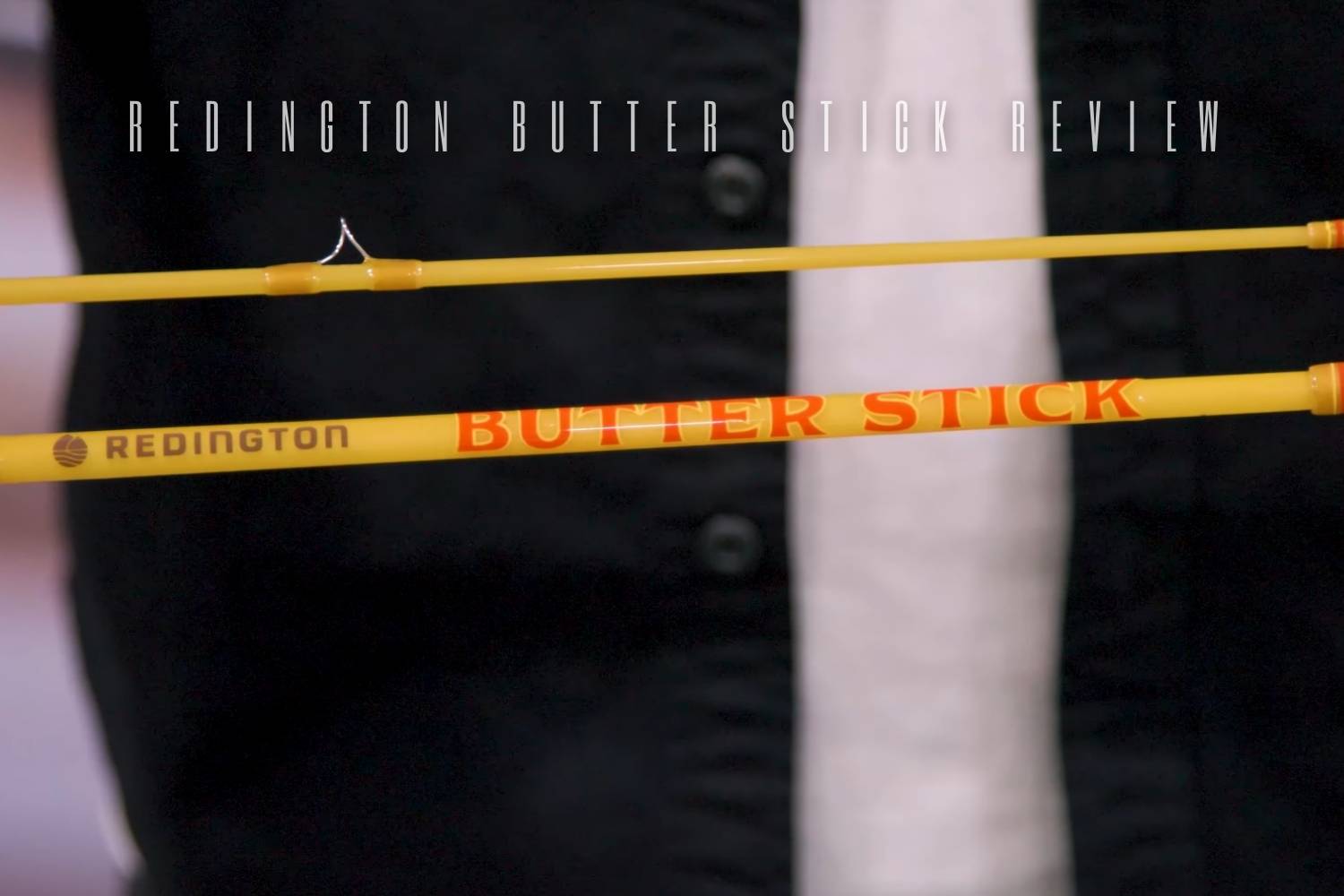
The Butter Stick question is not “Can fiberglass do everything?” It is whether a slow, deeply bending rod makes short-range fishing more controlled and more enjoyable for the flies and water you actually choose. Keep the earlier-generation Butter Stick separate from later redesigns that may share the same bright personality.
The exact hands-on experience
An earlier-generation Redington Butter Stick was fished in tight New Zealand water with smaller dry flies, and it also handled a dry-dropper arrangement when the nymph remained small. That hands-on observation belongs only to the rod used in that setting and should not be extended to every Butter Stick weight or to a later generation.
For the earlier-generation rod used here, keep the suitability claim to short casts and compact streams. It does not prove broad wind authority, heavy-nymph capacity, or long-distance efficiency. In fact, its slow fiberglass character points in the opposite direction. Those limits are part of the result.
Hands-on scope, model details, and buyer fit
- Exact hands-on scope
- On tight New Zealand water, it worked with small dry flies and a light dry-dropper arrangement, provided the nymph stayed modest.
- Earlier-generation model details
- Fiberglass construction, slow action, short lengths, cork hardware, alignment aids, protective storage, and configuration-dependent reel-seat or fighting-butt choices apply only when they match the marked rod. Butter Stick generations differ: some are three-piece with a cream finish, while others are four-piece with a sunshine-yellow blank. Do not combine those traits into one model.
- Buyer fit
- A correctly identified Butter Stick is best viewed as a compact-water specialist for anglers willing to slow their stroke, not as a default all-purpose rod.
Generation identity comes before color
Butter Stick has appeared in more than one form, with different details attached to different periods. Some earlier Butter Sticks were three-piece rods with a cream finish; others were four-piece rods with a sunshine-yellow blank. Do not combine those traits into one exact model. Those differences must not be blended into a fictional single model.
Inspect the writing on the blank, count sections, note line weight and length, and compare reel-seat style. A yellow rod is not automatically the generation discussed in every paragraph. If identity remains uncertain, treat it as a Butter Stick of unknown generation rather than as proof of a particular taper, travel format, or component package.
Why small water suits the bend
Compact creeks rarely reward endless line speed. They ask for fast setup, controlled turnover, roll casts, and accurate placement with obstacles close behind. A slow glass blank can load with little line out and communicate timing clearly once the caster waits for it. That fuller bend also makes modest fish feel lively.
There is a trade. A deep-loading rod punishes an impatient stroke, and wind can push open loops or light leaders away from the target. The answer is not to force the Butter Stick harder. Shorten the cast, reduce fly bulk, refine the leader, and let the rod finish bending before beginning the forward stroke.
Keep rigs proportionate
The New Zealand session included small dries and a dry-dropper only with a smaller nymph. That qualifier matters. Extra bead mass, split shot, an indicator, or a wind-resistant fly changes the load sharply on a light glass rod. A setup that technically leaves the tip can still feel unpleasant and land without control.
Build around the intended line weight. Use compact leaders where brush demands it, choose flies the tip can turn over, and test the pickup as carefully as the delivery. A heavy rig can overload the rod during the lift before the forward cast begins. When larger payloads become normal, choose a different rod rather than turning a Butter Stick into a lever it was never meant to be.
Is it a teaching rod?
Fiberglass can make loading visible and tactile, which helps some learners understand timing. Yet slow action is not automatically easy. A beginner who rushes the transition may tail loops or collapse the cast. The Butter Stick can teach patience, but it will not replace instruction.
For a child or first-time angler, test grip size, total length, and balance before praising durability. A short rod may fit tight water while still feeling tip-heavy to small hands. Use open space first, then move to the creek after the caster can pause and form a stable loop without muscling the blank.
Inspect glass differently
Look along the blank under angled light for bruises, crushed fibers, deep scratches, or stress around ferrules. Check that sections seat evenly and do not rotate after several casts. Examine guides and wraps for impact damage, and test reel-seat fittings with the exact reel. Sliding or cap-and-ring hardware can be charming, but it must hold securely.
Do not dismiss a scuffed tube or cosmetic mark while ignoring structural damage. Conversely, do not reject sound fiberglass because its finish shows ordinary use. The priority is an intact blank, reliable ferrules, straight guides, solid grip, and hardware that keeps the reel fixed through a full bend.
Small-water fit table
| Fishing need | Fit | Boundary |
|---|---|---|
| Small dry flies | Strong | Short, controlled casts on compact water |
| Light dry-dropper | Conditional | The observed nymph remained small |
| Windy distance | Weak | Slow glass does not create effortless line speed |
| Heavy rigs | Poor priority | Payload can overwhelm turnover and pickup |
Final verdict on the earlier-generation Redington Butter Stick
The Butter Stick is compelling when its limitation is the attraction: a slower cast, close connection, and a full bend on small water. The exact earlier-generation experience supports small dries and a restrained dry-dropper in tight New Zealand conditions. It does not support turning every Butter Stick into a wind rod or heavy-rig tool.
Confirm which generation is in hand, because three-piece, four-piece, cream, and yellow details cannot all define one exact rod. If identity is clear and the intended fishing stays compact and light, this fiberglass specialist has a coherent purpose. A successor or differently configured Butter Stick must be judged on its own blank and build.
