
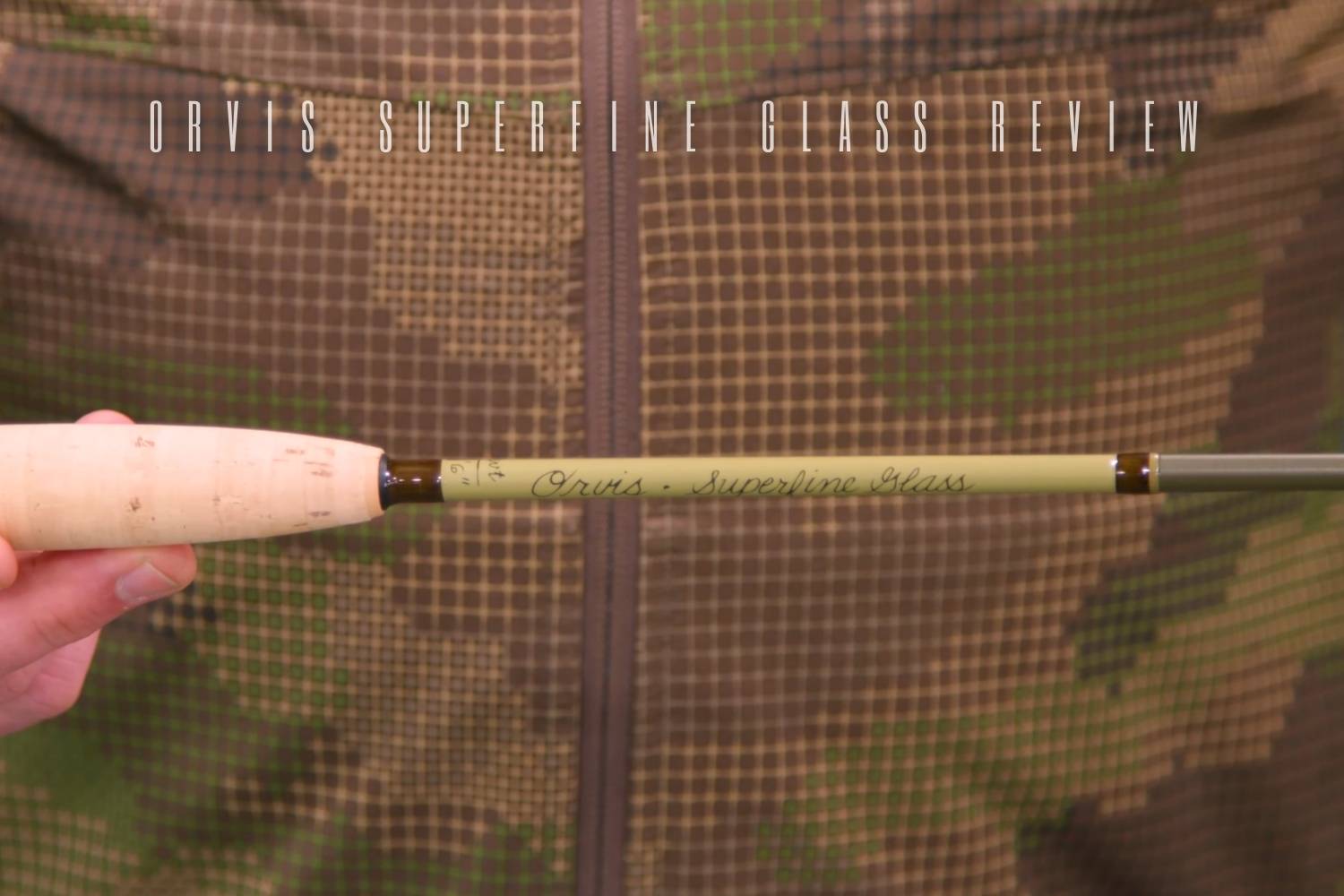
In brief: Superfine Glass turns short casts into the main event. In the earlier-generation family, the deliberately slow fiberglass bend supports creek placement and roll casting while openly giving up wind authority and effortless reach.
Earlier-generation Superfine Glass at a glance
- Casting behavior
- The Superfine Glass loaded at a measured pace and rewarded a patient stroke rather than a sharp hit. Roll casts suited the short blank, although heavier flies made the flex feel more pronounced.
- Earlier-generation components
- A fiberglass blank, light-wire stripping guide, thread wraps, cork handle, and protective tube; the earlier-generation family included 2- through 6-weight rods in short creek-oriented lengths.
- Best fit
- Orvis Superfine Glass is best considered for a small-stream angler who wants close-range accuracy, a measured casting tempo, and deliberate line control, especially on tight creeks, short presentations, roll casts, and light-line trout fishing.
A slower tempo by design
Glass changes the conversation around Orvis Superfine Glass. The Superfine Glass loaded at a measured pace and rewarded a patient stroke rather than a sharp hit. A caster who waits for Orvis Superfine Glass to finish loading gains control; a caster who rushes tends to fight the material. The slower rhythm is the feature, not a delay that needs to be corrected.
Water that suits the rod
The best setting for Orvis Superfine Glass is tight creeks, short presentations, roll casts, and light-line trout fishing. In those places, line management and landing angle matter more than maximum carry. Orvis Superfine Glass turns its short working range into an advantage by making modest presentations deliberate and visible to the caster.
Close-range placement
Close-range accuracy is the earlier-generation Superfine Glass rod’s strongest trait. At close range, the rod placed a fly accurately while keeping the delivery notably soft. That control remains dependent on a compatible line and leader. It should not be stretched into a promise that Orvis Superfine Glass will dominate wind, oversized flies, or broad rivers.
Why the material changes the cast
The earlier-generation Superfine Glass used a fiberglass blank, light-wire stripping guide, thread wraps, cork handle, and protective tube. Its deep bend and slower recovery shaped swing feel and the pace of each cast. For Orvis Superfine Glass, the material choice changes swing feel, recovery speed, and how quickly a caster can redirect the line.
The decision in practical terms
The reason to choose Superfine Glass is not maximum reach. It is the deliberate rhythm and close-range connection of fiberglass. The earlier-generation Superfine Glass was strongest on small streams, with gentle dry-fly delivery, roll casting, and a classic bend. Larger water, wind-resistant flies, and long casts work against the design. A patient caster can enjoy that exchange; a hurried caster will probably experience it as unnecessary labor.
How to assess this exact rod
Inspecting an older glass rod should be patient rather than forceful. Check each translucent or painted section for impact marks, crushed fibers, ferrule wear, and wraps that have lifted from the blank. Confirm the exact line designation because a short two-weight and the longer six-weight examples occupy different jobs. Once assembled, use a moderate line and let the back cast straighten before beginning the forward stroke. Try a compact overhead loop, a roll cast, and one wind-resistant fly. The contrast between those casts will tell you more about fit than an attempt to chase a maximum distance figure.
Use the bend instead of fighting it
A slow glass blank needs time to finish loading. The earlier-generation Superfine Glass combined close-range accuracy with a flexible, responsive feel, while heavier flies felt more pronounced through the bend. On a confined creek, that feedback can help with short presentations and roll casts. On open water, the same behavior reduces reserve and increases the work required to control a bigger payload.
Choose the exact earlier-generation Orvis Superfine Glass configuration by line weight, length, casting range, technique, water type, grip fit, balance, and overall condition
| Decision point | Earlier-generation performance | Reader use |
|---|---|---|
| Tight creek casts | The earlier-generation Superfine Glass made close-range accuracy its defining strength. | Use a smooth stroke and allow the glass to complete its bend. |
| Roll casting | A short earlier-generation model produced soft roll-cast delivery. | Pair it with a line and leader that preserve the intended tempo. |
| Wind and payload | Wind-resistant flies and larger water exposed the earlier-generation rod’s limited reserve. | Select another taper when bulky rigs or open exposure dominate the day. |
Who should choose this Superfine Glass
The earlier-generation Superfine Glass succeeds when a slow bend, close accuracy, and a lively connection to modest fish are the desired experience. It is not a disguised all-water graphite rod. Wind, big payloads, and open reaches expose its limited reserve, while wooded creeks and measured presentations reveal why anglers enjoy it. Select it with those boundaries intact and identify the exact generation before treating any related Superfine as comparable.
These casting and handling traits belong to the earlier-generation Superfine Glass only. No graphite Superfine, later glass build, or adjacent Orvis rod inherits its creek feel or limitations without a separate cast and configuration check. If the rod makes a fifteen-foot presentation engaging and predictable, it is doing its intended work; extra reach should remain a secondary bonus.
