
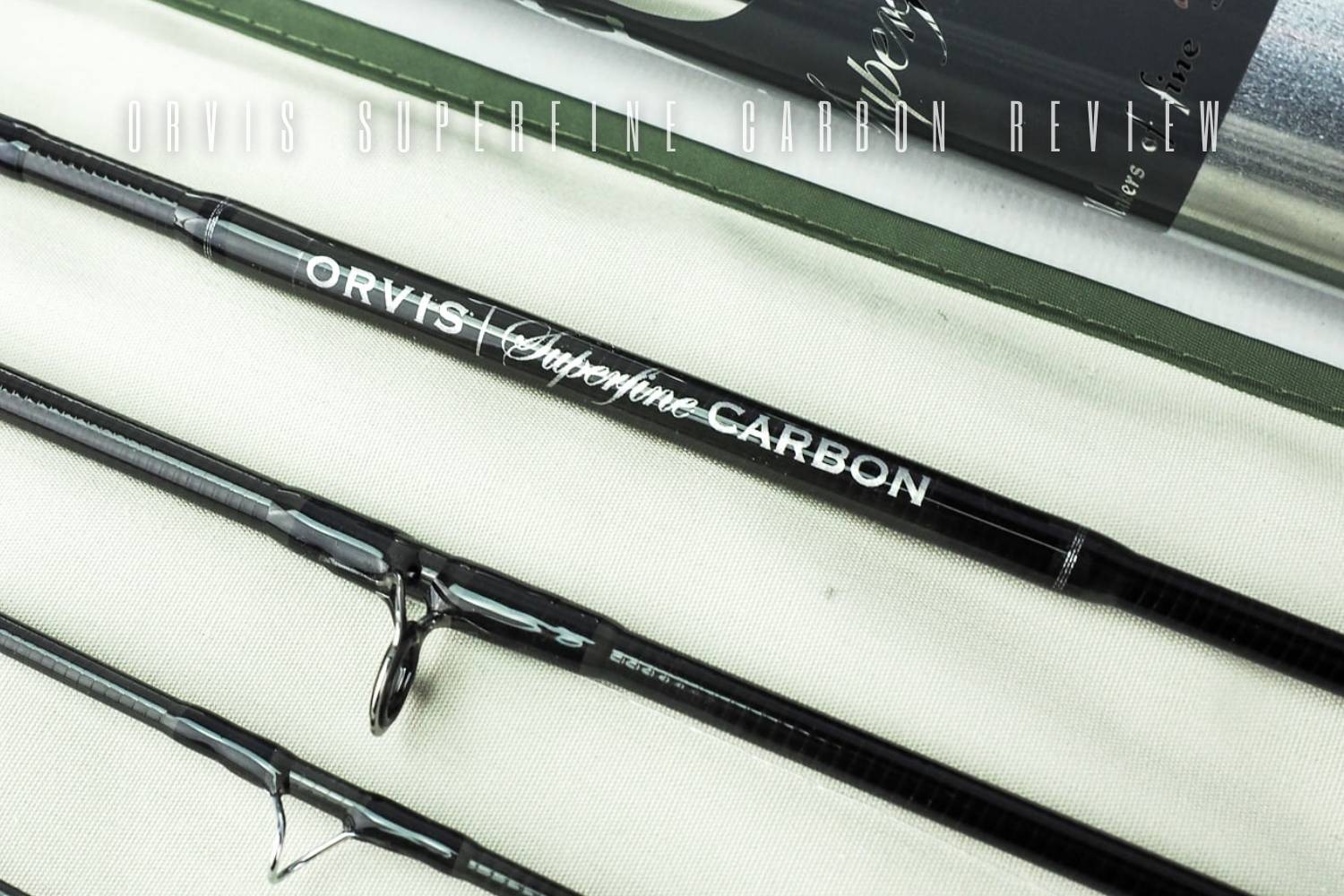
In brief: Superfine Carbon appeals to the caster who treats the bend as information. The earlier-generation rod favors unhurried timing, dry-fly feedback, and small-water control instead of the instant recovery of a stiffer power taper.
Earlier-generation Superfine Carbon at a glance
- Earlier-generation casting behavior
- The earlier-generation Superfine Carbon bent deeply through the lower blank with a relaxed casting stroke. Compared with glass, the Carbon recovered more quickly while preserving a relaxed casting rhythm.
- Earlier-generation components
- An unsanded graphite blank, matching wraps, silver hardware, snake guides, and a cork grip; line weights 1 through 7 and lengths from 6 to 8 feet in the earlier-generation family.
- Best fit
- Orvis Superfine Carbon is best considered for a dry-fly angler who values deep loading, tactile feedback, and small-water control, especially on small and medium creeks, quieter rivers, and restrained lake work.
Reading the blank
The appeal of Orvis Superfine Carbon is physical communication. The earlier-generation Superfine Carbon bent deeply through the lower blank with a relaxed casting stroke. Orvis Superfine Carbon asks the caster to notice when the lower blank joins the cast. That feedback supports a smoother stroke and discourages the hurried timing associated with stiffer, faster tools.
The decision in practical terms
Superfine Carbon suits a caster who enjoys feeling the lower blank participate. This earlier-generation Superfine Carbon bent deeply at medium and longer range and was most accurate before the outer edge of its reach. That combination favors deliberate dry-fly work and tactile feedback over urgent line speed. It is a poor fit for anyone who wants a stiff lever that conceals timing errors or regularly carries bulky rigs across exposed water.
Dry-fly character
Dry-fly work gives Orvis Superfine Carbon its clearest purpose. Dry flies landed with restrained line speed, and the blank transmitted subtle movement clearly into the hand. The result is not automatic perfection; leader design and caster timing still matter. Yet Orvis Superfine Carbon makes a controlled turnover easier to read because the blank announces its load instead of hiding it.
Hardware and finish
The earlier-generation Superfine Carbon used an unsanded graphite blank, matching wraps, silver hardware, snake guides, and a cork grip. The finish supports the rod's intended character, but the real buying value lies in straight guides, an undamaged blank, sound ferrules, and a grip that fits the hand. Those checks matter especially when encountering Orvis Superfine Carbon as used equipment.
Distance without disguise
Distance exposes the boundary of Orvis Superfine Carbon. The rod could reach beyond fifty feet, but its most convincing accuracy arrived before that distance. That is a useful limitation, not an embarrassment. A buyer who regularly needs more reach should choose a different taper instead of forcing Orvis Superfine Carbon beyond the water it handles naturally.
How to assess this exact rod
A used Superfine Carbon deserves a slow inspection that matches its full-flex character. Roll each graphite section under strong light and look for bruises, scratches that catch a fingernail, or repairs hidden beneath wraps. Join the ferrules without forcing them and verify that the guides form one clean line. Examine the cork and reel-seat hardware, then flex only through an ordinary cast rather than by pulling the tip into an artificial curve. With a suitable dry-fly line, compare gentle loops at creek distance before adding more carry. The right specimen should communicate its load without requiring a sharp acceleration.
Let the carbon taper set the tempo
Against glass, the earlier-generation Carbon recovered faster, formed tighter loops, and suited somewhat larger water while retaining a classic full-flex character. Specific configurations also carried noticeable casting and swing weight during repeated casts. The useful lesson is to wait for the bend and assess fatigue over repeated casts, not to judge the rod from one forceful lawn stroke.
Choose the exact earlier-generation Orvis Superfine Carbon configuration by line weight, length, casting range, technique, water type, grip fit, balance, and overall condition
| Decision point | Earlier-generation performance | Reader use |
|---|---|---|
| Dry-fly feedback | The earlier-generation Superfine Carbon showed subtle flex and a deep bend through the cast. | Choose it when feeling the load matters more than immediate recovery. |
| Working distance | The earlier-generation Superfine Carbon could pass fifty feet but became less accurate there. | Judge it inside the range where your presentations normally occur. |
| Older graphite condition | Older graphite can hide impact damage even when its finish looks intact. | Inspect blank surfaces, ferrules, and guide wraps carefully before fishing. |
Who should choose this Superfine Carbon
Superfine Carbon is a persuasive earlier-generation choice for anglers who want graphite with a deep, classic conversation. Its attraction lies in tactile loading and controlled dry-fly work before the edge of its range. The same qualities can feel slow or tiring to someone who prefers low swing weight and rapid recovery. Condition is especially important with older graphite. Choose it for rhythm and feedback, not because its name promises the behavior of glass or of a later carbon design.
These casting and handling traits belong to the earlier-generation Superfine Carbon. Superfine Glass, another carbon generation, or any similarly named replacement must be judged separately for material, taper, and intended water.
