
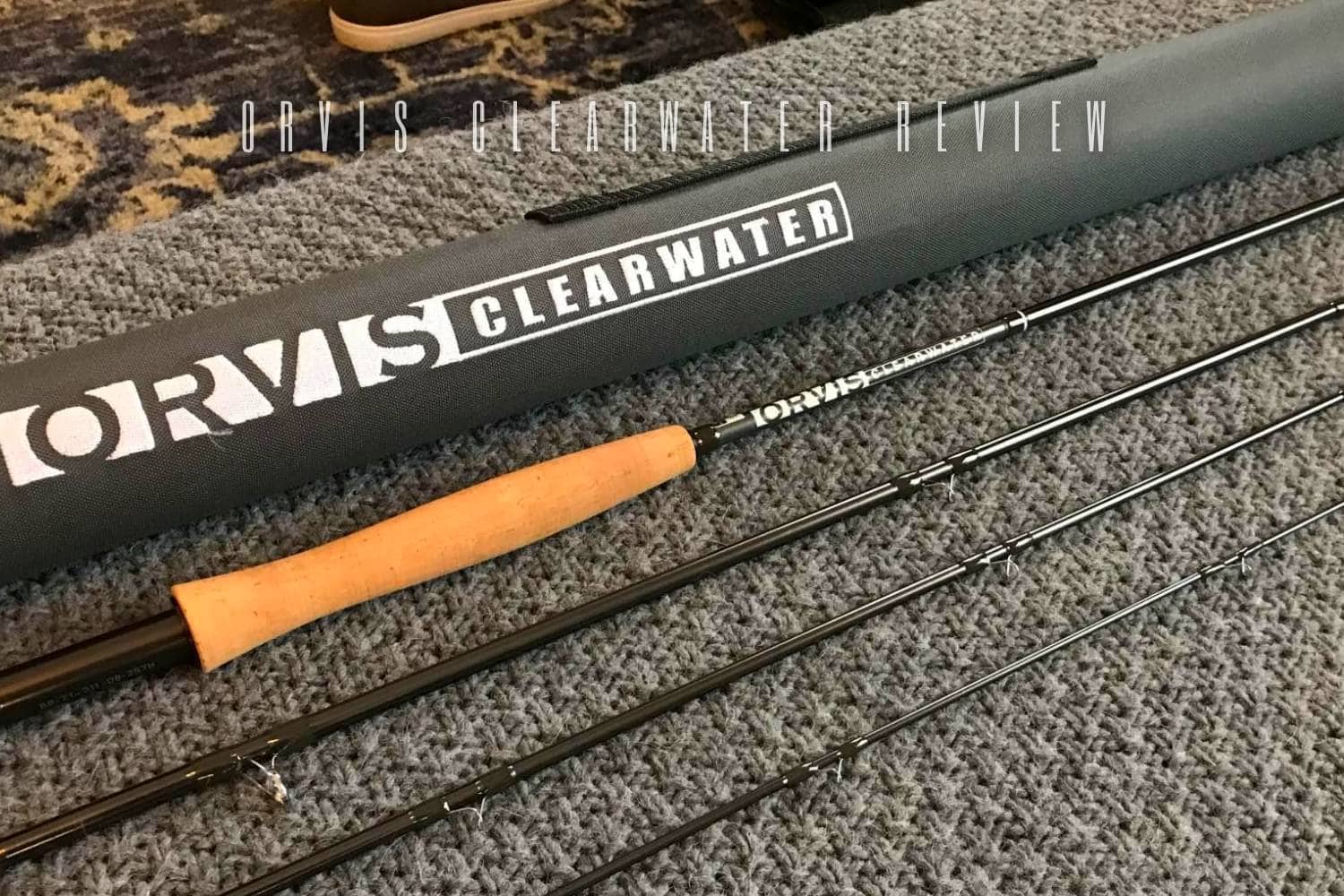
In brief: The earlier-generation Clearwater is best understood as a broad family, not one universal taper. The useful question is whether the exact weight in front of you covers ordinary trout work without demanding a more specialized feel.
Earlier-generation Clearwater at a glance
- Casting range and control
- The earlier-generation Clearwater tracked cleanly and formed controlled loops from close range through roughly sixty feet. At roughly sixty feet, accuracy stayed consistent rather than collapsing into uncontrolled power.
- Earlier-generation components
- A four-piece graphite rod with chrome guides, a ceramic stripping-guide insert, and an uplocking aluminum reel seat; line weights 3 through 12 and lengths from 7 to 11 feet.
- Best fit
- Orvis Clearwater is best considered for an angler who wants one adaptable trout rod rather than a narrowly specialized tool, especially on rivers, lakes, and ordinary trout water.
The decision in practical terms
The Clearwater decision begins with the exact configuration, because a short light rod and a long heavy rod cannot be judged as one casting tool. The trout-oriented earlier-generation Clearwater remained comfortable from close work through about sixty feet, with consistent accuracy at the far end of that window. That makes breadth the central attraction. An angler who mainly fishes one narrow technique should still favor the taper built for that job rather than assuming the family name guarantees the same response.
Where the cast settles
With Orvis Clearwater, the practical casting window matters more than headline distance. The earlier-generation Clearwater tracked cleanly and formed controlled loops from close range through roughly sixty feet. Orvis Clearwater therefore rewards a measured comparison at the range used most often. Short casts reveal feel; middle casts reveal tracking; longer casts reveal how much control remains.
Construction that matters
The earlier-generation Clearwater used a four-piece graphite blank, chrome guides, a ceramic stripping-guide insert, and an uplocking aluminum reel seat. Those details explain how Orvis Clearwater sat in the hand and carried line; they do not prove anything about a later product bearing a related name. For Orvis Clearwater, reel-seat security, guide alignment, grip comfort, and blank recovery deserve more attention than decorative language.
Technique range
The technique case for Orvis Clearwater begins with versatility across ordinary trout distances. Line control felt precise enough for dry flies and nymph rigs without making the rod a single-technique specialist. That makes Orvis Clearwater useful when an angler changes flies during a day but stays inside the rod's credible load range. A heavier rig still asks more of timing, line choice, and open space.
How to assess this exact rod
Before relying on an older Clearwater, start with its printed line weight and length. Assemble every section and check that ferrules seat evenly without cracks, loose fits, or unexplained witness marks. Sight down the blank for damaged guide feet and twisted alignment. Turn the uplocking seat through its full travel, then mount the reel you intend to use. Finally, cast the outfit with a normal trout leader at close, middle, and longer fishing range. This sequence distinguishes the broad Clearwater reputation from the condition and balance of the particular rod.
Separate family breadth from the rod in hand
A Clearwater buyer should read the line designation, measure the assembled length, and cast the actual rod with the intended line before drawing conclusions. The earlier-generation family included configurations for dry flies and nymphing, with a cork grip, chrome guides, ceramic stripping-guide insert, and uplocking aluminum seat. Those details make useful inspection points. They do not prove that every Clearwater weight shared identical stiffness, balance, or recovery.
Choose the exact earlier-generation Orvis Clearwater configuration by line weight, length, casting range, technique, water type, grip fit, balance, and overall condition
| Decision point | Earlier-generation performance | Reader use |
|---|---|---|
| Everyday trout range | The earlier-generation Clearwater offered useful performance from roughly twenty to sixty feet. | Test the exact weight at the distances used on your own water. |
| Mixed methods | The earlier-generation Clearwater family included rods capable of handling dries and nymphing. | Match fly size and line taper before calling it an all-purpose setup. |
| Feel preference | Some earlier-generation Clearwater configurations felt stiffer than expected. | Cast it beside a softer trout rod if feedback and delicacy lead your choice. |
Who should choose this Clearwater
The earlier-generation Clearwater earns its place as a flexible trout option rather than a delicacy or distance specialist. The earlier-generation Clearwater stayed consistent across ordinary casting ranges and covered more than one trout method. Its family breadth is also the main caution: configuration matters too much for a name-only verdict. An angler who wants a single adaptable setup can reasonably favor it after an exact-model cast; someone seeking a soft creek tool or a forceful long-range taper should compare more focused designs.
These Clearwater traits belong to the earlier-generation family and the exact configuration covered here. A Clearwater from another production period needs separate identification and casting; a familiar name alone cannot carry these traits forward. A final side-by-side with the line you already trust is more valuable than another family-level assumption, because it exposes how this specimen recovers and balances.
