
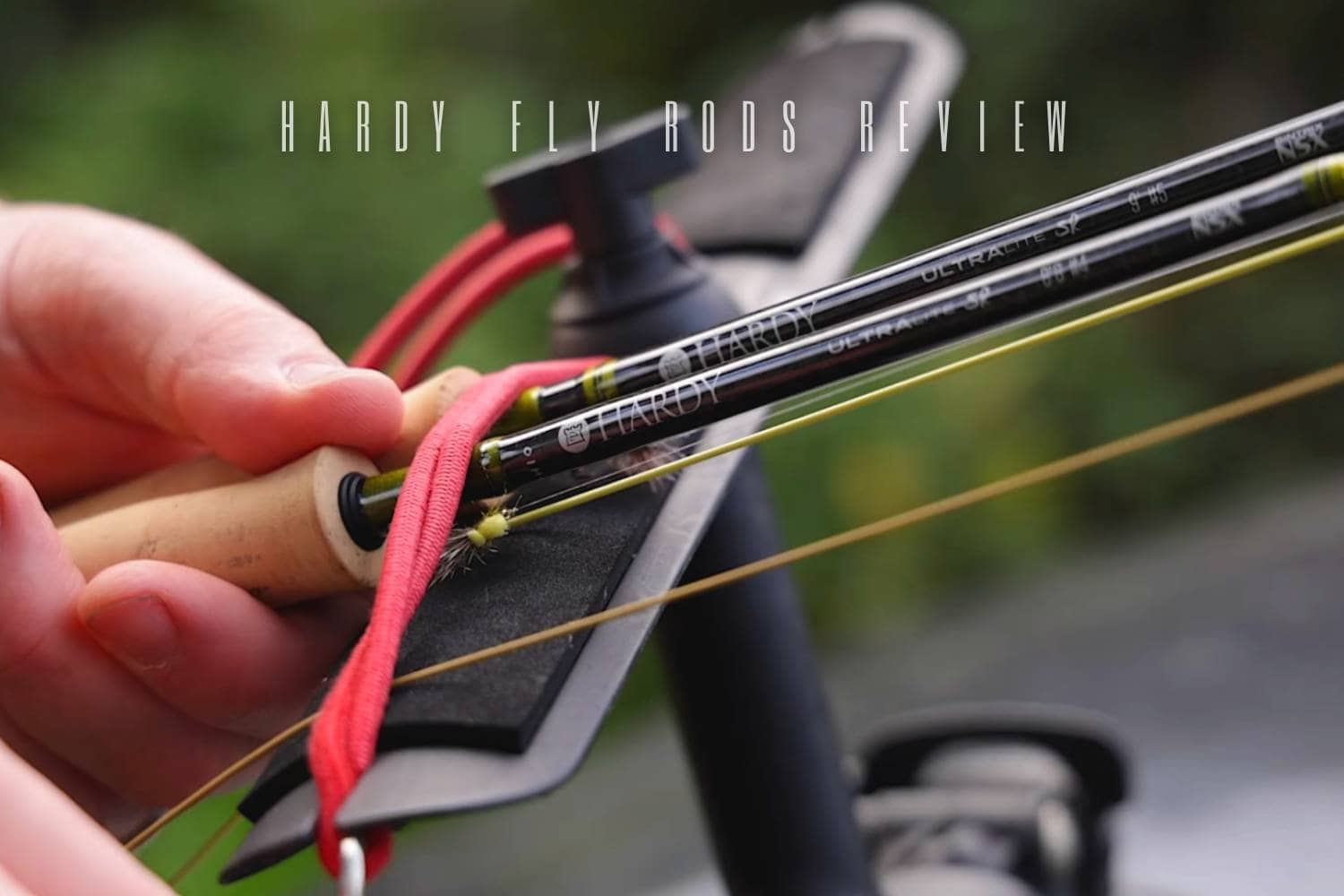
A Hardy rod choice begins with feel, format, and travel
The historical Hardy range brought together light-line trout rods, packable multi-piece designs, fiberglass, powerful two-handed tools, and saltwater families. Looking at them as one prestige ladder misses the real structure. Some were meant to disappear in the hand during careful trout work; others were shaped around transport, broad rivers, wind, or strong fish. The best starting point is the day’s physical problem, not the badge on the blank.
The names in this guide are historical examples from that earlier lineup. They do not establish present production, specifications, or lineage. A later rod with similar wording may be a different design. Treat each generation and configuration as its own object, particularly when an old family splits into single-hand, double-hand, ultralight, or saltwater forms.
Orient the older lineup by format
| Design question | Named examples | Useful buyer test |
|---|---|---|
| Light trout work | Shadow | Does the rod provide useful feedback at normal fishing distance? |
| Compact transport | Demon Smuggler | Does the packed format justify extra ferrules and setup attention? |
| Fiberglass character | Sirrus Glass | Does the caster enjoy a deeper load and more deliberate cadence? |
| Boron-era breadth | Zephrus DH, Zephrus Ultralight, Zephrus SWS | Which exact branch matches the casting method and water? |
| Fast single-hand work | Wraith AWS | Is quick recovery helpful at the distances and fly sizes normally used? |
| Saltwater or two-handed duty | Demon, Zephrus SWS, Zephrus DH | Can the entire line and leader system handle the intended load? |
Judge trout rods at trout distances
Shadow represented the lighter trout side of the old Hardy lineup. That role calls for a different evaluation from a rod designed to carry a large fly into wind. Ask how easily the caster senses the load, adjusts loop shape, and protects a light tippet. Distance matters only to the extent that it appears in real fishing; impressive lawn casts can distract from the fifteen- to forty-foot work that fills many days.
Presentation is not simply softness. A useful trout rod must recover cleanly enough to place the leader, hold a stable line path, and respond to small timing changes. At the same time, a blank that demands excessive line outside the tip before it comes alive can feel remote on intimate water. Compare rods with the line and leader system that will actually be fished.
Handle shape, reel balance, and overall leverage also affect perceived delicacy. A rod can be light on a scale yet feel tip-heavy once assembled. Spend time with the complete outfit, including the reel and a representative amount of line. Comfort over repeated casts is a more durable criterion than a bare-rod first impression.
Travel format changes the engineering trade-off
Demon Smuggler was the historical branch that made transport central. A compact multi-piece rod can fit journeys that defeat a conventional tube, but pack size is only half the decision. More sections mean more ferrules to seat, inspect, and align. The angler should decide whether that ritual and the resulting feel are acceptable in exchange for easier luggage, vehicle, or backcountry transport.
A travel rod should be evaluated assembled, not admired folded. Check that the sections join securely, guides align without fuss, and the outfit remains pleasant after repeated setup. Think through the trip as well: cramped flights, trail miles, wet breakdowns, and the possibility of leaving one short section behind all create different risks from ordinary home-water use.
Sirrus Glass raised another format question. Fiberglass tends to reward a smoother stroke and a willingness to let the blank work. The appeal is not nostalgia alone. A deeper bend can make close-range casting communicative and modest fish lively, yet that cadence may frustrate a caster who habitually drives a quick graphite stroke. Choose the tempo you enjoy rather than the material with the most romantic reputation.
Do not collapse the Zephrus name into one rod
The historical Zephrus group included clearly different branches: DH, Ultralight, and SWS. Their shared family name is less important than those suffixes. DH points toward two-handed use, Ultralight toward lighter freshwater work, and SWS toward saltwater duty. A specification or impression attached to one must not migrate to another merely because “Zephrus” appears on both.
Wraith AWS occupied a faster single-hand lane in the older range. Fast recovery can help form tight loops and manage demanding conditions, but only if the caster can load the rod at practical range. The right question is whether the speed reduces effort and improves control. If it forces the angler to overline, overpower, or carry more line merely to feel the cast, the theoretical advantage may not survive a full day.
These families demonstrate why exact configuration matters. Length and line designation alter leverage; grip and fighting butt alter control; a two-hand model introduces an entire head-and-tip system. Compare like with like before using broad labels such as light, powerful, or versatile.
Build saltwater and two-handed outfits from the line outward
Demon and Zephrus SWS appeared in the historical saltwater grouping, while Zephrus DH belonged to a two-handed context. Both lanes demand system thinking. The rod must work with a line profile, leader, fly, and casting environment. Wind direction, boat clearance, wading depth, and the resistance of the fly can matter more than a catalog action word.
For saltwater, test line pickup, backcast stability, and control with the intended leader rather than an easy practice setup. For two-handed fishing, define casting style, head length, tip mass, and river width before choosing a rod. A mismatched system can make a capable blank feel clumsy; a coherent one can reduce effort and improve repeatability.
Six rules for reading the historical Hardy range
- Start with water type and casting method.
- Evaluate light trout rods at the distances where trout are normally approached.
- Treat compact packing as a trade-off that includes ferrules, setup, and section care.
- Choose fiberglass only if its timing suits the caster.
- Keep every Zephrus suffix attached to its own branch.
- Identify any later or secondhand rod by exact generation before relying on old details.
Hardy’s historical lineup is valuable because it shows several distinct philosophies under one brand. Shadow, Demon Smuggler, Sirrus Glass, Wraith AWS, and the Zephrus branches cannot be reduced to one quality scale. They ask different things of the caster and solve different constraints.
The clean conclusion is practical: decide whether feel, transport, glass cadence, fast recovery, saltwater control, or two-handed delivery dominates the day. Then compare rods inside that format. A precise match between angler, line system, and water will matter more than choosing the most celebrated historical family name.
