
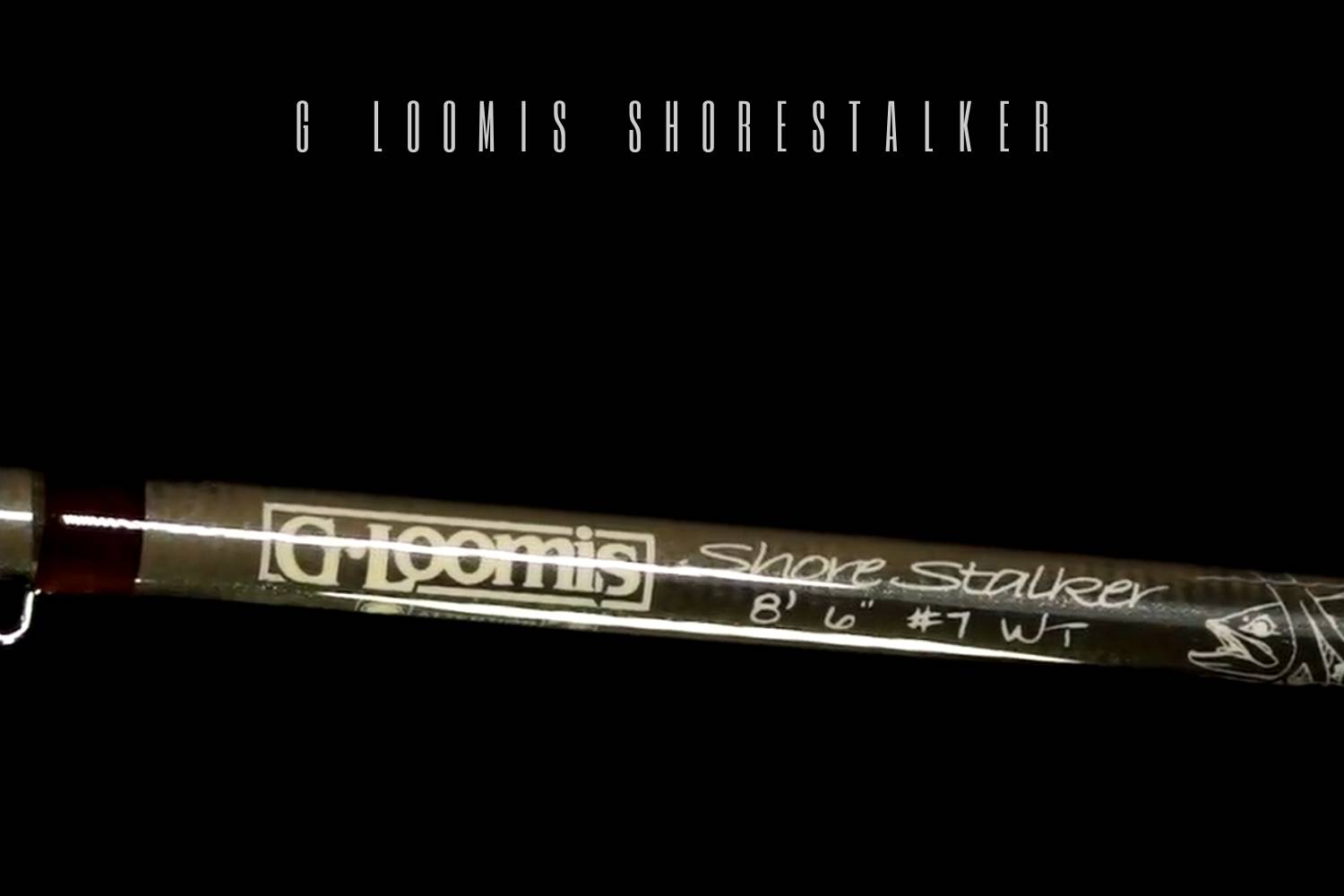
In brief: The earlier-generation G. Loomis ShoreStalker was built for a narrow problem: send a bulky fly beside cover, then keep the fish away from it. Its compact length favored speed and leverage rather than the manners of a delicate distance taper.
Earlier-generation ShoreStalker at a glance
- Casting behavior
- The earlier-generation ShoreStalker picked up and redirected a working line with one back cast. Past its intended range, the earlier-generation rod did not reward attempts to turn it into a distance tool.
- Earlier-generation rod construction
- A stiff graphite blank, full-wells cork grip, fighting butt, aluminum reel seat, and four-piece construction; the earlier-generation series included rods from 8 feet to 8 feet 8 inches in 5- through 9-weight configurations.
- Best fit near cover
- G. Loomis ShoreStalker is best considered for a warmwater or inshore angler who repeatedly casts bulky flies toward cover, especially on mangroves, wooded banks, lily edges, boat lanes, and other structure-rich situations.
The cast beside cover
Picture a bass or snook holding beside cover: that is the problem G. Loomis ShoreStalker was built to solve. Inside roughly sixty feet, the short blank placed large flies close to structure with striking control. The goal is not a beautiful ninety-foot loop. The goal is a fast, accurate delivery before the target moves or the boat changes angle.
Why the short lever works
The short lever is central to G. Loomis ShoreStalker. The earlier-generation ShoreStalker picked up and redirected a working line with one back cast. Less rod length can speed a directional cast and help keep a bulky fly under control. It also narrows reach and makes G. Loomis ShoreStalker a poor substitute for a conventional distance rod.
Control after the eat
Casting is only half the case for G. Loomis ShoreStalker. Once a fish turned toward cover, the compact lever and strong lower section helped the angler apply pressure. Near structure, immediate side pressure can matter more than cushioning finesse. The strong lower blank and fighting butt support that task, provided the angler uses sensible angles and tippet strength.
Line choice is part of the rod
G. Loomis ShoreStalker depends on a line that can load its fast, compact blank and turn over a bulky fly. An underpowered pairing can make G. Loomis ShoreStalker feel unresponsive; an excessive pairing can make it clumsy. Line choice is therefore part of the setup, not an afterthought.
The decision in practical terms
ShoreStalker is a specialist for making a fast delivery toward cover and controlling a fish before it reaches a snag. The earlier-generation ShoreStalker handled large poppers and streamers, one-back-cast redirection, and accurate placement inside about sixty feet. Those strengths come from a short, forceful lever. They also explain why the rod is not a delicate presentation tool or a natural choice for maximum distance.
How to assess this exact rod
A ShoreStalker check should resemble its intended use without placing people or property at risk. Confirm the exact eight-foot nine-weight marking on the earlier-generation rod, inspect each graphite section, and scrutinize ferrules and the fighting butt. Secure the reel in the aluminum seat and choose a line capable of loading a compact fast blank. In open practice space, pick up a realistic working length and redirect it with one back cast. Use a bulky but hookless practice fly, aim at several angles, and stop near sixty feet. The test should emphasize repeatable placement and recovery, not a heroic long shot.
Short leverage changes both cast and fight
The earlier-generation ShoreStalker suited mangroves, fallen trees, shoreline vegetation, bass, snook, redfish, and other structure-oriented situations. A compact rod can redirect line quickly from a boat and apply pressure at useful angles after the eat. That same compactness sacrifices reach and can feel technical to a newcomer. The rod earns its place only when the angler repeatedly faces that specific problem.
Choose the exact earlier-generation G. Loomis ShoreStalker configuration by line weight, length, casting range, technique, water type, grip fit, balance, and overall condition
| Decision point | Earlier-generation performance | Reader use |
|---|---|---|
| Target beside cover | The earlier-generation ShoreStalker favored accurate delivery of bulky flies near structure. | Prioritize a quick, controlled shot over decorative distance. |
| One-back-cast pickup | The earlier-generation ShoreStalker could lift and redirect a working line with one back cast. | Practice with the actual line and fly before relying on that maneuver. |
| Open-water delicacy | The earlier-generation ShoreStalker did not suit fine presentation or extreme reach. | Use a conventional taper when those needs lead the day. |
Who should choose this ShoreStalker
The earlier-generation ShoreStalker is persuasive for a warmwater or inshore angler who repeatedly fishes tight to structure. Quick directional casting, large-fly control, and pressure after the eat justify the specialist design. Limited reach, reduced delicacy, and a technical line match are the accepted costs. It should not be purchased as an all-purpose G. Loomis, and no adjacent model inherits this cover-oriented verdict.
The earlier-generation ShoreStalker owns this structure-fishing verdict. Another G. Loomis rod, even one aimed at warm water, must prove its own length, loading behavior, and fish-control character. For this tool, repeated placement beside a target is the honest benchmark, while an occasional longer cast should not redefine the purchase.
