
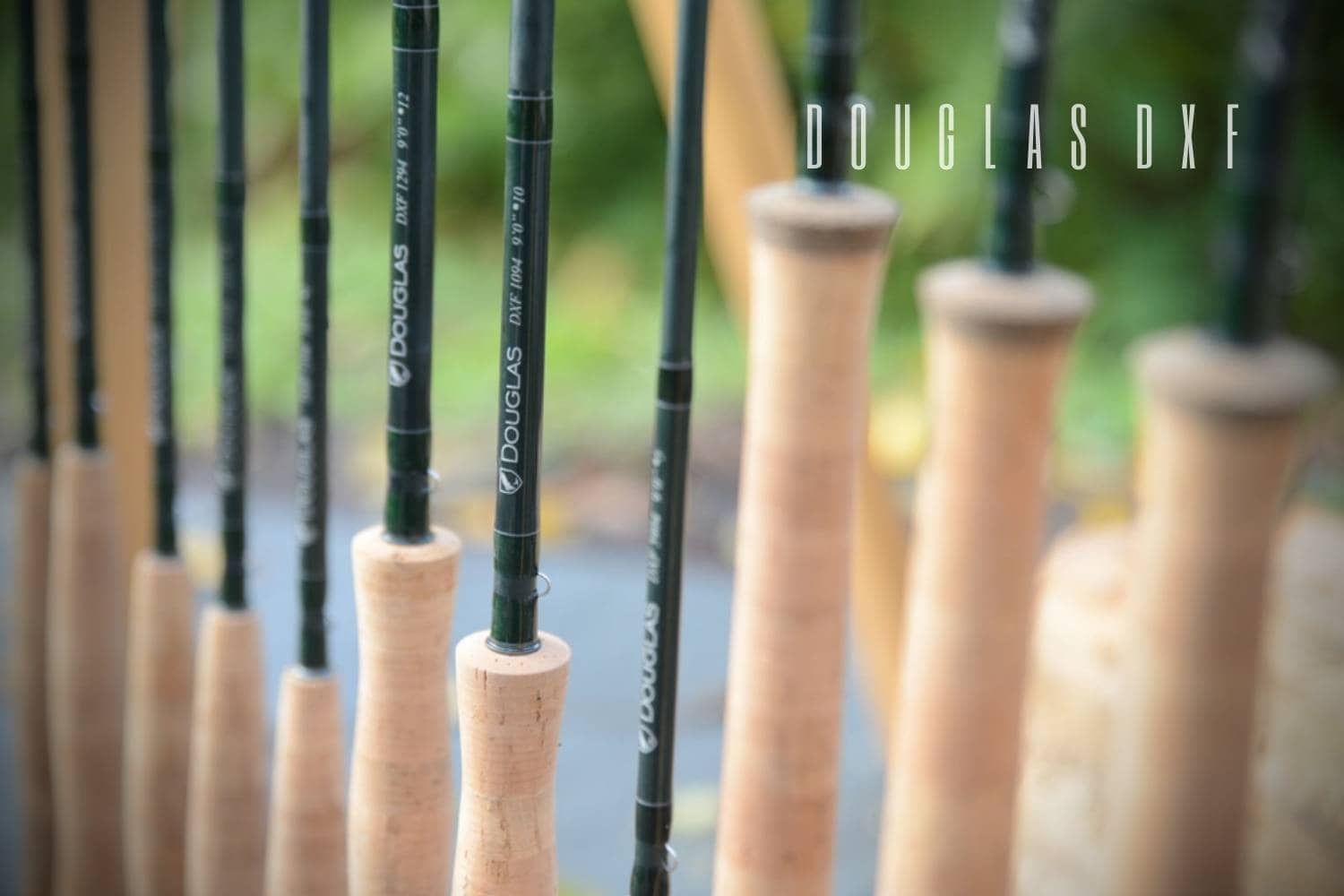
Short answer: A versatile moderate-to-fast rod whose softer tip offsets a noticeable swing load. DXF balances two sensations that do not always appear together: a soft enough tip for presentation and a backbone capable of moving a substantial fly. The reviewed matte-green rod felt crisp with dries, nymphs, and streamers, but its swing mass became more obvious as casting continued. That tradeoff gives the series a recognizable character. It is an adaptable fishing tool for someone who accepts a little more hand load in exchange for turnover and a forgiving tip.
Douglas DXF at a glance
| Category | What applies here |
|---|---|
| Original DXF range | Historical family listings conflict between 2–10 and 3–12 line weights; verify the exact blank inscription. |
| Original DXF lengths | Historical family lengths ranged from 9 to 11 feet |
| Original DXF action | Described inconsistently as fast, moderate-to-fast, and close to true medium; cast the exact configuration. |
| Original DXF build | Four-section high-modulus XMatrix blank, SiC strippers, hard-chrome snakes, wood seat, reverse half wells |
| Observed emphasis | Crisp turnover, soft tip, useful wind authority, heavier swing feel |
The specifications and casting observations apply only to the matte-green XMatrix DXF generation. Match the exact length and line weight before expecting the same soft-tip presentation, lower-blank authority, and noticeable swing load.
Casting character of this generation
The 5-weight character was crisp rather than extremely fast. It handled nymphs, dries, and modest streamers, while the softer tip helped a dry or dry-dropper settle with control and reduced abrupt pressure on fine tippet. The lower blank could drive a cast into wind and extend a tight loop. Over a long session, however, swing weight made the rod feel slower in hand, especially when the fly itself added mass and air resistance.
DXF is revealed by changing loads. A dry shows what the soft tip contributes, a nymph tests recovery, and a modest streamer exposes whether swing weight becomes intrusive for the individual caster.
Blank, grip and hardware
The matte-green DXF used high-modulus material with XMatrix carbon technology, two SiC stripping guides, oversized hard-chrome snakes and tip-top, a burled-wood reel seat, double-uplocking rings, alignment dots, and a reverse half-wells cork grip. The larger guide train encourages quick line movement, though the reviewed setup could allow loose line to tangle on occasion. The finish is traditional and subdued, with hardware selected for function rather than visual novelty.
XMatrix material, green finish, large guides, and wood seat identify the reviewed build. Insert damage, ferrule wear, or loose locking rings can alter performance more than any cosmetic blemish.
Where the rod makes sense
A trout-weight DXF can move among a dry, a nymph rig, and a modest streamer without forcing an immediate rod change. The tip supplies presentation and tippet protection; the backbone brings authority when wind rises. Heavier family members expand the load range, while longer specialty versions answer more specific techniques. That breadth should guide selection rather than justify one model for everything. The useful goal is a configuration whose swing and line speed fit the actual day.
Varied river techniques suit the trout model when fly mass remains proportionate. Wind, loose-line management, reel balance, and session length decide whether the stronger backbone compensates for the noticeable swing load.
Tradeoffs that define the design
The original DXF carried fast, moderate-to-fast, and near-true-medium action descriptions. Cast the exact configuration rather than treating any one label as definitive. Swing weight is the other clear limit. A caster sensitive to fatigue may find the rod demanding over hours, and oversized guides can be less tidy with unmanaged loose line.
The DXF's extra substance is the cost of its useful lower-blank authority. Calling the rod either fast or medium does less to clarify that exchange than casting the exact configuration with a real fly.
A practical choice test
Try the DXF with a balanced reel and the line taper intended for fishing. Make several short presentations, then add a streamer and cast into safe open space. Notice whether the soft tip recovers cleanly and whether the grip remains comfortable as the swing load accumulates. Someone who values versatility and wind authority may welcome the extra substance. A user seeking the lightest possible sensation or a dedicated dry-fly bend should compare a more specialized blank.
Record the matte-green blank, XMatrix-era markings, length, and line weight before relying on a DXF comparison. Specialty lengths and salt models cannot verify the 5-weight observations given here.
Setup and condition check
Inspect a used DXF at the oversized tip-top, both stripping-guide inserts, each snake foot, the wood seat, and the four ferrules. Confirm that the alignment dots still correspond and that no section has been replaced by a visually similar piece. Turn both locking rings under reel-foot pressure. Carry the rod in its protective tube and sock, keeping grit away from the joints. Following coastal exposure, rinse hardware gently, separate the sections to dry, and check for corrosion beneath the guide wraps.
- Verify the matte-green DXF identity and printed configuration on the blank itself.
- Seat and inspect every joint on this matte-green DXF before applying a full casting load.
- Balance the matte-green DXF with the reel, line, leader, and fly intended for its actual job.
- Do not extend this matte-green XMatrix DXF handling verdict to specialty lengths, salt models, or redesigned namesakes.
Verdict on the original-generation Douglas DXF
The original-generation Douglas DXF is a credible multipurpose rod because its soft tip and strong lower blank divide the work sensibly. It offers controlled presentations, enough authority for wind, and a broad technique range, while heavier swing feel prevents it from seeming effortless. Mixed action labels and wide family coverage make exact configuration essential. Keep this verdict with the matte-green XMatrix generation; no later DXF or adjacent Douglas model inherits the handling record.
