
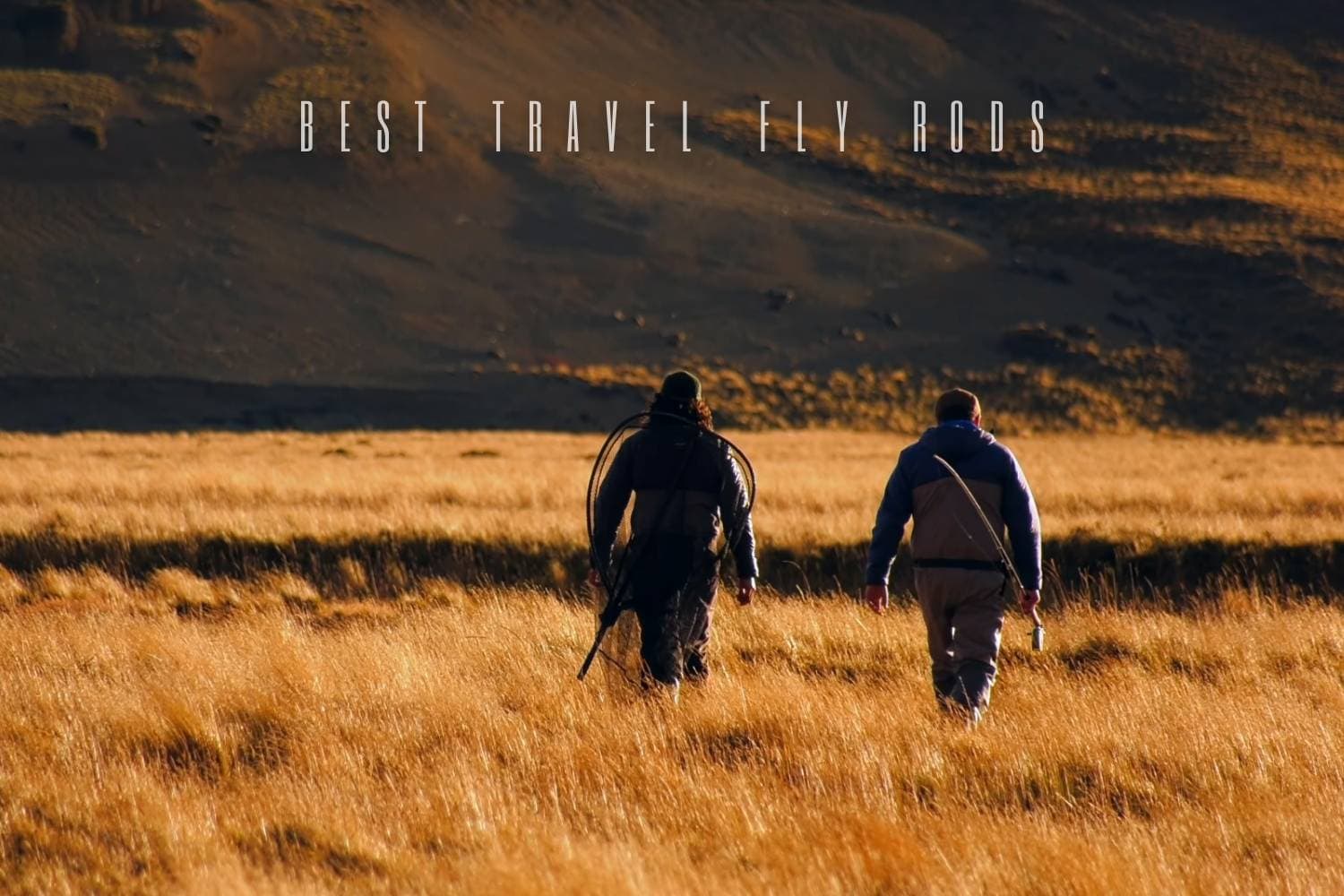
Travel fly rod buyer’s guide
A travel rod solves a packing problem, but it still has to fish when the journey ends. The smallest case is not automatically the best choice. More sections can shorten the packed length while adding ferrules to assemble, inspect, and keep seated. The useful target is a rod that fits the real bag, covers the destination’s flies, and remains pleasant enough to use for the whole trip.
Plan backward from the water and forward from the luggage. Destination, species, wind, fly size, transport mode, and backup options all matter. The named rods below are article-era examples, so their old configurations should not be read as a statement about later versions.
Write a destination brief before comparing rods
Record the fish, typical fly, likely wind, water type, and longest necessary cast. Then note how the rod must travel: inside a backpack, in ordinary luggage, in a vehicle, or carried between several transport modes. Packed length is only meaningful against that exact space.
A light trout trip may favor a compact moderate-action rod that loads at close range. A windy coast demands more line speed, stronger tackle, and fittings suited to corrosive conditions. A single rod can cover several trips only when those trips share similar casting loads. Otherwise, a versatile travel rod becomes a compromise at every destination.
Balance pack size against fishing performance
| Travel situation | Priority | Trade-off to accept or avoid |
|---|---|---|
| Backpacking to trout water | Low packed bulk, protective case, useful short-range load | Do not sacrifice the required line class merely to save a little space |
| Ordinary luggage | Case length and crush protection | A softer bag may fit easily but protect poorly |
| Windy freshwater trip | Stable recovery and enough line weight for the normal fly | A stiffer rod may be less friendly at close range |
| Saltwater destination | Appropriate power, fighting grip, secure reel seat, suitable guides | Heavier hardware and larger packed components |
| One-rod mixed itinerary | The hardest recurring casting job | General utility will not replace a true specialist at either extreme |
Five article-era travel strategies
Each section below stays with the exact historical name represented in the retained article. The examples illuminate packing choices; they do not authorize transferring dimensions, action, or fishing impressions to another generation.
Echo Trip eight-piece: minimum packed length
The article-era Echo Trip example used eight sections and was described as packing to roughly eighteen inches. Its matching observations praised straightforward assembly with alignment dots and a sturdy fishing feel for such a compact format. This is the maximum-section strategy: valuable when bag length is the binding constraint, but dependent on careful ferrule assembly throughout the day.
Redington Classic Trout six-piece: trout-first travel
The retained Classic Trout travel section describes six-piece, nine-foot examples in light trout weights with a packed length around seventeen and a half inches. The matching article-era notes emphasize accurate, sensitive trout casting while acknowledging limits in strong wind and long-distance work. This is a destination-specific option rather than a universal expedition rod.
Maxcatch Traveler seven-piece: compact general-river idea
The exact Traveler section presents a seven-piece carbon-fiber rod and notes alignment dots, power, and accuracy in the represented configuration. Its buyer lesson is to inspect the complete build rather than let low packed volume dominate. Ferrule fit, guide alignment, reel-seat security, and the intended action all need to agree.
Hardy Demon Saltwater: destination power before minimum size
The article-era Demon Saltwater example packed longer than the smallest trout options and paired that compromise with saltwater-oriented hardware, a fighting butt, and more authority. The matching notes favor short-to-middle-distance accuracy over extreme distance. It illustrates an important rule: a travel rod for powerful fish should be chosen as a capable fishing rod first and compact luggage second.
Orvis Clearwater Frequent Flyer: seven-piece historical context
The retained Frequent Flyer section describes an ultralight seven-piece rod with responsive casting impressions, while also identifying it as no longer manufactured at the time of that article. That lifecycle statement belongs to the represented generation only. A used example should be inspected by exact label, section count, repair history, and condition rather than confused with another Clearwater product.
Make every ferrule part of the routine
- Lay the sections in order on a clean surface and confirm that none is missing or duplicated.
- Inspect male and female ferrules for grit, impact marks, or cracks before joining them.
- Seat each joint securely without forcing it, then align the guides from the butt toward the tip.
- Check the joints again after the first period of casting and whenever the rod begins to click or feel different.
- Separate, wipe, and dry the sections before returning them to the bag and tube.
More joints create more opportunities for one section to loosen. A loose ferrule concentrates stress near the end of the overlap and can damage the blank. Stop and reseat the rod rather than finishing the pool with a suspicious connection.
Pack the case, not just the rod
Measure the outside of the tube or hard case, including caps and handles. A rod section may fit a backpack while its protective case does not. For air or vehicle travel, prevent the tube from flexing under other luggage. Keep reels, heavy fly boxes, and tools from striking the blank.
Carry a fishing system that can recover from trouble
A compact rod is only one part of trip resilience. Bring the correct line, spare leaders, tippet suited to the target, and a way to clean grit from joints. If the destination is remote, consider whether a spare line or backup rod section is realistic. Never improvise a mismatched tip after a break and assume the original action or strength remains intact.
Before departure, assemble the rod and cast it with the exact reel and line you will pack. This catches missing sections, an incorrectly spooled line, a loose reel foot, and a case that will not close around the chosen setup. A home test is cheaper than discovering incompatibility beside the water.
After harsh water
Rinse suitable exposed hardware with fresh water after corrosive conditions, dry every section, and inspect guides before storage. Avoid trapping a wet grip or damp cloth in a sealed tube. Care should follow the rod maker’s instructions for the exact model; do not apply chemicals or lubricants to a blank or ferrule without specific guidance.
Pack the rod that earns its space
Choose the shortest packed rod that still meets the destination’s real casting load. For a sheltered trout hike, compactness and close-range feel may decide the shortlist. For open water, wind, or salt, line class and hardware must win even if the tube is longer and heavier.
A strong travel choice passes three tests before the ticket is booked: it fits the actual bag in its protective case, it casts the planned flies with the packed line, and every section can be assembled securely. When those conditions are met, portability supports the fishing instead of replacing it.
