
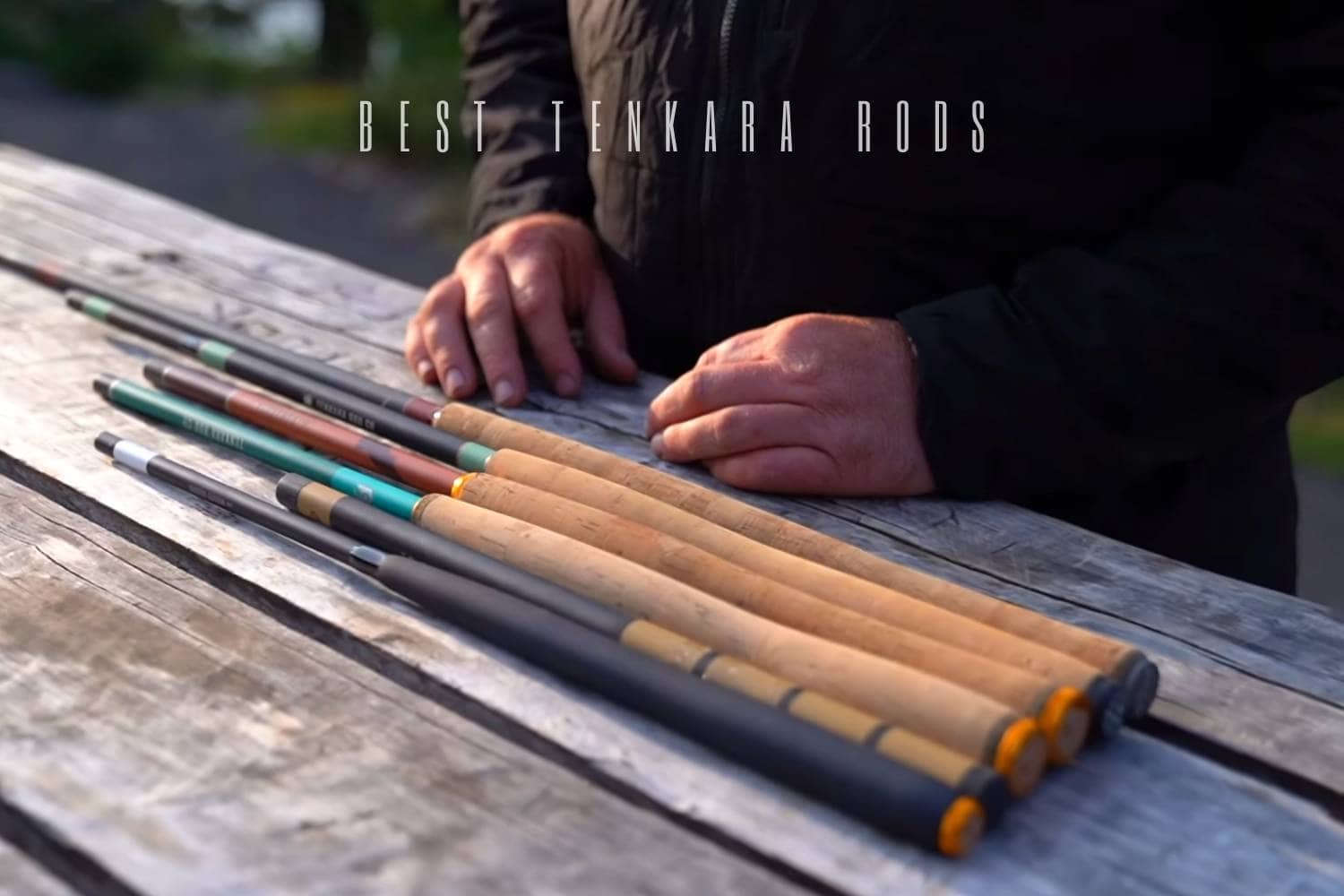
Tenkara removes the reel, but it does not remove the need for a careful system choice. Rod length, fixed-line length, overhead cover, current speed, fish size, and collapsed dimensions interact directly. The best first decision is therefore a map of the water: how much open reach exists, where branches intrude, and how far you are willing to carry a rigid telescoping package.
What changes when the reel disappears
A tenkara rod stores as nested telescoping sections and carries a fixed line from the lillian at the tip. There are no guides and no reel to recover line or provide mechanical drag. Reach comes from the rod and line together. Fish control comes from rod angle, blank flex, footwork, and the angler’s ability to guide the fish into manageable water.
This simplicity makes terrain more important, not less. A long rod and line can keep line off conflicting currents and present a fly with little surface disturbance, but the same reach becomes awkward beneath trees. A short collapsed length helps on a hike only if the packed tube fits securely and the extended tool suits the creek. Measure both conditions.
Flex descriptions in tenkara are not perfectly interchangeable with conventional fly-rod action labels. Numbers such as 6:4 may describe where a rod tends to bend, while actual feel still depends on taper, length, and load. Hold the rod extended, make gentle casts with the intended line, and notice recovery, tip bounce, and grip comfort rather than purchasing by ratio alone.
Match the rod to stream geometry
| Terrain or goal | Design clue | Main compromise | Article-era examples |
|---|---|---|---|
| Brushy headwater | Moderate extended reach and compact collapsed storage | Less ability to span broad conflicting currents | Tenkara USA Hane; DRAGONtail Shadowfire 365 |
| Open trout stream | A balanced twelve-foot class with a manageable fixed line | More tip leverage and greater demand on fish control | Tenkara Iwana twelve-foot; Wild Water Tenkara Combo |
| First complete setup | Clearly identified rod, line, tippet, and storage components | Bundle contents may not match local water | Maxcatch Tenkara Combo Kit; Wild Water Tenkara Combo |
| Longer weighted fixed-line work | A stiffer, longer keiryu-style layout | Major overhead and transport constraints | Keiryu Rod Co. Telescoping Keiryu Rod |
Keiryu and tenkara are adjacent rather than identical. The article-era keiryu example used a longer, stiffer tool and discussed weighted flies or bait. Buyers should not collapse every telescoping fixed-line rod into one category. Decide whether the method, rig, and water call for traditional tenkara simplicity or the added reach and loading of a keiryu-style setup.
Historical rods as terrain lessons
Tenkara USA Hane
The writer found the article-era Hane stiff and tip-heavy, while valuing its compact packed form. That observation is limited to the rod discussed in that section. It reveals a real trade-off: short storage and stronger-feeling flex can suit travel and larger-water ambitions, yet forward balance may become tiring and small fish may feel muted.
Tenkara Iwana twelve-foot
The article-era Iwana represented the lighter, more presentation-focused side of the category. Its section emphasized precision, delicacy, and sensitivity rather than maximum fish size. Do not assume those qualities or dimensions carry to a later product with a similar name; use them to identify the feel you want to test.
DRAGONtail Shadowfire 365
This historical combo illustrated the low-commitment backpacking role and mentioned a plug that required attention. For any telescoping rod, small closure parts deserve inspection because losing one can expose delicate sections during transport. Verify the exact packed kit instead of assuming an old bundle remains unchanged.
Maxcatch Tenkara Combo Kit
The article-era Maxcatch package was framed as a complete starting set. A bundle can remove shopping friction, but it may also include a line length or fly selection that does not suit local cover. Judge the rod first, then treat accessories as useful only when their specifications fit the planned water.
Test and protect a telescoping rod
- Measure the open casting corridor and compare it with both rod and fixed-line reach.
- Extend sections gently in order without twisting or forcing them.
- Cast with the intended line and watch how quickly the tip settles.
- Hold the rod at fishing angle long enough to reveal forward imbalance.
- Practice guiding a modest load toward a safe landing position without high-sticking.
- Collapse the rod in the correct order and confirm that cap, plug, lillian, and tube are secure.
Fine nested sections can be damaged by grit, side pressure, or careless collapse. Follow the instructions supplied with the exact rod, keep joints clean, and stop if a section binds. Do not grip a delicate section with tools or apply an improvised lubricant. Dry the equipment before prolonged storage and protect the tip from crushing inside a pack.
Let the stream set the length
A tenkara rod should make the water simpler: fewer moving parts, direct contact, and deliberate presentation. That simplicity appears only when extended reach fits the canopy and the rod’s balance fits the angler. Choose open-water span, backpack dimensions, flex, and fish-control needs before choosing a bundle. Article-era names help illustrate stiff travel rods, delicate twelve-foot tools, starter kits, and keiryu alternatives, but the final answer is geometric. The correct rod reaches useful lies without turning every branch, current seam, or hooked fish into a leverage problem.
