
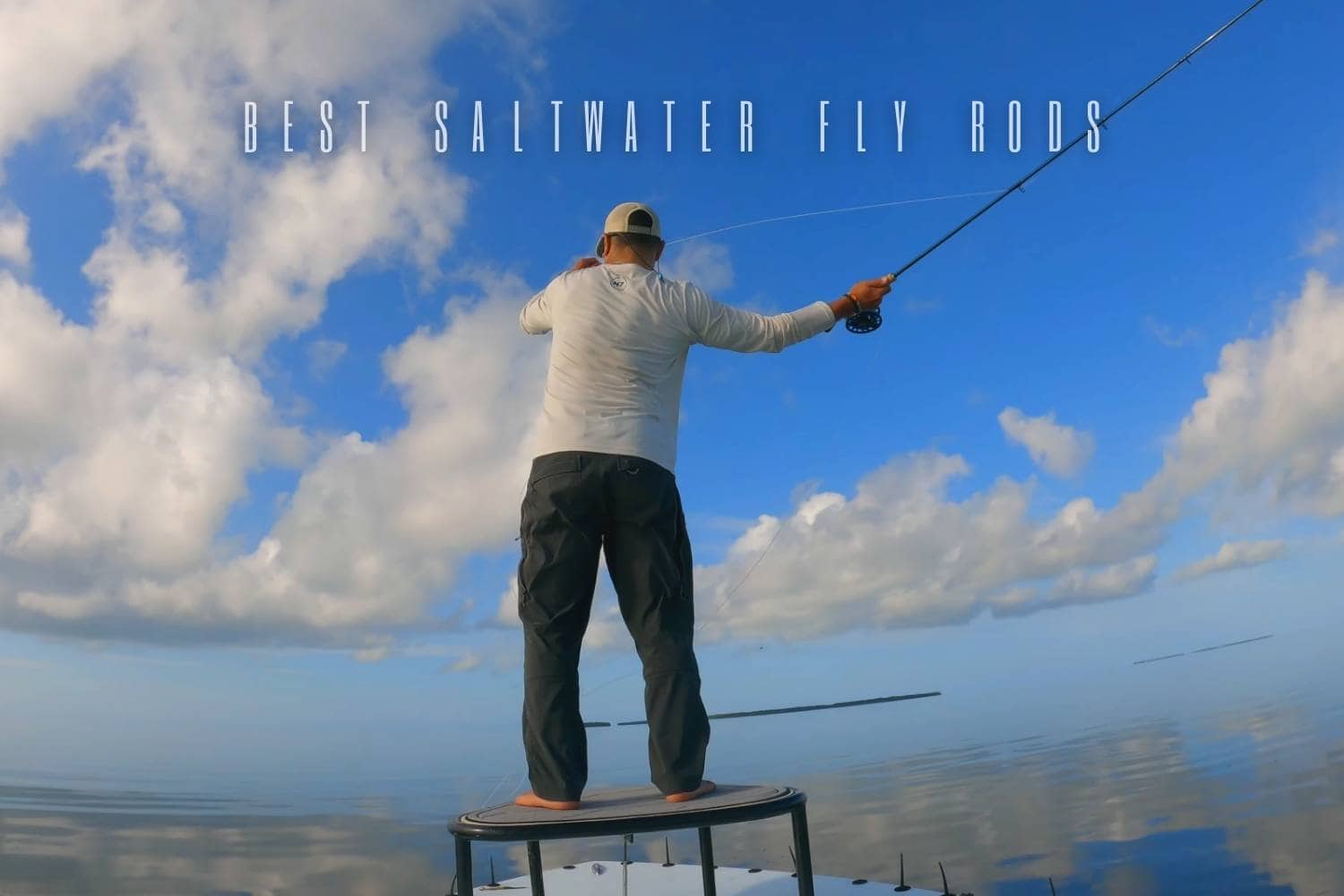
Choosing a Saltwater Fly Rod by Target and Conditions
Saltwater exposes weak decisions quickly. Wind reveals a poor line match, repeated casting exposes excess swing weight, and salt punishes neglected fittings. The right rod is therefore defined by target, fly, line, typical wind and the pressure required after the eat—not by a single claim of being saltwater ready.
Start with an 8-weight-style generalist only when its job truly fits. Larger flies, stronger fish and heavier lines move the decision upward, while smaller quarry in calm shallow water may allow less. The article-era rods named below illustrate several saltwater directions; none is evidence of current catalog status or an unchanged modern configuration.
Decision matrix
| Primary job | Look for | Trade-off | Article-era examples |
|---|---|---|---|
| General flats and light inshore work | A conventional-length 8-weight-style outfit with fast recovery | Versatile and manageable; limited for very large flies or fish | Hardy Zephrus SWS; Orvis Helios 3 |
| Repeated windy presentations | A stable fast blank that tracks and recovers cleanly | Maintains loop shape; demands accurate timing | Sage Salt HD; Scott Sector |
| Large flies and stronger fish | A higher line weight with secure hardware and strong butt | Adds lifting and turnover authority; increases fatigue | Heavier article-era Salt HD or NRX+ configurations |
| Short accurate shots from a skiff | Low swing weight, predictable tip and practical fighting butt | Quick presentation; not chosen for maximum distance | Scott Sector; Orvis Helios 3 |
| Travel to remote water | Four-piece format, protective tube and inspectable ferrules | Easier transport; requires disciplined assembly and spares planning | All five article-era families were shown as multi-piece directions |
Select line weight by quarry and fly
An 8-weight is a common starting point for many flats and inshore situations because it can carry useful flies without becoming an extreme outfit. Nine- and 10-weight tools add authority for larger patterns, stronger wind and more demanding fish. Eleven, 12 and heavier weights belong to increasingly specialized work where tackle, leader and fighting technique must be planned together.
Do not step up merely because salt water is present. A needlessly heavy outfit increases fatigue and can reduce delicacy. Conversely, forcing a light rod to deliver a bulky fly creates poor loops and unnecessary effort. Name the ordinary fly and the largest honest fish before choosing the line class.
Value accuracy before distance
Saltwater casts are often made under time pressure. The rod must load at the distance where the fish appears, track through the stroke and recover without a wandering tip. High line speed helps in wind, but speed without loop control sends the fly away from the target.
Practice with the complete line and leader while standing as you will fish. Include backhand casts, quick pickups and shots at several angles. A rod that only performs after many false casts may be poorly suited to a moving target. Repeatable placement is the useful measure.
Look for controlled pulling power
The butt section helps apply pressure, yet rod angle determines whether that strength is used safely. Fight from lower angles, change sides when necessary and avoid lifting the tip into a high-stick position. The leader, knots, hook and reel drag form one system with the rod.
More power can shorten a fight only when the angler can control it. A rod that overwhelms the caster or mismatches the tippet adds no practical advantage. Test lifting pressure cautiously and learn the outfit before a major trip rather than discovering its limits beside the boat.
Inspect every exposed component
A secure uplocking reel seat, sound guides and a usable fighting butt matter in a corrosive environment. Check guide feet, inserts and metal surfaces before travel. Ferrules should seat fully and stay aligned through repeated casting. A protective tube reduces transport damage but does not excuse packing a wet rod.
After salt exposure, rinse the rod with fresh water, wipe it gently and allow sections, bag and tube to dry. Inspect the reel seat threads and guides rather than applying unverified chemicals. Regular observation catches rough inserts or loosening hardware before they damage line or fail under load.
Read the article-era five by role
Sage Salt HD was framed as a high-power, long-range family across several line weights. Hardy Zephrus SWS emphasized a fast saltwater format. Scott Sector highlighted salt-oriented components and recovery, G. Loomis NRX+ represented a quick powerful direction, and Orvis Helios 3 supplied another fast accuracy-led route.
The exact names are article-era examples, not confirmation that the same designs remain on sale or that later names describe identical rods. When evaluating a used rod, confirm its printed line weight and sections, inspect corrosion and guides, and cast the exact unit. When evaluating another generation, rely on that rod’s own design and documentation.
Final decision
Choose a saltwater rod by writing down target, common fly, line, wind and required pressure. Those five details reveal whether a general 8-weight-style setup is sensible or whether the job demands a different class. Then test rapid accurate casts, not only maximum carry.
A capable saltwater outfit is balanced, cleanable and familiar in the hand. Inspect fittings, practice low-angle pressure and pack a realistic backup plan. The best choice is the one that still works after repeated shots and hard use, not the one with the most aggressive specification language.
