Small-stream rod buyer’s guide
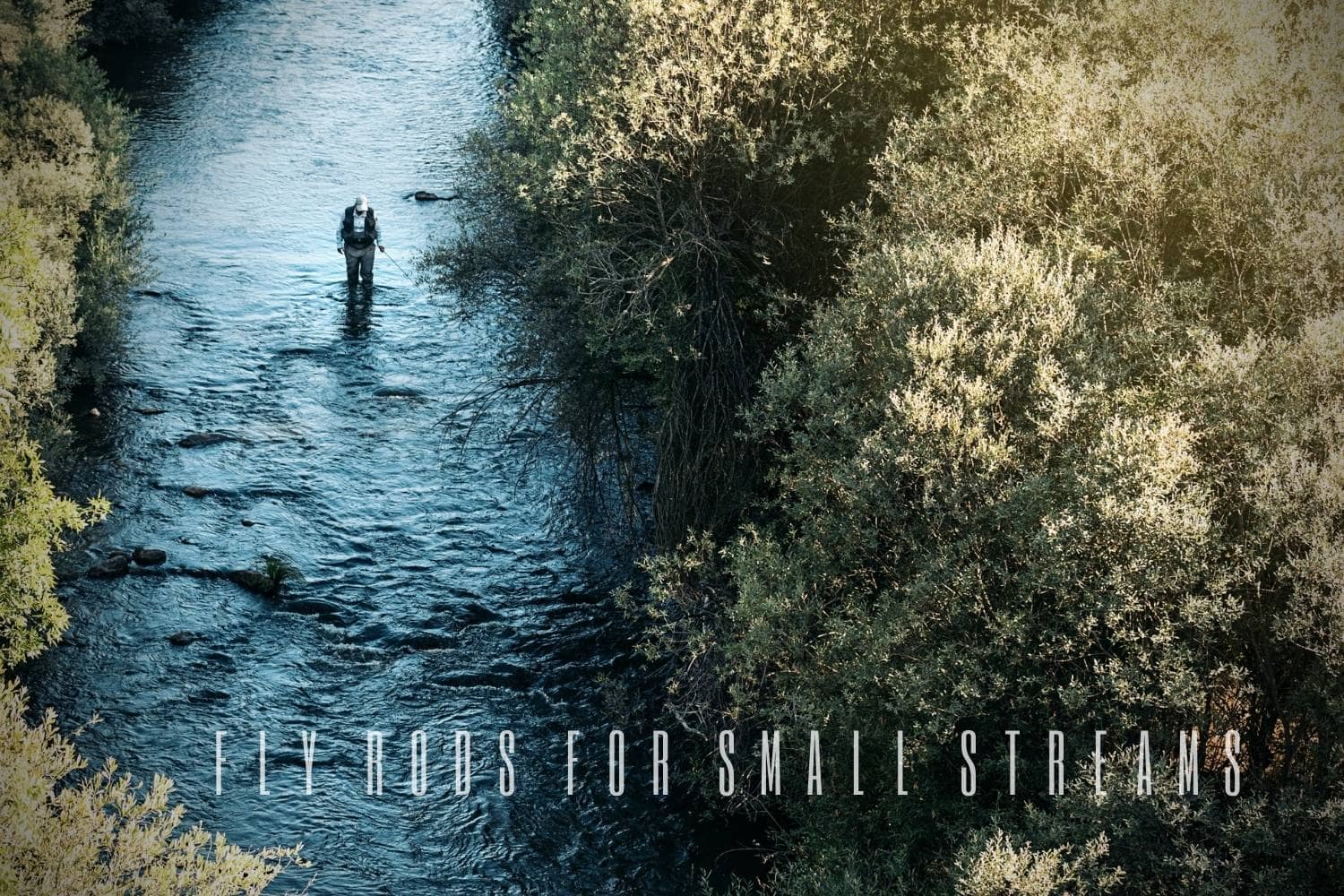
On a small stream, the cast is often decided by the space behind you rather than the water in front of you. Branches shorten the stroke, steep banks complicate line control, and wary fish punish a heavy landing. The right rod helps you form useful loops with little line outside the tip while remaining short enough to move through cover.
That makes “small stream” a setting, not one specification. A dry-fly creek, a pocket-water nymph run, and a brushy channel where roll casts dominate require different compromises. Choose around the cast you can make from the bank you actually stand on.
Measure the obstacles before the distance
A narrow channel may still favor a longer rod when high banks, complex currents, or nymphing demand reach. Conversely, open meadow water can accept a standard-length rod even when the stream itself is tiny. Walk through four questions: Is there room for an overhead cast? How far must you reach across conflicting currents? Are most flies dry, weighted, or both? How large are the fish and tippet you expect to use?
Line weight should follow the rig. A light line can land softly and make modest fish lively, but it loses authority as flies become larger or weight is added. A heavier line turns over more mass but can arrive with more disturbance. The aim is not the smallest number possible; it is the lightest coherent system for the regular fly and leader.
Pick the compromise that fits the technique
| Primary job | Rod direction | Watch for |
|---|---|---|
| Short dry-fly casts under cover | Shorter, lighter rod with a moderate loading feel | Too little reach for mending across mixed current |
| Dry flies plus light nymphs | A balanced light trout rod near standard creek length | A design that is either too soft for weight or too stiff up close |
| Tight-line nymphing | More length, sensitive tip, low overall swing weight | Branches, transport, and tip protection while landing fish |
| Roll casts and bow-and-arrow casts | A rod that loads clearly with limited line | Fast tapers that feel unresponsive at very short range |
| Occasional larger flies | A little more line weight and stable recovery | Giving up the soft presentation used most of the day |
Lessons from the article-era rod set
The retained page names five exact examples. They show different solutions to small-water problems, but they do not establish continuity into later versions. Keep any casting observation with the same named generation and configuration.
Orvis Clearwater: mixed-method all-rounder
The article-era Clearwater example centers on an eight-foot-six-inch four-weight configuration for combining dry-fly and nymph work. That length sits between a brush-specific short rod and a dedicated long nymphing tool. Its buyer lesson is breadth: choose this type of compromise when the stream changes character through the day and no single technique dominates.
Okuma Crisium: compact dry-fly direction
The retained Crisium section identifies a seven-foot four-weight, two-piece example with medium action. A short rod can be easier to steer under a canopy and through brush, while two long sections may be less convenient to carry than a rod with more pieces. Inspect the ferrule and case length if transport through dense cover matters.
Redington Classic Trout: forgiving trout feel
The matching Classic Trout example uses an eight-foot-six-inch four-weight with moderate action. This design direction favors a readable load and controlled presentation rather than maximum line speed. It suits anglers who want one light trout rod to cover more than the shortest casts, provided their rigs remain modest.
Echo Shadow II: specialized nymph reach
The article-era Shadow II section describes a ten-foot light-line rod for technical nymphing. The extra reach helps control drift and keep line away from conflicting currents, but it changes the whole small-stream problem. A long, soft tip needs deliberate handling around branches and during landing; it is not the natural substitute for a short dry-fly rod.
TFO Lefty Kreh Signature Series II: short dry-fly setup
The retained section focuses on a seven-foot-six-inch three-weight, two-piece example with a moderate feel. This is the classic tight-cover idea: compact movement and delicate dry-fly work. Its limits appear when heavier nymph rigs, stronger wind, or broad mends become regular requirements.
Let the stream shape the cast
Use less false casting
Extra false casts create more chances to touch branches and warn fish. On confined water, lift cleanly, form the loop you need, and present. A roll cast can reposition line without requiring a full back cast, while a sidearm cast can pass beneath overhanging limbs. A bow-and-arrow delivery is a close-range placement tool when there is almost no casting lane.
Load the rod at useful distance
A rod designed only to feel alive with a long line outside the tip may be frustrating when most casts are a few rod lengths. Test short-range loading if possible. The line taper also matters: a front section that turns over the normal leader and fly can make a suitable rod feel much more cooperative.
Control drift without overreaching
Reach is valuable, but a longer rod is not free. It can strike overhead cover, increase swing weight, and complicate close handling. Use length to solve a real drift-control problem. If the stream is narrow enough to step closer or change the casting angle, a shorter rod may remain the cleaner choice.
Protect light rods from ordinary accidents
- Keep the tip away from branches when moving between pools; point the rod behind you only when the path is clear.
- Check ferrules during the day because repeated short casts and contact with brush can work joints loose.
- Do not pull a snag free by bending the rod deeply; point the rod toward the snag and pull through the line system.
- When landing a fish, avoid lifting the rod beyond a steep angle that concentrates load in the tip.
- Dry the grip and blank before returning the rod to a closed tube.
Small-stream tackle is often light, but light does not mean fragile by definition. Most damage comes from doors, falls, loose ferrules, high sticking, or careless transport rather than from ordinary casting.
Choose for the cast you repeat all day
If most of your fishing is dry flies beneath a canopy, prioritize short-range load, modest length, and presentation. If you split time between dries and light nymphs, accept a little more length and authority. If tight-line nymphing is the purpose, choose reach and tip behavior deliberately instead of calling a long rod a general creek tool.
The right small-stream rod disappears into the problem: it clears the branch, forms a useful loop with little line, and helps the fly enter without unnecessary commotion. Describe your stream’s obstacles first, and the sensible rod category will usually become obvious.
