
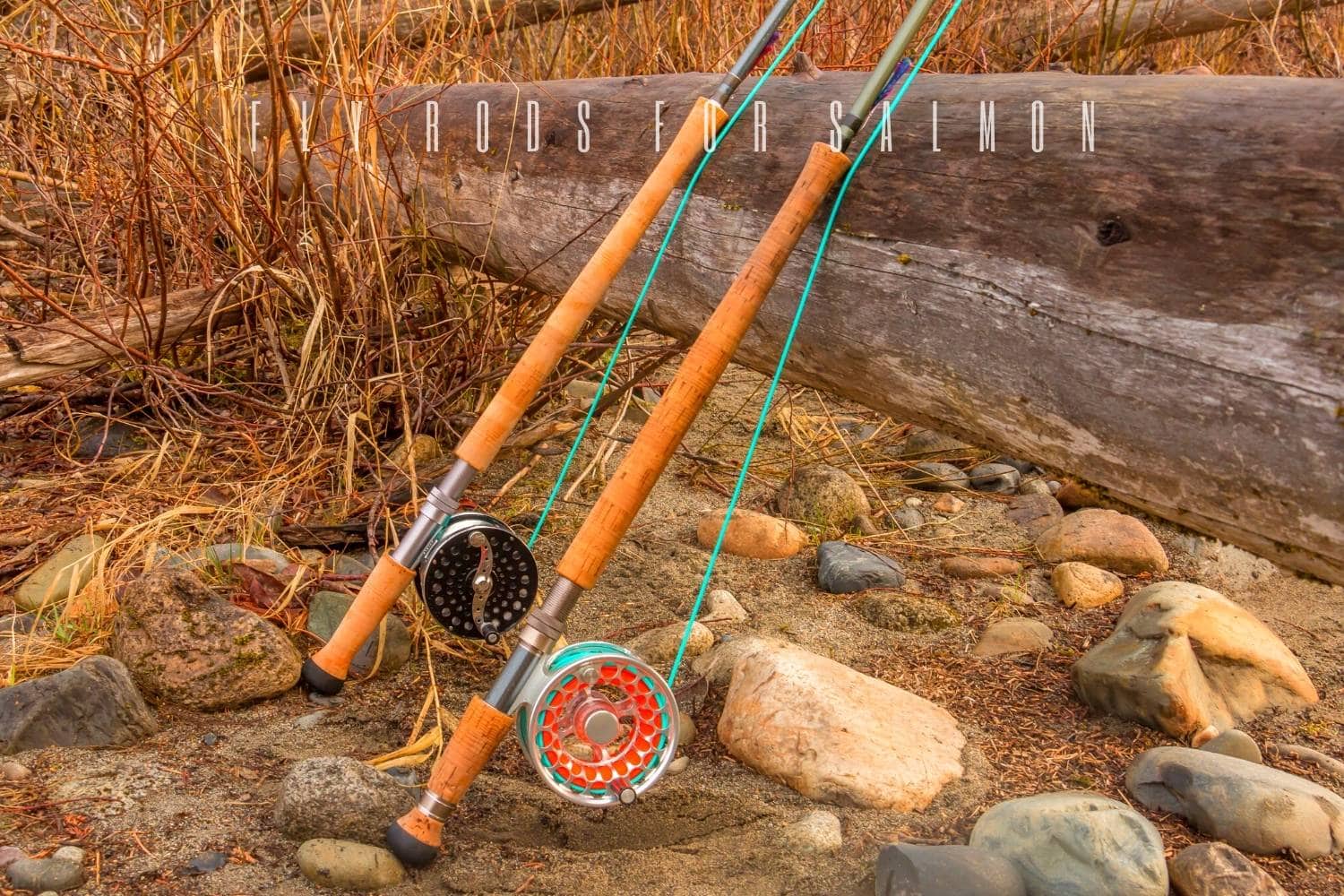
Choosing a Salmon Fly Rod by River and Casting Method
A salmon fly rod begins with river geometry and casting method. A single-hand rod, a compact switch setup and a full Spey rod can share a target species while solving different problems. Bank room, current width, fly and line system decide which tool makes sense long before brand or finish enters the conversation.
Separate two questions: how the line will be delivered and how much reach or leverage the water demands. The article-era Sage X, Redington Chromer, Orvis Clearwater Two-Handed and Echo Swing examples show distinct paths, but they are not current-catalog claims. Use them to understand formats, then verify any exact rod on its own merits.
Decision matrix
| Primary job | Look for | Trade-off | Article-era examples |
|---|---|---|---|
| Confined banks and mixed casting | A switch-length two-handed rod that can cover compact techniques | Flexible around changing water; line setup requires care | Echo Swing; shorter Orvis Clearwater Two-Handed examples |
| Broad river with room for sustained-anchor casts | A longer Spey rod matched to the head and sink-tip system | Reach and efficient two-handed casting; awkward in tight cover | Redington Chromer; longer Echo Swing examples |
| Single-hand overhead or indicator work | A strong conventional rod in a suitable line class | Familiar casting and transport; less leverage for repeated broad-river swings | Sage X article-era configuration |
| Heavy tips and larger flies | A rod and head pairing built for the total payload | Turns over dense systems; increases fatigue and setup complexity | Heavier Chromer, Clearwater or Swing directions |
| Travel to varied river sizes | A multi-piece outfit with an adaptable but defined line plan | Portable and flexible; compromise must be practiced before the trip | Four-piece article-era examples across the set |
Choose single-hand, switch or Spey
Single-hand rods suit overhead casting, indicator work and places where the familiar stroke is practical. Switch rods occupy a middle length and can support compact two-handed techniques while remaining manageable on smaller water. Full Spey rods add reach and leverage for broad rivers and repeated swinging, but they need room, a matched line system and technique.
Do not buy a two-handed rod merely because the target is salmon. Study the home river: width, bank vegetation, wading depth and prevailing casting side. A long rod can solve line-control problems on open water while creating new problems beneath trees or on a steep bank.
Match the entire line system
The number on a salmon rod does not tell the complete payload story. Head type, head weight, running line, leader, sink tip and fly all contribute. A compact head may suit restricted space and heavier tips; a longer-bellied system asks for different timing and room. Follow the exact rod and line guidance available for the unit you are considering.
A practical test includes the tip and fly type you expect to fish. The system should anchor predictably, form a clean D-loop where the bank allows and turn over without a violent forward stroke. If the setup feels vague or collapses, change one variable at a time rather than blaming the blank immediately.
Let river scale set length
Long rods help manage broad current seams, mend or steer line and keep a larger D-loop clear of the water. Their leverage can also support sustained two-handed work. Shorter switch-style rods are easier in confined places, simpler to transport and often more convenient for mixed techniques.
Extra length adds swing weight and magnifies poor movement. Hold the complete outfit and make repeated casts before deciding. A rod that feels acceptable for three lawn casts may become tiring during a full day of stepping down a run.
Use action to support timing
Fast and medium-fast labels are relative, especially across two-handed designs. The important question is where you feel the rod load with the intended head and whether recovery supports a stable loop. A rod that is too abrupt for the caster can encourage force; one that is too soft for the payload may struggle to recover.
Practice both casting directions and the changes required when wind or bank orientation shifts. Salmon fishing rewards efficient movement. Smooth anchor placement, a quiet lift and a controlled forward stroke matter more than making every cast as long as possible.
Understand the article-era formats
The Sage X example represented a powerful single-hand route. Redington Chromer was presented as a dedicated Spey family for steelhead and salmon rivers. Orvis Clearwater Two-Handed illustrated purpose-built longer rods, while Echo Swing covered both switch and two-handed directions with a comparatively more moderate feel.
These descriptions remain attached to the exact article-era entities. A later family name may hide a changed taper, line recommendation or configuration. For a used rod, read every inscription, verify all sections are present, inspect ferrules and guides, and ask which head was actually used successfully with that exact unit.
Final decision
Begin with a map of the river, not a catalog. Casting room, river width, fly and line system will tell you whether the answer is single-hand, switch or Spey. Length and action can then be judged within the correct format instead of compared across incompatible jobs.
Assemble and cast the complete system before important travel. A well-matched head on a manageable rod will outperform an impressive blank paired by guesswork. Choose the setup you can cast smoothly from both banks, maintain carefully and control confidently when a fish finally takes.
