
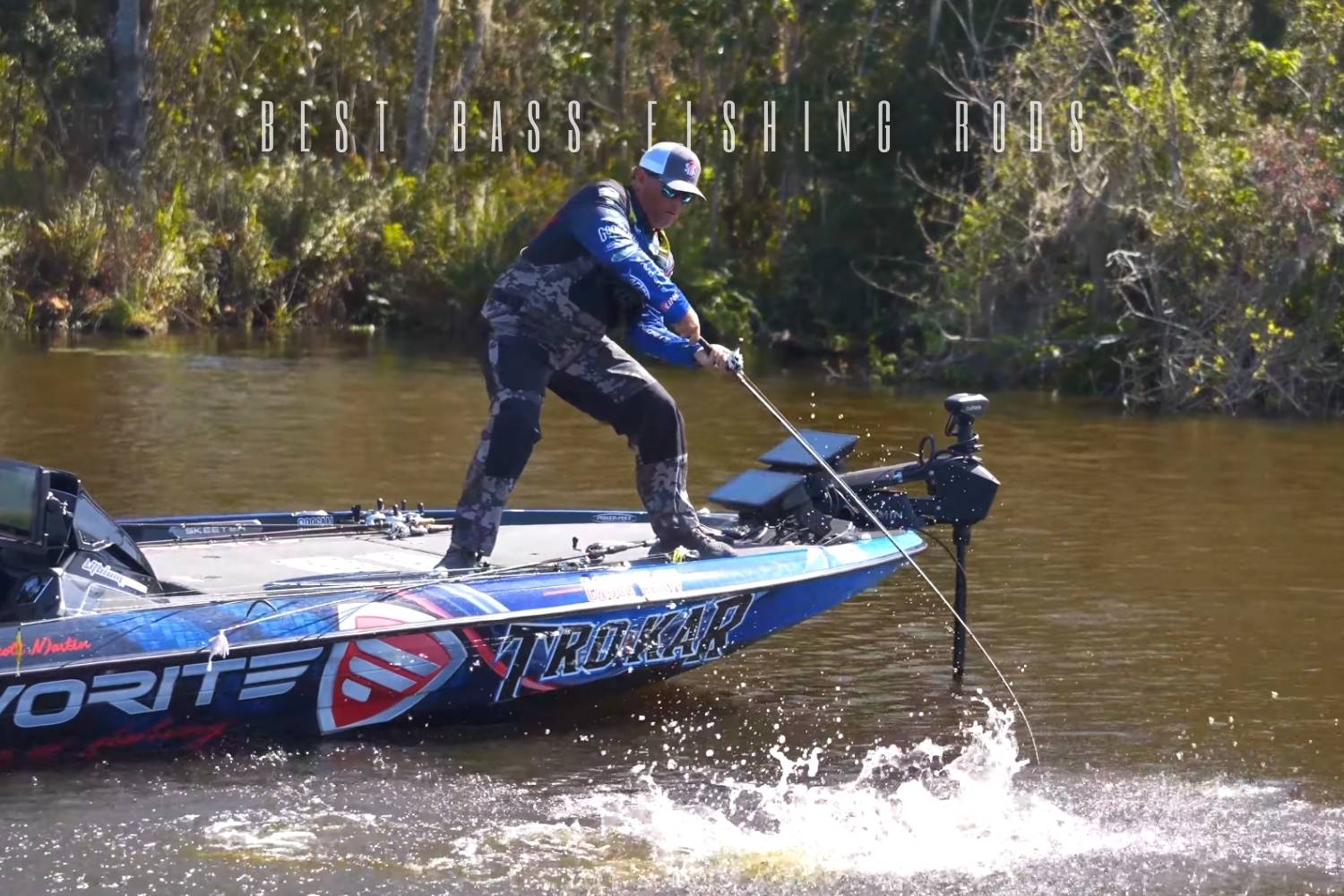
Choosing a Bass Fishing Rod by Technique
Bass rods are technique tools. The rod that skips a light lure beneath cover is not automatically the rod that drives a hook through a heavy presentation or keeps a fish clear of vegetation. Choosing well means describing lure weight, cover, retrieve and reel type before comparing brand names.
This guide separates spinning, casting and travel needs, then uses several article-era products as examples of those layouts. They are not presented as current offers. The goal is to build a small, understandable system rather than treat every bass technique as a reason to buy another nearly identical rod.
Decision matrix
| Primary job | Look for | Trade-off | Article-era examples |
|---|---|---|---|
| Light lures and open water | Spinning rod with a responsive tip and moderate backbone | Easy light-lure handling; less authority in dense cover | St. Croix Premier; Shakespeare Ugly Stik GX2 |
| Accurate casting around targets | Casting rod with controlled fast action | Direct lure control; requires comfort with a casting reel | Abu Garcia Veracity; G. Loomis E6X |
| General-purpose bank fishing | Medium-power, fast or moderate-fast layout | Covers common lures; compromises at finesse and heavy-cover extremes | KastKing Perigee II |
| Travel and vehicle storage | Multi-piece or telescopic format with protected guides | Compact carry; more joints and moving sections to inspect | KastKing Blackhawk II |
| Inshore crossover | Corrosion-conscious fittings and suitable line/lure rating | Wider environmental use; may feel heavier than a freshwater specialist | St. Croix Mojo Inshore |
Choose spinning or casting first
Spinning tackle is approachable with lighter lures and gives the line a relatively open path from the spool. It suits finesse presentations, smaller baits and anglers who value easy setup. Casting tackle places the reel above the rod and gives direct control for accurate work around targets, but spool control and braking need practice.
The reel choice affects handle shape, guide train and balance, so it cannot be postponed until after buying the rod. Mount the intended reel, hold the outfit where you naturally grip it and check that the line path matches the rod type. A comfortable bare rod can become awkward when paired with a heavy reel.
Separate power from action
Power describes how much force is needed to bend the rod; action describes where the bend begins. A fast-action tip on a medium-power blank can provide lure feedback without behaving like a heavy-cover rod. A more moderate bend can keep steady pressure with moving lures, while heavier power is useful when hooks, cover and fish demand authority.
Avoid choosing by species alone. A small lure on open water does not need the same blank as a heavy lure pulled through vegetation, even when both target largemouth bass. Match the rod’s printed lure and line range to the actual terminal tackle, then use action to tune casting feel and hook application.
Use length deliberately
Longer rods increase reach, line pickup and casting leverage. They can help from an open bank or boat deck, but become cumbersome beneath trees, in a kayak or when making short target casts. Shorter rods move easily in confined spaces and can feel precise, though they give up some reach.
Handle length matters alongside total length. A long rear grip can brace against the forearm during powerful casts yet catch clothing in a compact cockpit. Rehearse the motion you use most: an overhead cast in open water, a low side cast beneath branches, or a quick pitch toward cover.
Inspect build quality at stress points
Guides should align, inserts should be smooth, and the reel seat should lock without movement. On multi-piece and telescopic designs, each joint deserves attention because sand or incomplete seating can concentrate stress. Clean moving sections before collapsing them, and never force a gritty joint.
Durability also depends on transport. Protect the tip, avoid closing a vehicle door on the blank, and do not let loose rods bounce against hard tackle. A modest rod stored carefully can outlast an expensive one treated as indestructible. Examine used examples for flattened guide rings, cracked finish around feet and damage near ferrules.
Place the article-era examples in context
KastKing Perigee II was positioned as a broad-value choice, while Abu Garcia Veracity and G. Loomis E6X represented casting-oriented tools. KastKing Blackhawk II supplied the telescopic travel direction. St. Croix Mojo Inshore illustrated an environmental crossover, and St. Croix Premier plus Shakespeare Ugly Stik GX2 covered different spinning priorities. Enigma Fishing Phenom was framed as a powerful bass-specific option.
Those descriptions belong to the named article-era products, not to every later family member. If one appears used, verify the exact model markings, straightness, joints, guide condition and reel-seat fit. If shopping among newer designs, compare technique geometry rather than assuming the old name carries an unchanged build.
Final decision
Build a bass outfit from the lure outward: lure weight and hook, cover, casting space, reel type, then rod power, action and length. That order prevents a familiar logo or broad bass label from deciding the wrong technical question.
One medium-power generalist may be enough for mixed bank fishing. Add a specialist only when a recurring technique exposes a clear limitation, such as light-lure control or heavy-cover authority. Fewer rods with distinct jobs are easier to learn, transport and maintain than a crowded rack of overlapping choices.
