
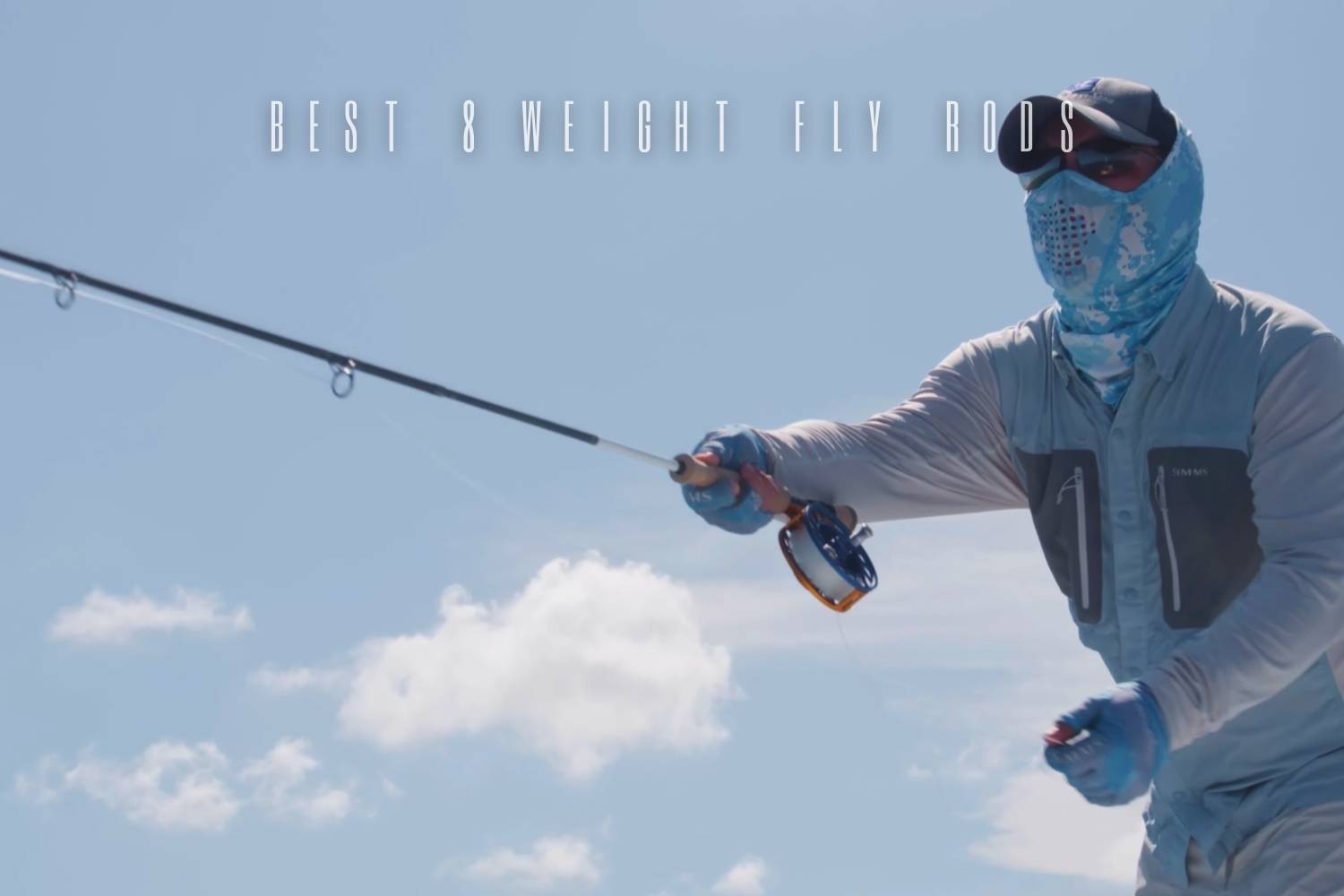
An eight-weight is where fly-rod shopping becomes system planning. Large flies, wind, strong fish, backing capacity, fighting leverage, boat clearance, and corrosion exposure can all matter in one day. The rod cannot be judged as an isolated casting wand. Choose the environment first, then the fly and line, and only then decide how much speed and stiffness your casting stroke can use.
Begin with exposure and fly size
Saltwater use affects more than the target species. Hardware, reel-seat design, guide size, grip shape, and care instructions all deserve attention. Freshwater anglers chasing bass, carp, or salmon may still need the payload capacity of an eight-weight without every offshore feature. A rod that crosses between environments should be confirmed for the exact configuration; a family name or fighting butt alone does not prove salt suitability.
Describe the largest normal fly in practical terms: bulky and wind-resistant, weighted and compact, or long and difficult to control. Then pair the rod with the line taper intended to carry that shape. A fast blank with an unsuitable line can feel reluctant to load, while an aggressive head may overwhelm a more moderate rod at close range. The test should reproduce the first important shot, not merely the longest cast of the afternoon.
Boat geometry changes the ideal length. A shorter rod can clear less air on a skiff or drift boat, simplify net work, and reduce leverage against the angler. A conventional nine-footer remains a broad reference. Longer layouts can aid certain mends or line-control jobs, but the added lever must justify its swing weight and deck-management cost.
Choose the eight-weight architecture
| Role | Architecture to examine | Critical trial | Article-era examples |
|---|---|---|---|
| Windy flats from a skiff | Fast recovery, durable fittings, full-wells grip, fighting butt | Accurate delivery from short line to realistic range | Orvis Helios 3D; G. Loomis NRX+ Saltwater |
| Freshwater bass, carp, or salmon | Stable loop formation with the chosen payload | Pickup and direction change with the everyday fly | Scott Sector nine-foot; Sage Maverick |
| Guide or boat fleet duty | Reduced ferrule count or compact length when transport permits | Deck handling, repeated use, and practical storage | Scott Sector two-piece; G. Loomis CrossCurrent Pro-1 |
| Caster who prefers a deeper bend | Moderate-fast or fiberglass response | Timing feedback without tip collapse under the fly | Epic 888 FastGlass; Scott Tidal |
| Travel backup | Protected multi-piece pack and a forgiving action | Packed size, field assembly, and repair arrangements | Orvis Encounter; Sage Maverick |
Fast action is helpful only when it converts the caster’s movement into a controlled loop. Less experienced casters can find very stiff rods short on feedback, especially at close range. A slightly slower rod may load more clearly and expose fewer timing errors. The right test includes accuracy, rapid presentation, and a clean pickup, not a distance contest.
Hands-on notes belong to exact article-era rods
Orvis Helios 3D eight-weight
The writer’s article-era experience described the Helios 3D as accurate with large flies and capable in wind. Keep that judgment with the Helios 3D section; it cannot be assigned to another Helios generation. Its broader selection lesson is to test whether a rod remains precise when the cast is hurried and the fly creates drag.
G. Loomis NRX+ Saltwater eight-weight
On first picking up the article-era NRX+ Saltwater, the writer noticed a thick butt section yet found the rod unexpectedly light in hand. That is an exact-model observation. It illustrates why visual blank diameter and catalog weight cannot replace an assembled balance test.
G. Loomis CrossCurrent
The historical CrossCurrent section distinguished a four-piece GLX from a one-piece Pro-1 intended for operations that can store and transport it. Do not assume those configurations or statuses persist. The lasting trade-off is clear: fewer joints can appeal for intensive local duty, but they create major transport constraints.
Epic 888 FastGlass
The article-era Epic 888 represented a different material response from the carbon rods around it. A deeper fiberglass feel may suit a caster who wants a clearer load, but the material label alone does not establish action, durability, or salt readiness. Inspect the exact build and cast it with the working line.
Rehearse the shot you are buying for
- Load the reel with the exact line taper and enough backing for the intended setting.
- Cast the real fly or a safe replica with similar weight and air resistance.
- Start with a short presentation, make one false cast, and deliver to a target.
- Practice a pickup and redirection, because missed shots rarely reset perfectly.
- Hold the rod in fighting position and check grip diameter, butt placement, and wrist comfort.
- Inspect ferrules, oversized knots passing through guides, tube protection, and travel length.
Care should follow the exact maker’s instructions. After demanding use, check ferrule seating and guides for damage, and let equipment dry before storage. Salt exposure requires particular attention, but avoid adopting a universal cleaning recipe that may conflict with a finish or component. Repair policy, service eligibility, and turnaround expectations should be confirmed when buying, especially for a travel-critical outfit.
Authority without excess is the goal
A successful eight-weight delivers the actual payload, in the actual wind, from the platform you actually fish—without requiring a casting style you cannot sustain. Treat salt exposure, boat length, line taper, and travel as first-order choices. Use article-era rods to understand the spectrum from deep-loading glass to very fast saltwater blanks, never as proof of today’s lineup. When the rod makes the first accurate shot easier and still gives you controlled leverage after the eat, the system is properly matched.
