
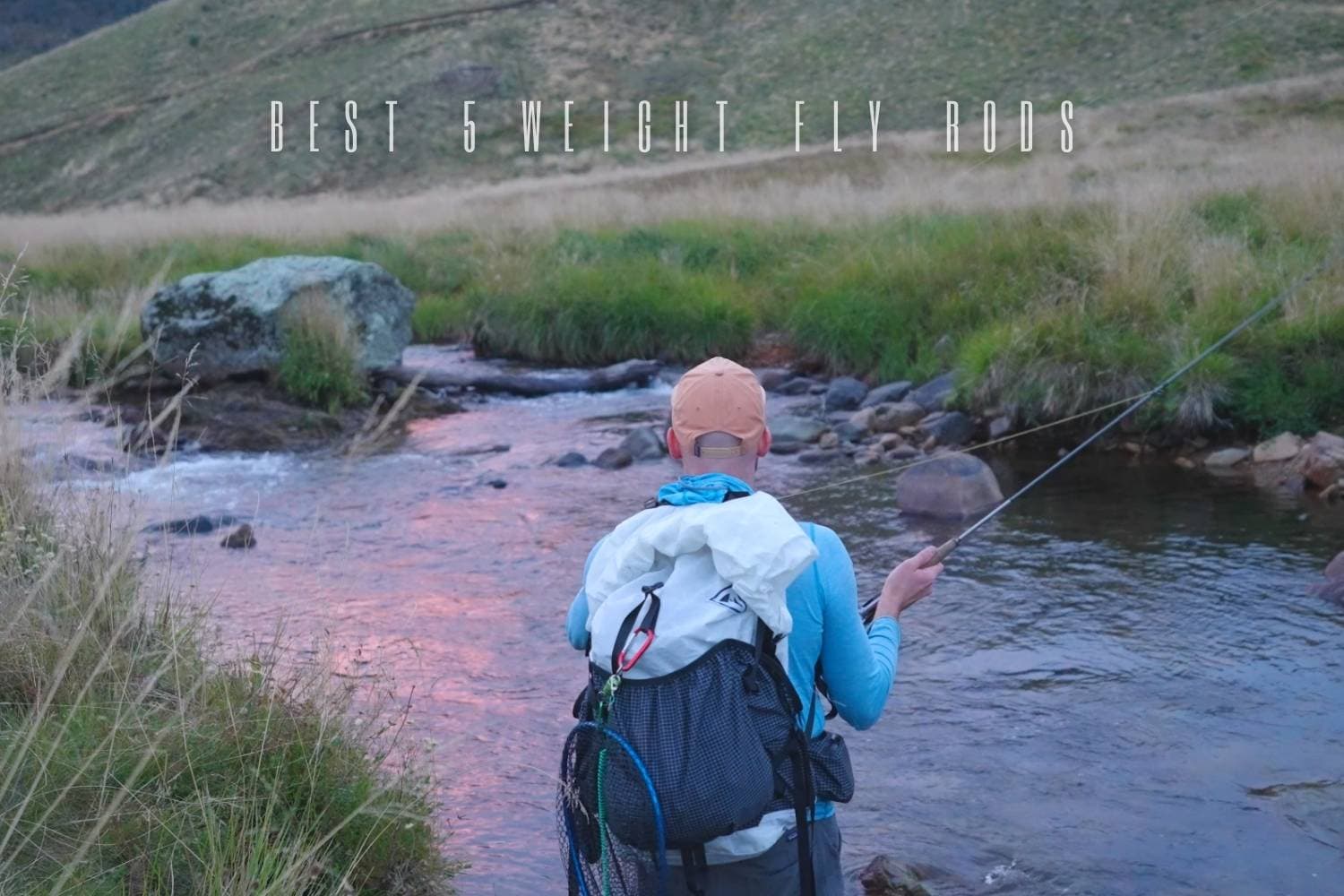
The five-weight is popular because it sits near the center of freshwater fly fishing, not because every five-weight does every job equally well. A short, forgiving rod for boat work can share a line number with a long, quick rod built around mending, yet the two feel unrelated on the water. Start by choosing the version of “all-round” that matches your week, not somebody else’s highlight reel.
Make the five-weight serve the majority
List your fishing in percentages: dry flies, light nymphs, heavier indicators, small streamers, stillwater, wading, and boat use. The largest share should control the decision. A rod chosen mainly for dry-fly feel may tolerate an occasional weighted rig, but it should not be expected to behave like a dedicated streamer six-weight. Conversely, a very quick five can move heavier flies while giving up some loading feedback and softness at close range.
Line choice belongs in the same calculation. The blank, reel, and taper operate as one casting system. A good line that matches the intended loading window can make a modest rod coherent; an unsuitable taper can make an expensive rod feel abrupt or dull. Reserve enough of the outfit budget for the line you will actually fish, then test that line on the candidate.
Environment sets the limits. Windy banks reward stable loops. Complex currents reward reach and easy mending. Tight tree cover rewards a shorter lever and a rod that loads with little line outside the tip. If your fishing changes dramatically by season, favor the configuration that handles the hardest recurring job without becoming tiresome during the ordinary one.
Choose the useful length and tempo
| Priority | Rod character to inspect | What you gain | Article-era examples |
|---|---|---|---|
| Boat, cover, and compact loops | A slightly shorter layout with low swing weight | Simpler net work and less tip exposure around obstacles | Orvis Helios 3F eight-foot-six; G. Loomis NRX+ LP nine-foot |
| Broad all-round use | Nine-foot length with a medium-fast, readable load | A practical blend of reach, loop control, and travel convenience | Hardy Shadow; Scott Flex |
| Dry-fly presentation | A forgiving upper section and progressive bend | Better feedback with longer leaders and lighter deliveries | G. Loomis NRX+ LP; Orvis Helios 3F |
| Mending and nymph control | Additional length without excessive tip weight | More line control across changing currents | G. Loomis IMX Pro ten-foot; Scott Centric ten-foot |
| Fast loops in open water | Crisp recovery that still matches your timing | Higher line speed when technique and space support it | Sage X; Scott Centric |
An eight-foot-six rod is not automatically delicate, and a ten-footer is not automatically a nymph rod. Configuration and taper must be tested together. Nine feet remains a useful reference point because it avoids the strongest penalties at either extreme, but “reference point” is not “universal answer.”
Generation-bound lessons from the article
G. Loomis NRX+ LP
The article-era NRX+ LP was described as surprisingly forgiving and slower than ultra-fast alternatives, a preference the writer tied to freshwater presentation. Keep that judgment with this exact model section. The transferable question is whether a rod gives enough loading feedback to place a dry without forcing the caster to accelerate harder than feels natural.
Sage X five-weight
The writer considered the article-era five-weight a sweet spot within the Sage X family while disliking some lighter versions for their intended use. That is a useful warning against family-wide assumptions. Line weight can change a taper’s personality, so cast the exact configuration rather than relying on a verdict about the logo or series.
Scott Flex
The article-era Flex appealed to the writer because its recovery felt slower and more alive than the race toward maximum speed. This does not establish anything about another Scott generation. It does remind buyers that feel is not a flaw: a deeper or slower response can improve timing and enjoyment even when a faster rod looks more impressive in specifications.
Hardy Zephrus FWS
An extended-use durability observation about the Zephrus SWS does not establish durability for the distinct Zephrus FWS. That experience must not be transferred across those distinct entities. The buyer lesson is to separate a manufacturer-family impression from evidence about the exact freshwater rod.
Give each candidate the same casting exam
- Use identical reel and line setups so the rod is the main changing variable.
- Begin close, where loading feedback and tip stability are easiest to notice.
- Cast a dry-fly leader, then the nymph or small-streamer rig you truly use.
- Try a reach cast, roll cast, pickup, and mend instead of judging only distance.
- Observe accuracy after several minutes, when novelty has worn off.
- Inspect ferrule fit, grip comfort, guide alignment, case, and exact service terms.
For travel, the packed length and protection matter more than a generic “travel rod” label. At home, dry the rod before storing it, keep grit away from ferrules, and avoid leaving sections assembled indefinitely. Check care instructions for the exact finish and hardware, particularly after dirty or mineral-rich water.
One five-weight, one honest center of gravity
A five-weight becomes versatile when its compromises mirror your fishing. A dry-fly angler may choose feel and leader control; a mixed-rig angler may accept a quicker response; a boat angler may give up reach for easier handling. Decide the dominant use, cast the complete outfit, and let comfort at ordinary distance break the tie. Historical product names show how designers pursued different versions of the five-weight idea, but the best choice is the configuration that makes your most frequent cast simpler and your least frequent cast merely possible.
