
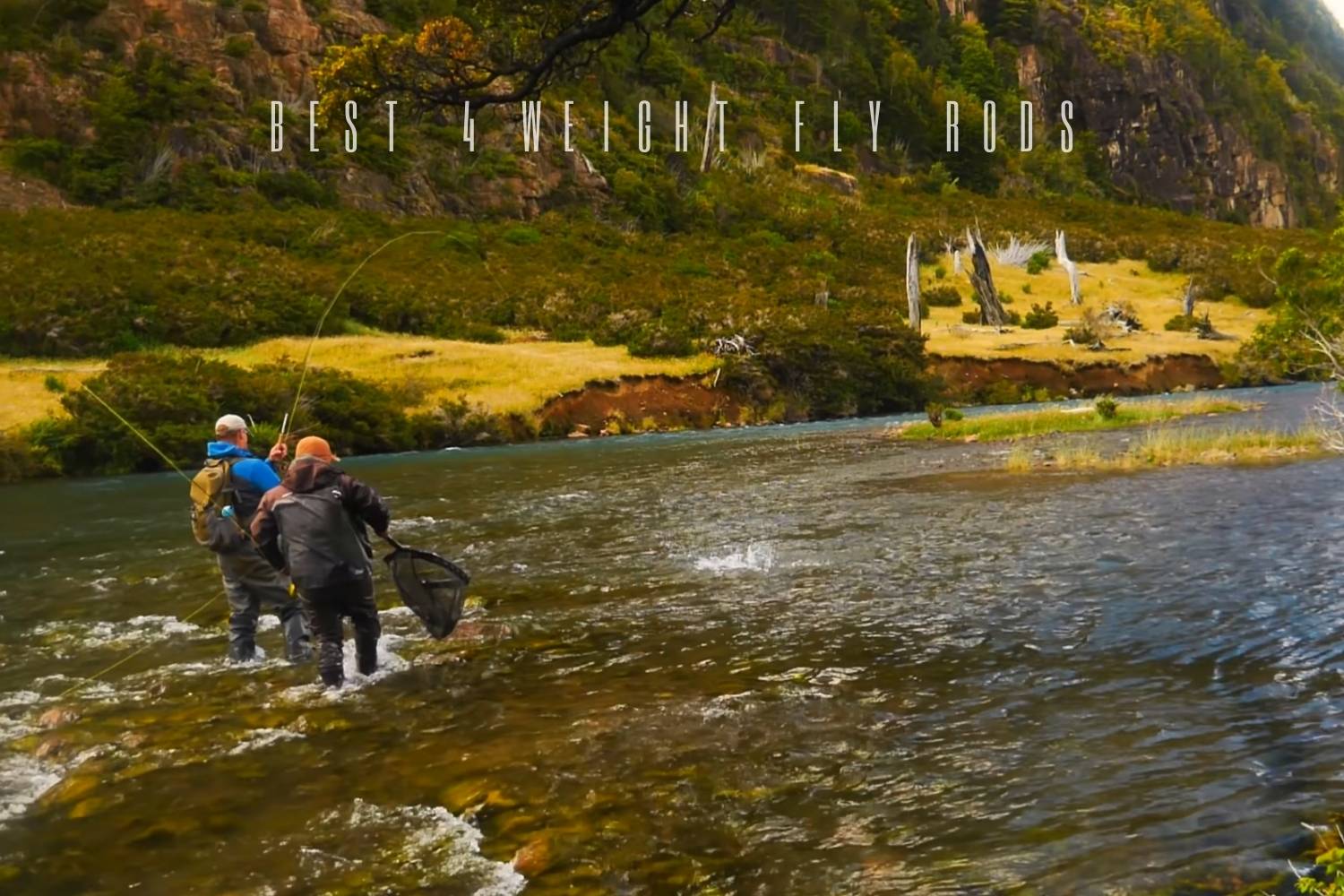
Choosing a 4-Weight Fly Rod by Trout-Water Job
A 4-weight is not simply a lighter version of a general trout rod. It earns its place when presentation, line control and the pleasure of playing modest fish matter more than carrying bulky flies or driving casts through hard wind. The useful question is therefore not which named rod wins, but which 4-weight shape matches the water you fish most often.
Begin with the fly and the river. A dry-fly angler on an open medium river needs a different tool from someone guiding nymphs through pocket water or crawling under branches on a tight creek. Length, action and transport format should follow that job. The choices below keep those trade-offs visible and use named rods only as article-era examples, not as claims about today’s catalog.
Decision matrix
| Primary job | Look for | Trade-off | Article-era examples |
|---|---|---|---|
| Delicate dries on open trout water | A moderate or medium-action 4-weight with a controlled tip | Rewards measured timing and gentle turnover; gives up some wind authority | R L Winston Pure; G Loomis NRX+ LP |
| Mixed dries and small nymphs | A medium-fast all-round shape near conventional trout length | Broadest range of ordinary trout work, but not specialized at either extreme | Orvis Helios 3F; Douglas DXF |
| Long-leader nymph control | Extra reach and a tip that protects light tippet | Improves reach and drift control; becomes less convenient under trees | Longer Hardy Shadow and Orvis Clearwater configurations |
| Small creeks and short casts | A shorter rod that bends progressively at close range | Easier around brush; sacrifices reach and line pickup | Shorter R L Winston Pure and TFO Finesse Trout configurations |
| Windier banks or compact streamers | A quicker recovery and firmer butt | Carries more authority, but can make delicate casts feel less relaxed | Sage X; Hardy Zephrus FWS |
Let the water choose the length
On a brushy creek, extra length is often a liability before the first cast. A shorter 4-weight clears fewer branches, fits a compact casting stroke and is easier to move between pools. On an open river, more reach can improve line pickup, mending and contact with a long leader. The familiar middle length remains the least risky choice when one rod must cover several trout settings.
Length also changes leverage and transport. A long rod can help hold line beyond conflicting currents, yet its tip travels farther and asks for more care near bankside cover. A compact multi-piece format is easier to carry in a vehicle or on foot. Check the assembled feel rather than treating the printed length as a complete answer.
Match action to casting rhythm
Moderate and medium actions suit anglers who wait for the rod to load. That deeper bend can make short casts intuitive and help deliver a dry fly without an abrupt turnover. Faster actions respond to a shorter, more forceful stroke and can recover crisply when the caster supplies enough line speed. Neither description guarantees accuracy; timing and line choice still decide the result.
A shop cast should imitate fishing rather than a distance contest. Try the leader and fly type you expect to use, begin at close range, then add the longest honest cast your water requires. Notice whether the rod communicates the load, whether the tip settles after the stop, and whether you can make the same useful loop repeatedly without forcing it.
Keep the payload modest
A 4-weight shines with dry flies, small nymphs and restrained rigs. Adding a heavy indicator, multiple weighted flies or a bulky streamer changes the casting job even when the target fish is still trout. If those payloads dominate your season, moving to a more authoritative line weight is usually more sensible than buying an unusually stiff 4-weight and expecting it to behave like two rods.
For mixed fishing, decide which compromise you can tolerate. A presentation-led rod may feel wonderful with a single dry yet run out of composure with weight. A firmer rod can handle a wider fly menu but may need more line outside the tip before it comes alive. The right compromise is the one that covers your common cast, not the most dramatic test in the parking lot.
How the article-era examples divide
The R L Winston Pure and G Loomis NRX+ LP were framed around light presentation and dry-fly control. Hardy Zephrus FWS and Sage X represented quicker, more assertive tools. Orvis Helios 3F, Hardy Shadow, Orvis Clearwater, Douglas DXF, Fenwick Aetos and Temple Fork Outfitters Finesse Trout occupied different points between general trout use, affordability, reach and softer close-range work.
Those names are useful as a vocabulary of design directions. They do not establish that an unchanged model, configuration or service policy can be bought now. When handling any used or new-old-stock example, identify the exact line rating and length on the rod, inspect ferrules and guides, and judge the action in hand rather than assuming every version shares one character.
Inspect the details that affect a light rod
Light tackle makes small flaws noticeable. Assemble every ferrule fully, sight along the guides, check for cracked inserts or loose feet, and feel the cork and reel seat for movement. A tip that has taken a set or a damaged guide can spoil line travel. After fishing, separate the sections without twisting against the guides and let a damp bag dry before storage.
Balance the rod with the reel and line you will actually use. Chasing the lowest bare-rod weight can produce an outfit that feels tip-heavy once assembled. The more valuable test is whether your wrist remains relaxed while holding line off the water, making repeated short casts and mending through a normal session.
Final decision
Choose a 4-weight by naming one primary scene: dry flies on open water, mixed trout methods, nymph control, or small-creek precision. That answer narrows length and action far more reliably than a ranked list. Cast at fishing distances, with a realistic leader, and pay attention to repeatability rather than one heroic loop.
The best outcome is a rod that makes modest trout work feel deliberate. If heavy rigs and strong wind are regular rather than exceptional, step up in authority. If quiet presentations and responsive fish-fighting are the reason you go, a well-matched 4-weight remains a particularly satisfying tool.
