
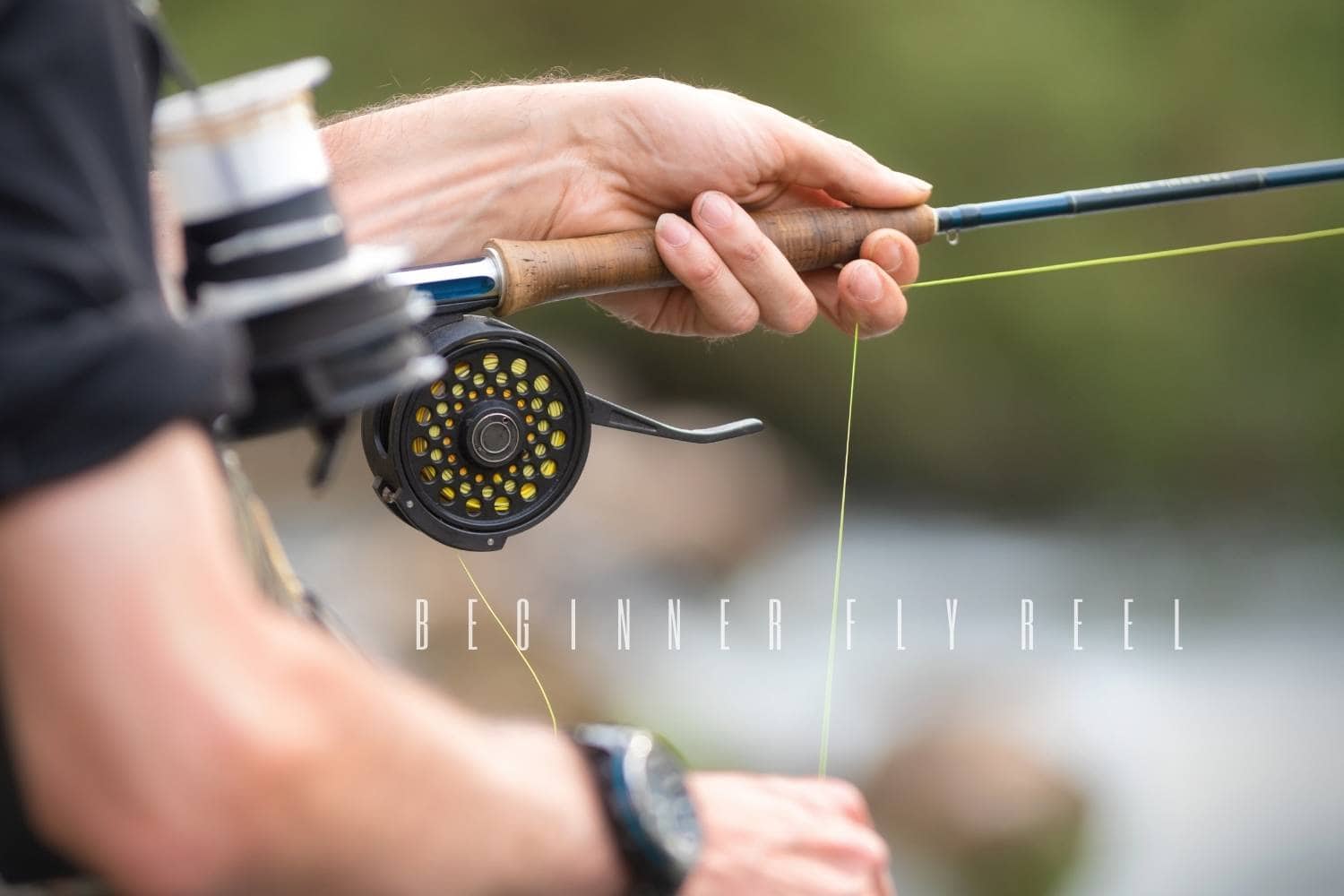
Quick answer: there is no universal beginner reel. For a first trout outfit, start with the Lamson Liquid S 3+ or 5+ at Trident Fly Fishing that matches the exact line-and-backing requirement. Choose the Redington BEHEMOTH 4/5 or 5/6 when you want an adjustable carbon-fiber drag and expect larger trout, stronger current or occasional warmwater fishing.
The simplest first-reel decision is not “Which reel has the most features?” It is “Which exact size fits my line, balances my rod and gives me the control I need?” Both ranked families can work for a beginner, but they take different routes: the Liquid S is the sealed-drag, trout-oriented starting point; the BEHEMOTH is the heavier adjustable-drag alternative.
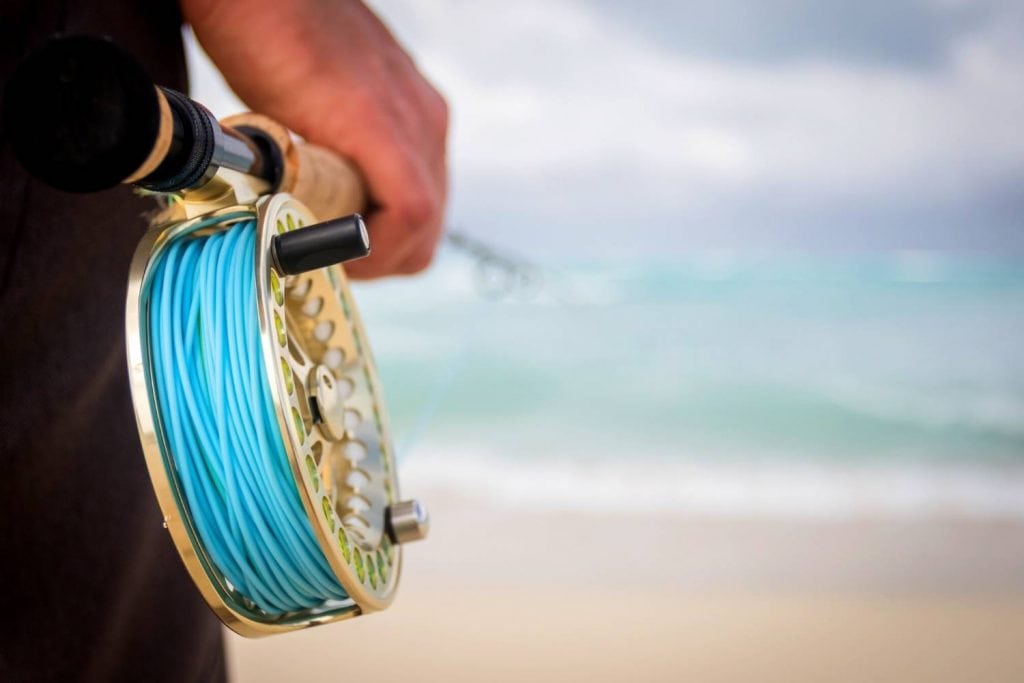
Best beginner fly reels at a glance
- Best starting point for common trout setups: Lamson Liquid S 3+ and 5+
- Best for adjustable drag and stronger freshwater use: Redington BEHEMOTH 4/5 and 5/6
Best beginner fly reels compared
| Model | Best for | Sizing focus | Drag | Build and spool note | Action |
|---|---|---|---|---|---|
| Lamson Liquid S 3+ and 5+ | Common trout outfits | Choose 3+ or 5+ from the exact capacity row | Sealed conical | Pressure-cast architecture; previous Liquid and Remix spools are incompatible | See details |
| Redington BEHEMOTH 4/5 and 5/6 | Larger trout, current and warmwater crossover | 4/5 or 5/6 | Adjustable carbon-fiber | Die-cast chassis; large-arbor deep-V spool | See details |
These are two ranked options, not a claim that one reel is best for every new angler. The right answer changes with rod weight, line type, target fish and water. A small-stream trout setup and a heavier river or warmwater setup should not be forced into the same reel choice.
Detailed beginner fly reel reviews
Option 1 of 2
Lamson Liquid S 3+ and 5+: Best starting point for common trout setups
Generation note: Liquid S is the current second-generation Liquid family. Earlier Liquid photographs, specifications, observations and spools do not describe or fit this generation.
Verdict: Start with the Liquid S when your first outfit is centered on trout and you want a sealed conical drag in the 3+ or 5+ size range. The important step is choosing between those sizes from Lamson’s exact capacity information, not assuming that “trout reel” makes either frame correct for every trout line.
Lamson lists the current Liquid S family from 3+ through 9+. Its pressure-cast architecture keeps it distinct from an all-machined reel, but that construction label alone does not predict service life. The more important beginner advantage is a clear current family with multiple sizes and a known generation boundary.
That boundary matters if you plan to add a second line later: Lamson says Liquid S spools are incompatible with previous-generation Liquid and Remix. Buy a spare spool only when it is identified for the current Liquid S and the exact frame size.
Reasons to choose it
- Current 3+ and 5+ options for common trout roles
- Sealed conical drag
- Clear second-generation identity
Reasons to skip it
- Pressure-cast rather than all-machined architecture
- Exact line-and-backing fit still requires the selected capacity row
- Previous Liquid and Remix spools do not fit Liquid S
Option 2 of 2
Redington BEHEMOTH 4/5 and 5/6: Best for adjustable drag and stronger freshwater use
Generation note: The BEHEMOTH 5-5506 family continues today. The exact size and finish of the earlier article reel are unknown, so no unnamed earlier reel is presented as the current 4/5 or 5/6.

Verdict: Choose the BEHEMOTH when a new angler wants knob-adjustable drag for larger trout, stronger current or occasional warmwater fishing. The 4/5 and 5/6 are the useful beginner configurations here; the larger 7/8 is not the default answer for an ordinary trout outfit.
Redington lists the 4/5 at 3.4 inches and 5.2 ounces, and the 5/6 at 3.6 inches and 5.7 ounces. Both current size records specify 125 yards of 20-pound backing capacity. Those numbers make the trade-off clear: the BEHEMOTH brings an adjustable carbon-fiber drag and a large-arbor deep-V spool, but it is not a lightweight click reel.
The chassis is die-cast rather than fully machined. That does not make it automatically fragile or durable; it describes how the reel is made. Judge long-term fit by the complete reel, how it will be used and the maker’s repair route—not by one construction label.
Reasons to choose it
- Current 4/5 and 5/6 configurations
- Adjustable carbon-fiber drag
- Large-arbor deep-V spool
Reasons to skip it
- Heavier than a light trout clicker
- Die-cast rather than fully machined construction
- Redington does not describe the drag as sealed
First-reel setup checklist
1. Start with the rod and fly line
Write down the rod weight and the exact fly line before choosing a reel. Then use the manufacturer’s capacity row for the selected frame. Specialty tapers can take more spool room than a standard floating line, so the family name alone is not enough.
2. Check what is actually included
A complete outfit can reduce compatibility decisions, while a separately chosen reel gives you more control over balance and drag. Either way, verify the reel, backing, fly line and leader contents rather than assuming every product photo shows the complete setup.
3. Confirm retrieve direction
Know which hand will retrieve line and check the maker’s conversion instructions before spooling. A convertible reel still needs to be set correctly, and the line must be wound in the correct direction for the chosen retrieve.
4. Set only enough drag
More drag is not automatically safer. Use enough resistance to prevent an overrun and control the fish without asking the drag to compensate for poor line handling or unsuitable tippet.
5. Balance the assembled outfit
Reel weight makes sense only with the rod, line and backing installed. A heavier reel can help one rod feel settled and make another feel cumbersome. Mount the reel on the intended rod before buying when possible.
Spare spools and cassette systems: what beginners should know
A second spool is useful when you regularly switch between line types, such as a floating line and a sinking setup. It keeps each line and backing package together, but the spool must match the exact reel generation and frame.
A cassette system solves the same multi-line problem with removable line-holding cassettes. The practical questions are not which format sounds more advanced, but how often you will change lines, what pieces are included and whether compatible replacements are clearly identified. Neither ranked reel is recommended here on a cassette claim.
For Liquid S buyers, the generation warning is specific: previous Liquid and Remix spools are incompatible with Liquid S. For any reel, check the exact spool name and size before ordering; a familiar family name is not enough.
Durability without the marketing shortcuts
Machined, cast and pressure-cast describe construction, not a guaranteed lifespan. Durability also depends on frame design, impacts, grit or salt exposure, care and access to repair parts. A beginner is better served by correct sizing, sensible care and a clear repair path than by assuming one production method is indestructible.
Choose a growth path without overbuying
If your near-term fishing is small streams and ordinary trout, buy the correct trout reel now. If larger rivers, stronger fish or warmwater trips are already part of the plan, the BEHEMOTH’s adjustable drag may be the better starting point. A future heavier rod can still require a different reel size; buying an oversized first reel does not create a free upgrade path.
Multiple lines are a separate decision from multiple rod weights. A compatible spare spool can support two line types on the same reel frame, but it cannot turn an undersized reel into the correct match for a much heavier line.
Frequently asked questions
What is the best fly reel for a beginner?
For a typical trout setup, start with the Liquid S 3+ or 5+ that matches the exact line-and-backing requirement. Choose the BEHEMOTH 4/5 or 5/6 when adjustable drag for larger trout, current or warmwater crossover matters more than low reel weight.
What size fly reel should a beginner buy?
Buy the manufacturer configuration that explicitly fits the fly line and has enough backing capacity for the intended use. If two frames overlap the line, compare assembled balance, diameter and capacity instead of choosing the larger one automatically.
Does a beginner need a sealed drag?
Not always. A sealed or protected mechanism can be useful around grit, sand or salt, but ordinary trout fishing does not make it mandatory. Correct sizing and a drag appropriate to the fish matter more than the label alone.
Should I buy a pre-spooled outfit?
An outfit can reduce setup decisions, but verify every included component and its line weight. Buying separately gives more control over reel balance and drag, but it also makes you responsible for matching the rod, line, backing and reel capacity.
Should a beginner buy a spare spool?
Only if you expect to switch line types often enough to justify it. Confirm exact generation and frame compatibility first. For Liquid S, previous Liquid and Remix spools are specifically incompatible.
Is a cassette reel better for beginners?
Not universally. A cassette system can organize multiple lines, while a conventional spare spool keeps each line package on a matching spool. Compare compatibility, included parts and how often you will change lines rather than treating either format as automatically easier.
Are machined reels more durable than die-cast reels?
Construction method alone does not prove durability. Compare the complete frame, intended use, care requirements and repair support.
Final recommendation
Start with the Lamson Liquid S 3+ or 5+ at Trident Fly Fishing for a trout-focused first outfit, but let the exact line-and-backing row choose the size. Move to the Redington BEHEMOTH 4/5 or 5/6 when adjustable drag and stronger freshwater use justify the extra weight. Do not buy for an imaginary future setup: choose the reel that makes today’s rod, line and fishing simpler.
First-party sources
These manufacturer records support the current identities and specifications used above:
