
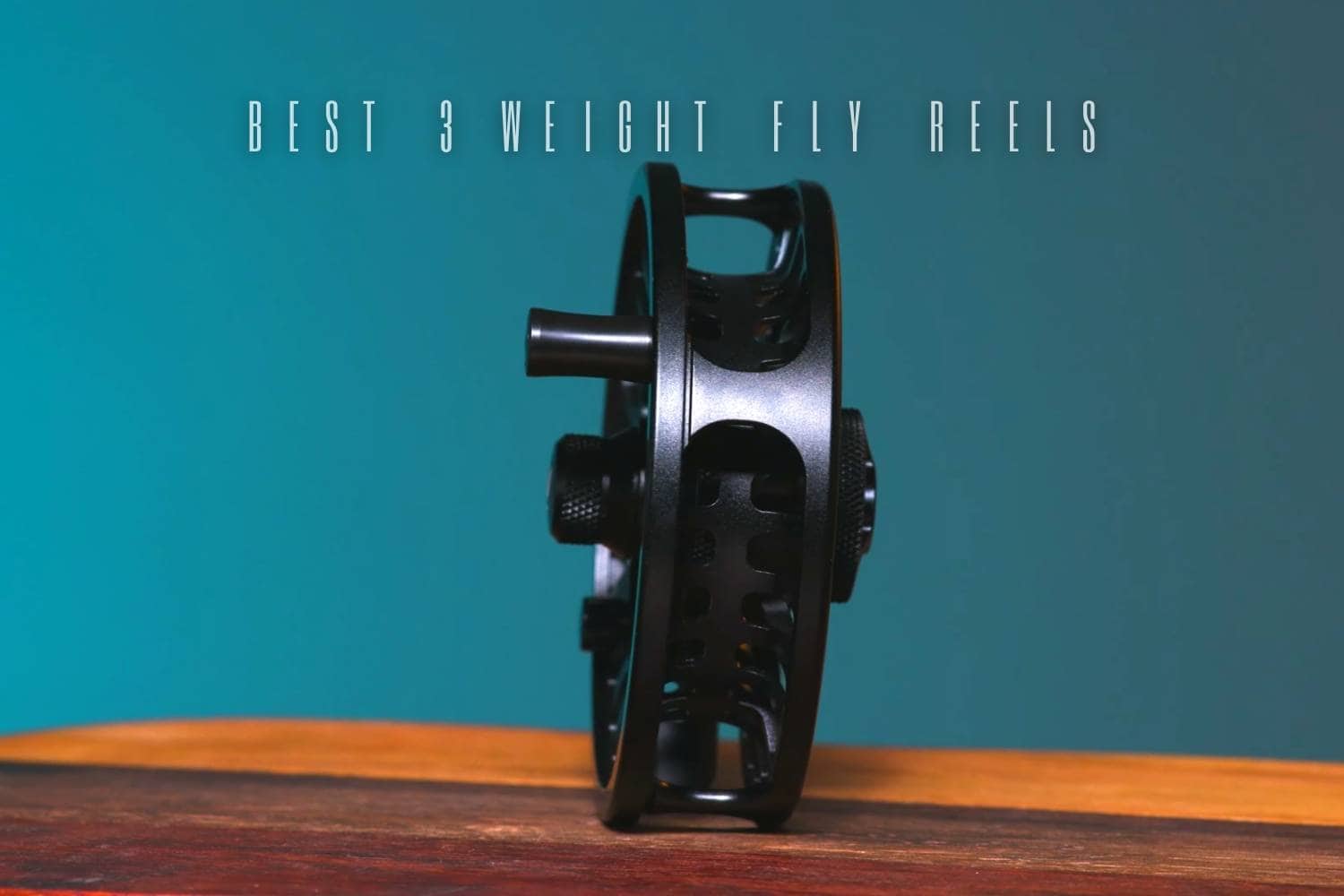
Quick answer: the Redington ZERO 2/3 at Trident is the light current value choice, while the Orvis Battenkill Click II offers a wider 3–5-weight range. The Ross COLORADO 2/3 and Sage CLICK 3/4/5 are current premium alternatives, while the Hardy UCL remains a clearly labeled legacy benchmark without a current offer.
A 3-weight reel should match the exact line and backing requirement, balance the intended rod and provide only as much drag as the fishing demands. This guide compares 4 current reels in one consistent order. A separate legacy note preserves 1 earlier reel without ranking it as a current buy.

Best 3-weight fly reels at a glance
- Lightweight value for a 3-weight: Redington ZERO 2/3
- Traditional clicker for 3-weight rods: Orvis Battenkill Click II
- Premium machined clicker: Ross COLORADO 2/3
- Premium light-line clicker: Sage CLICK 3/4/5
Best 3-weight fly reels compared
| Model | Best for | Configuration | Drag | Evidence | Action |
|---|---|---|---|---|---|
| Redington ZERO 2/3 | Lightweight value for a 3-weight | 2/3 | Spring-loaded clicker | Exact current ZERO family and exact 2/3 manufacturer configuration; the owned legacy photograph identifies ZERO 2/3 but not a current finish | See details |
| Orvis Battenkill Click II | Traditional clicker for 3-weight rods | II / 3–5 weight | Click-and-pawl | Current updated Battenkill Click II specifications; earlier 7H9P imagery and handling do not describe this generation | See details |
| Ross COLORADO 2/3 | Premium machined clicker | 2/3 | Click-and-pawl | Exact current post-Colorado-LT generation; current 2/3 manufacturer specifications | See details |
| Sage CLICK 3/4/5 | Premium light-line clicker | 3/4/5 | Click-and-pawl | Exact continuing enhanced CLICK 3/4/5 generation; current manufacturer specifications | See details |
Each current option above matches the detailed review below. A family page may contain several frames and finishes, but every verdict is limited to the named configuration; it does not claim that every family variant is suitable, available or personally handled.
Detailed reel reviews
Option 1 of 4
Redington ZERO 2/3: Lightweight value for a 3-weight
Evidence: Exact current ZERO family and exact 2/3 manufacturer configuration; the owned legacy photograph identifies ZERO 2/3 but not a current finish
Verdict: The ZERO 2/3 is the clearest lightweight starting point for a 3-weight trout rod. Redington lists the current family in dedicated 2/3 and 4/5 configurations, with the 2/3 using a simple spring-loaded clicker rather than an adjustable disc drag.
The legacy photograph identifies the ZERO 2/3 in a retired sand/cream finish. The recommendation uses Redington’s current 2/3 specification and does not present the pictured finish as a current merchant variant.
Reasons to choose it
- Exact light-line configuration
- Simple direct fish control
- Dedicated 2/3 size
Reasons to skip it
- No adjustable disc drag
- Confirm line and backing capacity for the selected line
Option 2 of 4
Orvis Battenkill Click II: Traditional clicker for 3-weight rods
Evidence: Current updated Battenkill Click II specifications; earlier 7H9P imagery and handling do not describe this generation
Verdict: The current Battenkill Click II covers 3–5-weight lines, making it a direct fit for a 3-weight setup with more range than a dedicated 2/3 reel. Its standard-arbor click-and-pawl design favors simplicity and palming over high drag pressure.
Orvis identifies the current Battenkill Click as an updated generation. Current dimensions and construction come from the 3FTH manufacturer record; older Battenkill photographs, weights and handling notes are not assigned to it.
Reasons to choose it
- Direct 3-weight overlap
- Simple click-and-pawl mechanism
- 6061-T6 aircraft-aluminum construction
Reasons to skip it
- No adjustable disc drag
- Standard arbor retrieves line more slowly than a large arbor
Option 3 of 4
Ross COLORADO 2/3: Premium machined clicker
Evidence: Exact current post-Colorado-LT generation; current 2/3 manufacturer specifications
Verdict: The current COLORADO 2/3 is a premium light-line clicker for anglers who value low mass, machining and direct palming more than adjustable drag. The retained reel is the same post-LT generation, while current size facts come from Ross’s exact 2/3 record.
The archived image does not prove its size, so this recommendation is tied to the current 2/3 specification and the exact available Platinum merchant variant rather than to a pixel-inferred configuration.
Reasons to choose it
- Light-line clicker format
- Low listed weight
- Premium machined construction
Reasons to skip it
- No external drag adjustment
- Premium pricing
Option 4 of 4
Sage CLICK 3/4/5: Premium light-line clicker
Evidence: Exact continuing enhanced CLICK 3/4/5 generation; current manufacturer specifications
Verdict: The CLICK 3/4/5 is Sage’s current configuration that directly overlaps a 3-weight line. It prioritizes low mass and direct line control rather than the braking range of an adjustable disc reel.
The retained article reel matches the continuing enhanced CLICK generation. Current facts and the buying path remain tied to the exact 3/4/5 model; the archived image does not prove its size or current color.
Reasons to choose it
- Simple mechanism
- Direct 3-weight overlap
- Large-arbor light-line design
Reasons to skip it
- No adjustable disc drag
- Premium pricing
Legacy context—not a current buying rank
Hardy Ultraclick UCL: Legacy ultralight reference
Historical boundary: Legacy UCL family only; exact pictured size is unrecorded and Hardy no longer lists the reel in its current catalog
Why it remains here: The legacy Ultraclick UCL remains useful for understanding the trade-off between a low-complexity click reel and an adjustable disc-drag model. Its archived manufacturer record documents an enclosed line guard, adjustable all-metal click system and push-off spool release.
Hardy no longer lists the UCL reel in its current fly-reel catalog. A current spare-spool page does not make the reel a current buying choice, and Hardy has not identified the Resonate as a direct UCL successor.
Why it is retained
- Archived enclosed line guard
- Archived adjustable all-metal click system
- Useful legacy benchmark
Limits
- No current exact UCL reel offer
- Exact pictured size is unproved
How to choose a 3-weight fly reel
Match the exact configuration
Start with the fly line you will actually fish, then use the maker’s exact size and capacity row. A family can contain several frames, and a larger configuration can add unnecessary mass to a light trout rod.
Choose the drag for the fish
Click-and-pawl reels keep the mechanism simple and let the angler add palm pressure. Adjustable disc drags offer more control for larger fish, stronger current and saltwater use. Match the mechanism to the fishing rather than assuming more drag is always better.
Balance the complete outfit
Reel weight matters only as part of the assembled rod, line and backing system. A very light reel can leave a long rod tip-heavy, while a larger reel can overwhelm a short delicate rod. Mount the reel before buying when possible.
Verify the selected merchant variant
A product page can mix sizes, finishes and availability states. Confirm the exact reel size, finish and retrieve direction in the cart. The links in this guide use exact product pages, but only the named relevant variants support each recommendation.
Frequently asked questions
What reel configuration should I use on a 3-weight rod?
Choose a manufacturer configuration that explicitly includes a 3-weight line, then confirm capacity for the actual fly line and backing. The exact examples in this guide are named in each review rather than inferred from a larger family.
Does a trout reel need a sealed drag?
Not always. A clicker is enough for much light trout fishing. A sealed or protected disc mechanism becomes more useful around grit, salt and larger fish, but it still needs the maker’s recommended care.
Is a large arbor always better?
No. A larger arbor can retrieve line faster and reduce tight coils, but spool width, depth, backing capacity and rod balance still matter. Compare the complete configuration.
Can I use a reel one line size larger?
Sometimes an overlapping maker configuration will work, but do not choose by family label alone. Check the exact line and backing row, then compare assembled balance with the intended rod.
Should I buy a spare spool?
A spare spool is useful when switching line types, but compatibility is generation-specific. Verify the exact reel generation and frame size before ordering a spool.
Are machined reels always better?
No. Manufacturing method affects design and cost, but it does not alone prove drag performance, impact resistance or service life. Compare the whole reel and the maker’s repair support.
Final recommendation
Start with the Redington ZERO 2/3 at Trident for the clearest current buying path, then compare the other ranked current options when drag type, construction or generation boundary changes the job. Finish by checking the exact maker configuration and selected merchant variant.
First-party sources
These records support the four current identities and configurations plus the separate Hardy legacy context above:
