
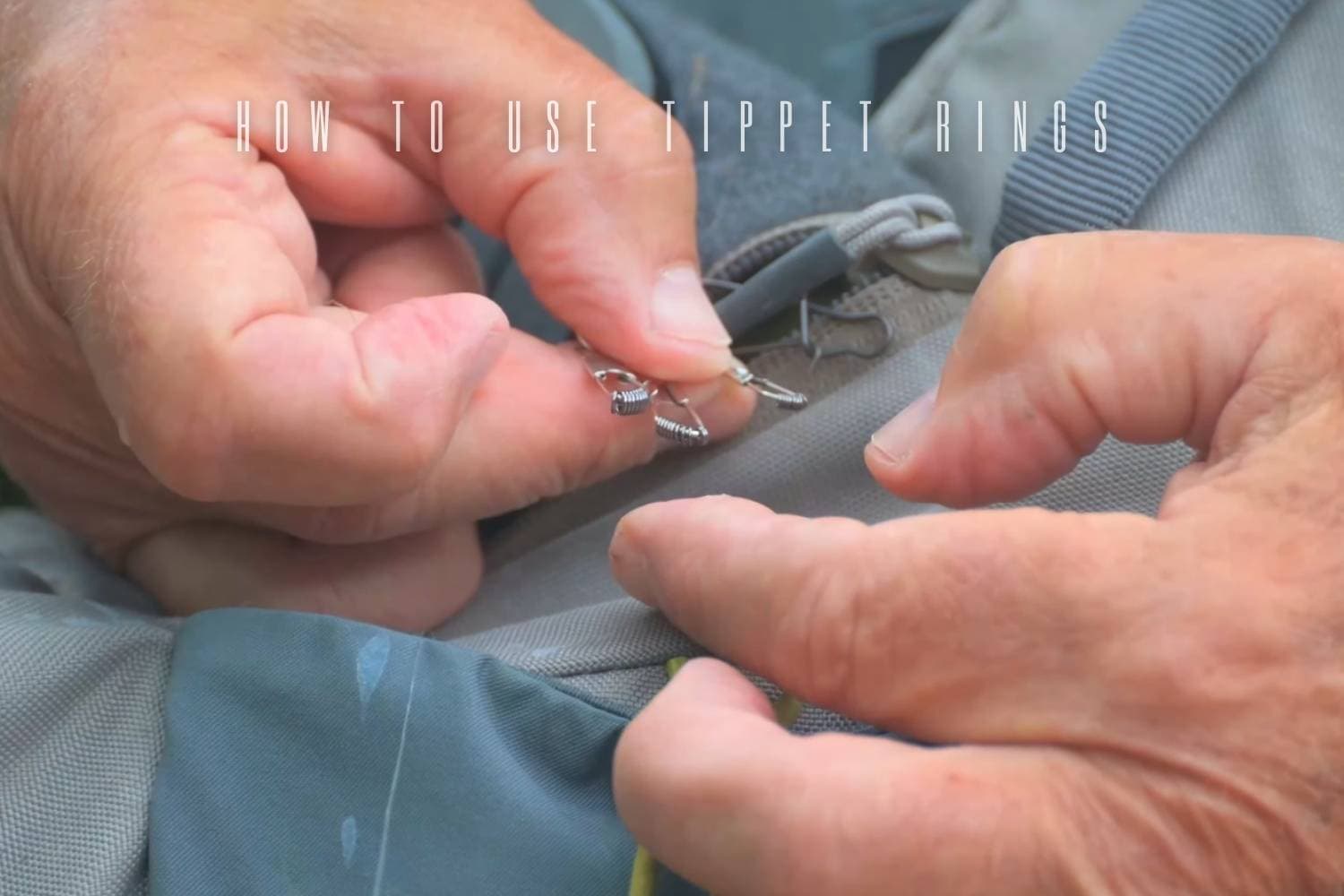
Quick answer: tie a tippet ring at the point where your tapered leader ends and replaceable tippet begins. Keep the ring on its carrier while tying the first knot, attach the leader with a properly seated clinch-style knot, slide the ring off the carrier, then tie the tippet to the other side. The ring saves the leader from getting shorter every time you change tippet.
A ring is optional, not a requirement. It is most useful for nymphing, frequent rig changes and extending the life of a tapered leader. It can work with dry flies when the ring is correctly sized and the surrounding leader is treated appropriately, but a simple knot-to-knot connection remains a good choice for the lightest, most delicate systems.
What is a tippet ring?
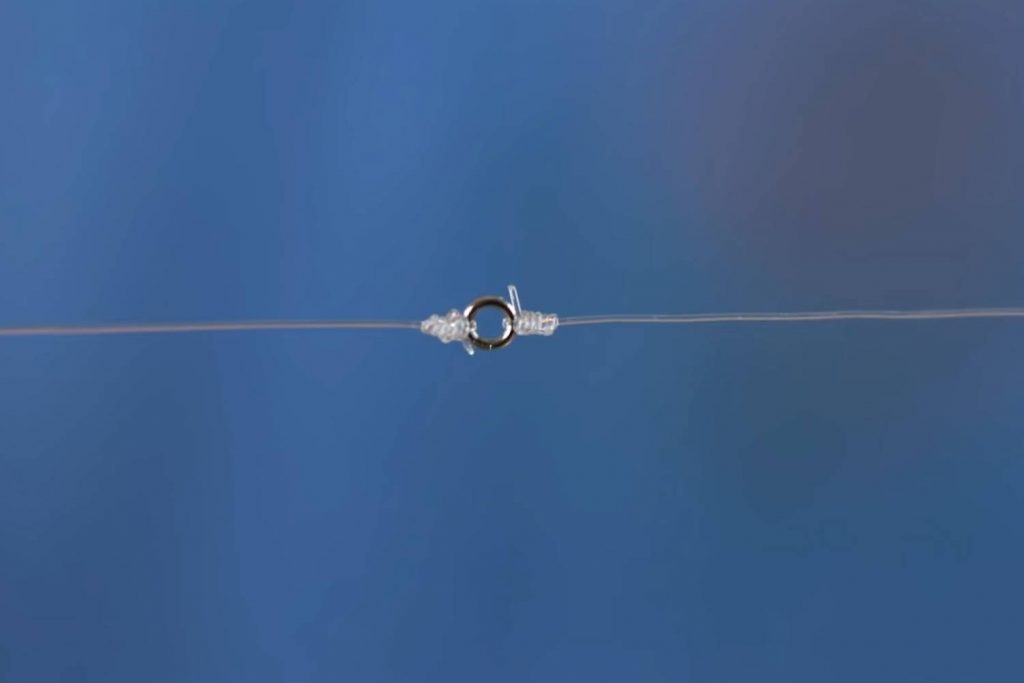
A tippet ring is a very small metal ring that creates a permanent junction between the thicker end of a leader and a replaceable piece of tippet. Instead of cutting the leader shorter whenever the tippet is changed, you cut and retie only on the outer side of the ring.
Manufacturers offer different sizes for trout, steelhead and other applications. Strength, diameter and material are product-specific. Do not assume that every ring has the same 25- or 30-pound rating; match the exact ring to the leader, tippet and fish.
RIO instructs anglers to tie the leader and tippet to the ring with clinch knots and offers separate Trout and Steelhead ring variants. That establishes the basic use, but the knot still needs to suit the line material and diameter you are using.
Why use a tippet ring?
- Longer leader life: repeated tippet changes do not consume the tapered leader.
- Fast rig changes: switch tippet diameter or material without rebuilding the taper.
- Clear junction: the ring marks where the leader ends and disposable tippet begins.
- Easy droppers: a tag or dropper can be attached at a defined junction when local rules and the chosen rig allow it.
- Useful for Euro and indicator nymphing: long tippet sections can be replaced without cutting into the leader or sighter.
The trade-offs are an additional two knots, another component to inspect and a small amount of mass. Most practical failures come from a poor knot, an undersized ring, a damaged edge or an unsuitable leader/tippet combination—not from the idea of a ring itself.
Where should a tippet ring go?
For a normal tapered trout leader, place one ring near the transition from leader to tippet. Do not cut an arbitrary three or four feet from every new leader. First identify the leader’s rated tip diameter and decide how much of that terminal section you want to preserve.
A practical setup is:
- Fly line.
- Tapered leader.
- Tippet ring.
- Replaceable tippet.
- Fly.
The ring should be tied to material that is thick enough to hold its knot securely but not so thick that the ring becomes crowded. Keep the taper logical: the tippet side should usually be the same diameter or finer than the leader side. Large jumps in diameter create poor turnover and can weaken the connection.
On a used leader, trim back until the remaining tip is sound and has the diameter you want at the junction. On a new leader, you may be able to add the ring at the existing tip without cutting much at all. The correct location depends on leader design, not a universal distance from the butt.
How to attach a tippet ring
What you need
- A ring sized for the application.
- A leader and compatible tippet.
- Nippers.
- A knot you can tie correctly in both materials.
Step-by-step
- Leave the ring on the carrier. The ring is easier to control while it remains on the wire or snap supplied with the pack.
- Pass the leader tip through the ring. Keep enough tag to form the knot without crowding.
- Tie the leader-side knot. A carefully tied clinch or improved clinch is common. Follow the line manufacturer’s guidance for very slick or stiff material.
- Moisten and seat the knot. Tighten smoothly so the wraps align rather than crossing.
- Test the connection. Pull firmly on the leader before removing the ring from its carrier.
- Slide off one ring. Close or secure the carrier immediately so the remaining rings are not lost.
- Tie on the tippet. Attach the selected tippet to the open side, seat the knot and test the complete connection.
- Trim sensible tags. Cut close without damaging the knot.
Test both knots every time the tippet is changed. If the leader-side knot shows abrasion, whitening, slipping or deformation, replace it rather than assuming the permanent side lasts forever.
Can you use tippet rings with dry flies?
Yes, a small trout ring can work in a dry-fly leader. It does not literally become buoyant because it is metal; its very low mass and the water’s surface tension can keep the junction from causing a practical problem in a balanced rig. RIO describes its current rings as light enough for dry-fly use.
Keep the ring appropriately small, avoid excessive knot bulk and treat only the leader material that should float. If the ring, knots or adjacent fluorocarbon repeatedly pull the tip under, switch to nylon tippet, shorten the heavy section or return to a direct line-to-line knot.
Nymphing and droppers
Tippet rings are particularly convenient in Euro and indicator systems because they make long tippet changes fast. A dropper can be formed from a tag at the junction or tied using a method appropriate to the rig. Do not automatically place a ring between every leader section: several rings add knots and hardware without solving a clear problem.
Check local regulations before fishing multiple flies. Use a dropper arrangement that keeps flies separated and does not create a dangerous tangle around the fish.
Streamers
A ring can work with small and medium streamers if the ring and knots meet the load. For heavy flies, toothy fish or shock/bite systems, use components specifically rated for the application. A trout ring is not a universal substitute for a swivel, snap or bite leader.
Common tippet-ring mistakes
| Problem | Likely cause | Fix |
|---|---|---|
| Knot slips | Poorly seated knot, slick material or too few correct wraps | Retie with the material maker’s recommended knot and test it |
| Leader turns over poorly | Ring placed too far up the taper or tippet diameter changes too abruptly | Move the junction toward the proper terminal diameter and restore a gradual taper |
| Dry-fly tip sinks | Oversized ring, heavy knots, waterlogged leader or sinking tippet | Use the correct trout size, clean/treat the leader or switch the terminal material |
| Ring disappears while tying | Removed from carrier too early | Tie and test the leader side before sliding off one ring |
| Break occurs at the ring | Damaged ring edge, old material, crowded knot or undersized component | Replace the ring and both knots; verify exact ratings and compatibility |
Should you use one?
Use a tippet ring when it solves a real rigging problem: extending leader life, making frequent tippet changes or creating a clean nymphing junction. Skip it when maximum simplicity and the most delicate possible connection matter more.
For component selection, see our leader and tippet guide and trout tippet comparison. Always take clipped leader and tippet home; small pieces of monofilament and fluorocarbon are difficult for wildlife to escape.
