
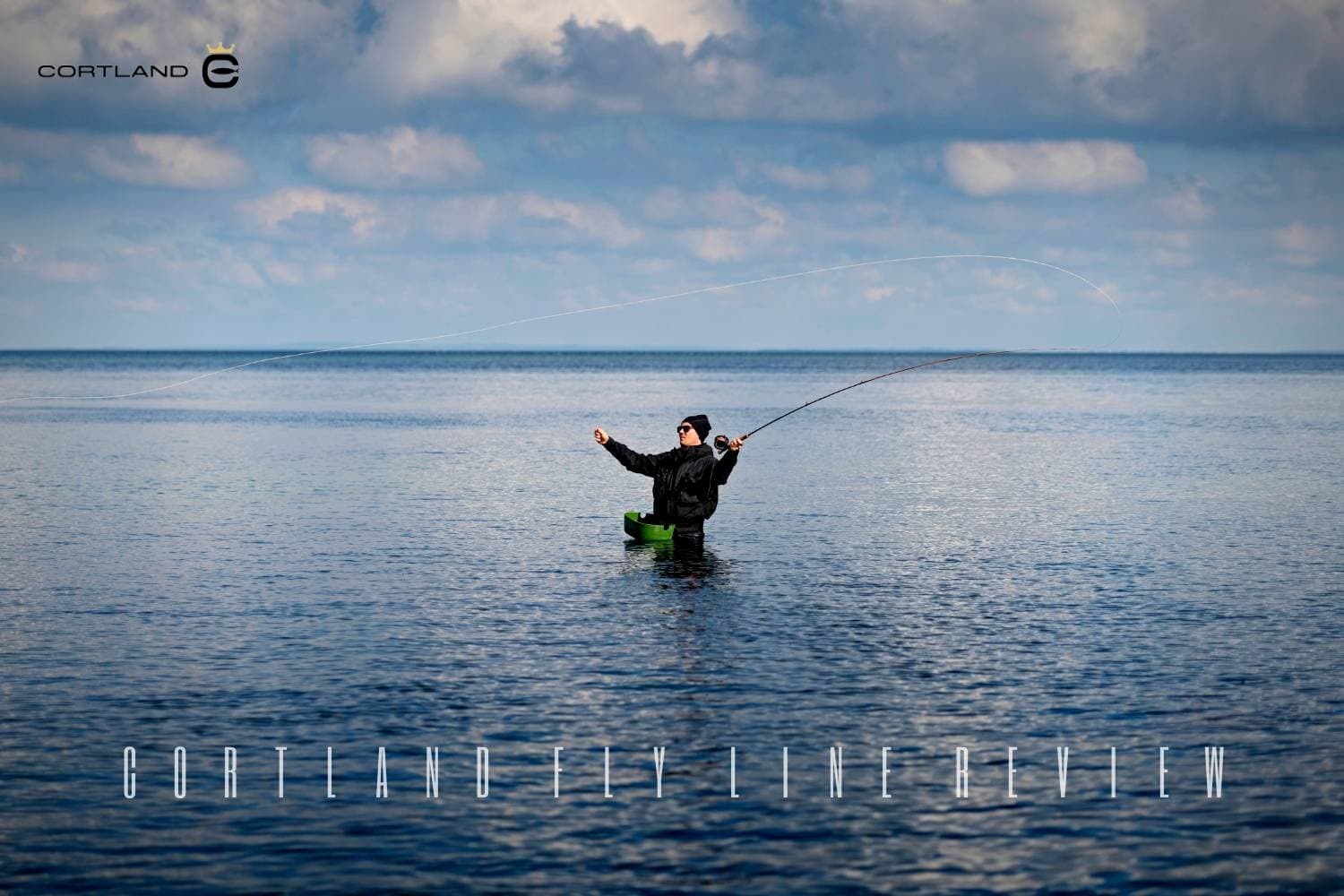
The best Cortland fly line is the one whose taper, density and temperature range match the fishing you actually do. Cortland’s current catalog runs from traditional double tapers and general-purpose trout lines to Euro-nymph, streamer, tropical saltwater and big-game designs. That breadth is useful, but it makes shopping by brand name alone a poor shortcut.
Cortland says it has made fishing line in Cortland, New York, since 1915 and that its lines are made in the USA. Use the current family map below to narrow the range by fishing job, then confirm the exact taper, density and line weight. Prices and stock can vary by configuration.
Quick Cortland line recommendations
If you already know the job, this is the shortest route into the range:
- Traditional all-around freshwater: start with 444 Peach. Choose the separate 444 Peach Double Taper when roll casting, line control and the reversible double-taper format matter more than shooting distance.
- One current trout line for mixed techniques and a fast-action rod: Trout Boss Green / Yellow is a weight-forward floating line built a full line size heavy.
- Delicate dry-fly work: compare Finesse Trout II, Ultralight II and Headwater. They solve different versions of the same problem: soft presentation, loop control or short-range loading on small water.
- Indicator fishing: Indicator II is the purpose-built option, with an aggressive weight-forward profile and extended head for roll casting and mending.
- Large freshwater streamers: the Streamer Series separates a floating line from intermediate-tip and several sink-tip jobs.
- Euro nymphing: use the Euro Nymph Series rather than a conventional weight-forward trout line.
- Warm tropical saltwater: begin in the Tropic Plus Series; choose a species-specific taper only when it matches your flies and casting distances.
- Clear flats presentation: Flats Taper Clear is the current clear Liquid Crystal branch. It is not simply a new label for every older blue Flats Taper reviewed online.
- Cooler saltwater: use the Cold Salt Series, which includes floating, intermediate, clear-tip and sinking jobs.
- Giant trevally, billfish and other big-game roles: look to the 50+ Series, then verify the exact line, weight and terminal-connection requirements for the fishery.
Current Cortland fly-line family map
Cortland’s collections overlap: some intermediate, sinking and species-specific lines appear in both freshwater and saltwater groupings. The clearest way to read the catalog is by design family and fishing job, not by trying to rank every spool in one list.
| Family | Current examples | Best starting point for | Taper or depth choices |
|---|---|---|---|
| Trout Series | Headwater, Trout Boss Green / Yellow, Finesse Trout II, Indicator II, Ultralight II, Trout Double Taper | Matching a trout line to small water, dry flies, indicators, mixed techniques or double-taper fishing | Floating weight-forward and double taper; profiles range from true-to-weight to half- or full-size heavy on the exact product pages |
| 444 Classic Series | 444 Peach, 444 Peach Double Taper, 444 SL, 444 Sylk, 444 Sylk Double Taper | Traditional freshwater casting and anglers who prefer supple classic tapers | Floating weight-forward and separate double-taper products |
| 444 Series | Modern Trout, Spring Creek, Big Shot, Hover, Clear Camo Intermediate, sink tips and full-sinking lines | A broad step from floating trout presentation to intermediate and sinking work | Floating, hover, intermediate, sink-tip Type 3/6 and full-sinking Type 3/6 records |
| 333 Series | 333 Trout All Purpose, Bass Panfish, Salmon, Double Taper, Full Sinking Type 3 | Straightforward species and density choices without entering a highly specialized taper family | Floating weight-forward, double taper and full-sinking Type 3 |
| Streamer Series | Streamer, Streamer Intermediate Tip, Sink Tip 10 T3, Sink Tip 10, 15 and 25 | Turning over bulky or weighted freshwater flies and controlling their depth | Aggressive floating head, intermediate tip and several sink-tip lengths/densities |
| Euro Nymph Series | Euro Nymph Braid Core, Euro Nymph Mono Core, Versatile Euro Nymph | Tight-line and modern nymphing systems | Specialist level or low-mass profiles; choose core and handling characteristics by technique and climate |
| Two-Handed Series | Compact Switch in the current collection surface | Compact Skagit-style switch casting with tips, weighted flies or nymph rigs | Floating integrated weight-forward line in multiple grain designations |
| Specialty Series | Bass, Pike Musky, Compact and Ghost Tip families, plus Salmon Steelhead | Species-specific fly turnover or a defined intermediate/sinking depth job | Floating, intermediate, Type 4/6/8/9 and ghost-tip configurations, depending on the exact product |
| Kelly Galloup Series | Dungeon 30, Top Shelf, Rock Bottom | Purpose-built streamer presentations where fly size and depth are the main variables | Separate named streamer profiles; compare the exact product before choosing |
| Tropic Plus Series | All Purpose Taper, All Purpose XP, Tropic Redfish, Tarpon, Backcountry, Hi-Vis Flip, tropical intermediate and ghost-tip options | Hot-weather saltwater where the target species, fly size and shot length define the taper | Floating weight-forward, intermediate and ghost-tip branches |
| Cold Salt Series | Striped Bass Float, Intermediate, Blitz and Sink 8; Cold Redfish; Cold Salt Clear Tip | Cooler-condition coastal fishing rather than tropical heat | Floating, intermediate, clear-tip and fast-sinking jobs |
| Liquid Crystal Series | Flats Taper Clear, Guide, Tarpon Taper Clear | Clear or low-visibility line bodies in tropical saltwater | Clear floating weight-forward profiles with different turnover jobs |
| 50+ Series | Billfish, Giant Trevally, Cannon, Heavy Sink, Intermediate | Big-game and heavy-duty applications after the exact rod, line weight and rigging system are known | Floating, intermediate and heavy-sinking specialist records |
| Fairplay fly lines | Fairplay Floating, Sinking Type 2, Pro Floating and Saltwater Floating product records | Simple fixed-purpose line choices within Cortland’s broader Fairplay collection | Floating and sinking records; confirm the exact line rather than treating the mixed Fairplay collection as one family |
How to choose the right Cortland line
1. Separate freshwater, tropical saltwater and cold saltwater
Temperature is not a cosmetic detail. Cortland gives warm-water and cold-water salt lines separate families, while freshwater lines use their own core, coating and handling descriptions. Start there. A tropical coating is intended to stay firm in heat; a cold-salt or supple freshwater line is designed for a different environment.
2. Pick the presentation before the species label
“Trout” can mean a size 20 dry on a spring creek, a weighted indicator rig, or a large streamer. Those jobs should not share an automatic winner. Headwater and Ultralight II emphasize subtle presentation; Indicator II emphasizes roll casting and mending; Trout Boss emphasizes quick loading and versatility; the Streamer Series is built around larger flies and depth control.
3. Match the line profile to the rod
A true-to-weight line and a line built half or a full size heavy can feel very different on the same rod. A heavier head can help load a fast rod quickly, but it may overpower a softer rod or make a delicate presentation less pleasant. Check the exact current product page, not just the family name.
4. Choose density as a fishing-depth tool
Floating, hover, intermediate, ghost-tip, sink-tip and full-sinking lines solve different depth and control problems. If you only need the fly to break the surface, a full sinking line is unnecessary. If wind, current or retrieve speed repeatedly lifts the fly above the zone, a defined intermediate or sinking profile is more useful than adding more weight to a general-purpose floater.
5. Treat line weight, grain window and rigging as exact specifications
This matters most with switch, two-handed and big-game lines. “Six weight” alone may not tell you enough. Read the manufacturer’s grain designation, head design, core and intended terminal setup, then compare those details with the rod maker’s recommendation.
Current product notes and recommendations
444 Peach: the familiar all-rounder
The current manufacturer name is 444 Peach, not simply “444 Classic Fly Line.” Cortland describes it as a high-floating, supple freshwater line for dry flies, nymphs and small streamers. The weight-forward and double-taper versions now have separate product records, which makes the choice clearer:
- Choose 444 Peach when you want the weight-forward version and expect to shoot line as well as mend it.
- Choose 444 Peach Double Taper when roll casting, controlled presentation and the double-ended format are the priority.
That makes 444 Peach a sensible traditional starting point, but not the automatic answer for heavy indicators, oversized streamers or specialized depth work.
Trout Boss Green / Yellow: mixed-technique trout fishing
The current Trout Boss Green / Yellow is a floating weight-forward line. Cortland describes it as a full line size heavy and positions it for indicator fishing, dry flies and streamers on modern fast-action rods. That profile is the reason to buy it—and also the reason not to: anglers using a softer rod or prioritizing the lightest dry-fly presentation should compare Finesse Trout II, Ultralight II or Headwater instead.
Finesse Trout II, Ultralight II and Headwater are not duplicates
Finesse Trout II uses an extended body and long front taper for line control, mending and softer delivery, while Cortland says it is half a line size heavy. Ultralight II emphasizes an extremely fine front taper, thinner diameter and dry-fly presentation. Headwater is true to line weight, uses a short body and front taper to load at close range, and is aimed at small streams and spring creeks. Choose by casting distance and fly size, not by which name sounds most delicate.
Flats Taper Clear: use the exact current branch
Cortland currently exposes both a sky-blue Flats Taper product page and a separate Flats Taper Clear page. The current top-level Saltwater Fly Lines collection includes Flats Taper Clear. Its manufacturer description identifies a clear floating weight-forward line on a monofilament core for shallow tropical flats work. That is a different identity boundary from the earlier blue Flats Taper reviewed below, so its performance should be judged from its own current specifications rather than inherited from the older review.
Hands-on note: the earlier 444 Classic Peach
My hands-on comments apply to the 444 Classic Peach line sold when this review was first assembled. My recorded verdict was simple: it was a personal favorite and a line I would happily fish for trout on creeks, streams, lakes and rivers.
That experience is useful background for the 444 family, but it does not prove that every current 444 Peach weight, taper, SKU or production revision behaves identically. The current specifications and product split above come from Cortland; the personal observation stays with the earlier 444 Classic Peach I used.
Legacy Cortland names explained
Cortland has retained several family names while changing color branches, product handles or the way tapers are separated. When reading older reviews, translate the name before applying the recommendation.
| Earlier label | Current catalog identity | What the distinction means |
|---|---|---|
| Cortland 444 Classic Fly Line | 444 Peach and 444 Peach Double Taper | The current catalog splits weight-forward and double-taper Peach lines into separate product records. Earlier hands-on comments do not establish testing of every current record. |
| Cortland Line Flats Taper Fly Fishing Line | Flats Taper (Sky Blue) and Flats Taper Clear | The clear line is a distinct current product record and the one listed in Cortland’s current top-level saltwater collection. Do not transfer the blue line’s review wholesale to the clear branch. |
| Cortland Trout Boss HTx Fly Line | Trout Boss Green / Yellow and Trout Boss Chartreuse / White are weight-forward records; Trout Double Taper is the double-taper record in the current Trout Series collection | An earlier review that combines weight-forward and double-taper specifications spans separate catalog records. Choose the current taper first and do not assume one review covers both. |
| Trout Boss Double Taper | A separately addressable older product page remains, while the current Trout Series collection lists Trout Double Taper | Use the exact current collection product when buying by present-day specifications; the names are not interchangeable evidence of one unchanged generation. |
Frequently asked questions
What is the best Cortland fly line for trout?
There is no single best line for every trout setup. Trout Boss Green / Yellow is the strongest starting point for mixed techniques on a fast-action rod. Choose Indicator II for indicator rigs, Finesse Trout II or Ultralight II for delicate presentations, Headwater for short-range small-water work, and Trout Double Taper when the double-taper format is the priority.
Should I choose 444 Peach or Trout Boss?
Choose 444 Peach for a traditional, supple all-around freshwater line. Choose Trout Boss when you deliberately want a full-size-heavy head that loads a fast rod quickly and handles mixed trout tactics. Rod action and fly size should decide between them.
Is Flats Taper Clear the same line as the older blue Flats Taper?
No. Cortland exposes separate product records with different names, colors and size/configuration sets. Treat Flats Taper Clear as its own current line and do not assume that every observation about the earlier blue Flats Taper transfers to it.
Where are Cortland fly lines made?
Cortland’s current About page says the company is located in Cortland, New York, and that all of its lines are made in the USA.
Do all Cortland lines have welded loops?
Do not rely on a lineup-wide yes or no. Cortland mentions a front welded loop on some exact product pages, while other specialist products use different construction or connection requirements. Check the exact line and weight you plan to use.
Were all the current products in this guide tested?
No. The current lineup and selection logic are based on Cortland’s present manufacturer catalog and product specifications. The retained hands-on observation is limited to the earlier 444 Classic Peach identified above.
Manufacturer sources
Catalog and product pages checked August 10, 2026:
