
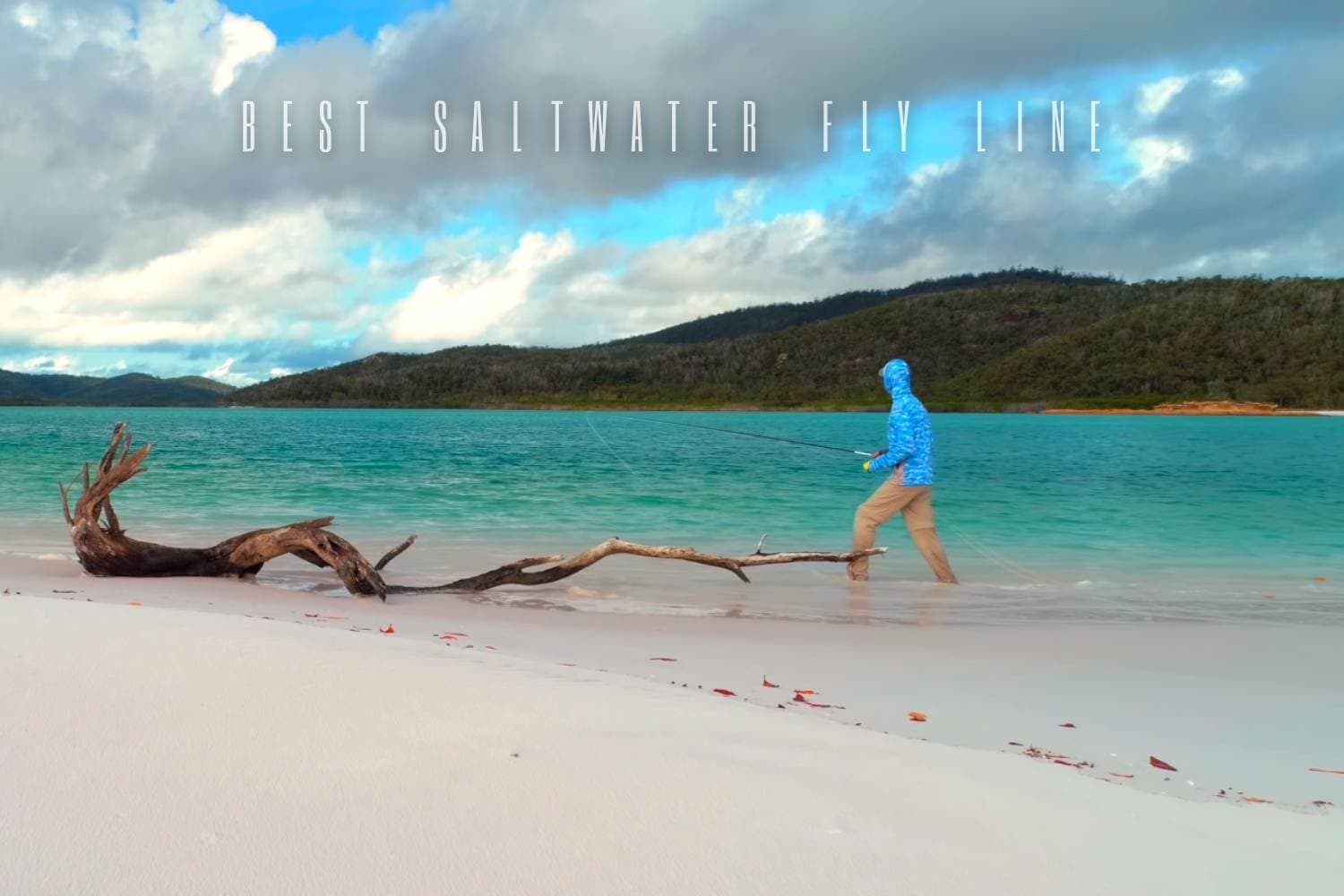
The best saltwater fly line is not one universal spool. Start with water and air temperature, then match the line’s head profile and density to your fly, wind, presentation distance and target. A hard tropical line can stay manageable in serious heat, while a line built to remain supple in cooler saltwater solves a different problem.
Saltwater lines compared by job
This is a job-based shortlist, not a single winner from light flats work through deep offshore presentations. The published configurations below describe the named line families; choose the exact weight that matches your rod and application.
| Line | Best fit | Published build | Main trade-off |
|---|---|---|---|
| Cortland All Purpose Taper | Balanced tropical floating use at close and longer range | Floating WF; 100 ft; monofilament core; WF6F–WF12F | Long-body versatility is less specialized than a compact, heavily front-loaded head |
| Cortland Tropic All Purpose | Hot conditions, wind and faster turnover | Floating WF; 90 ft; monofilament core; WF7F–WF10F | A short aggressive taper favors power over the softest presentation |
| Cortland Guide | Extreme heat, visible tracking and quick pickup for another shot | Floating WF; 100 ft; monofilament core; half-line heavy; WF7F–WF12F | The more assertive profile may be more line than a light-presentation setup needs |
| Cortland Ghost Tip | Presenting a fly just below the surface while retaining a floating head and running line | 9 ft clear intermediate tip; 100 ft; monofilament core; WF7I/F–WF12I/F | The tip changes pickup and depth control compared with a full floater |
| Cortland Tropic Clear Intermediate | A full intermediate presentation when fish are holding below the surface | Full clear intermediate WF; 100 ft; monofilament core; WF7I–WF12I | Not the first choice for shallow sight-fishing where immediate pickup matters most |
| Cortland Cold Redfish | Cooler saltwater and large or weighted redfish patterns | Floating WF; 100 ft; braided nylon multifilament core; WF6F–WF10F | A cold-condition redfish line is not a general tropical substitute |
Choose the temperature range first
Saltwater labels do not make lines interchangeable. The coating and core must remain usable where the line will sit: on a hot deck, in tropical water, in cool surf or during a cold early-season morning. A line that is pleasantly firm in the tropics may hold coils in cooler conditions. A supple coldwater line can become too soft and sticky in intense heat.
Use destination and season, not species alone, to make this choice. Redfish are a good example: Cortland separates the hard, slick Tropic Redfish from the braided-core Cold Redfish. Both are floating weight-forward lines for the same broad target, but their temperature jobs differ.
If a trip spans genuinely different climates, one line may not cover both well. Decide which conditions dominate, then consider a second spool for the other end of the temperature range rather than forcing one construction into every day.
Match the head to the fly, wind and presentation
Head shape determines how quickly a rod loads and how forcefully energy reaches the leader. A compact or short aggressive head helps turn over bulky, weighted or wind-resistant flies with fewer false casts. The cost is a more forceful delivery. A longer body and more progressive taper can carry line smoothly and offer better control once more head is outside the rod tip, but it asks for better timing and room for the cast.
- Small, lightly weighted flies and wary fish: favor control and a clean front taper over maximum punch.
- Large or air-resistant flies: favor a head with enough mass near the front to keep the leader turning over.
- Quick shots: choose a line that loads at the distance you actually carry, not one that only feels good with the full head outside the guides.
- Repeated direction changes: an extended back taper can make pickup, repositioning and the second cast easier.
- Strong wind: use a line and fly combination that forms a stable loop. Extra head weight cannot rescue a fly that overwhelms the rod or a leader that will not turn over.
Choose floating, intermediate or sinking as separate tools
Floating lines
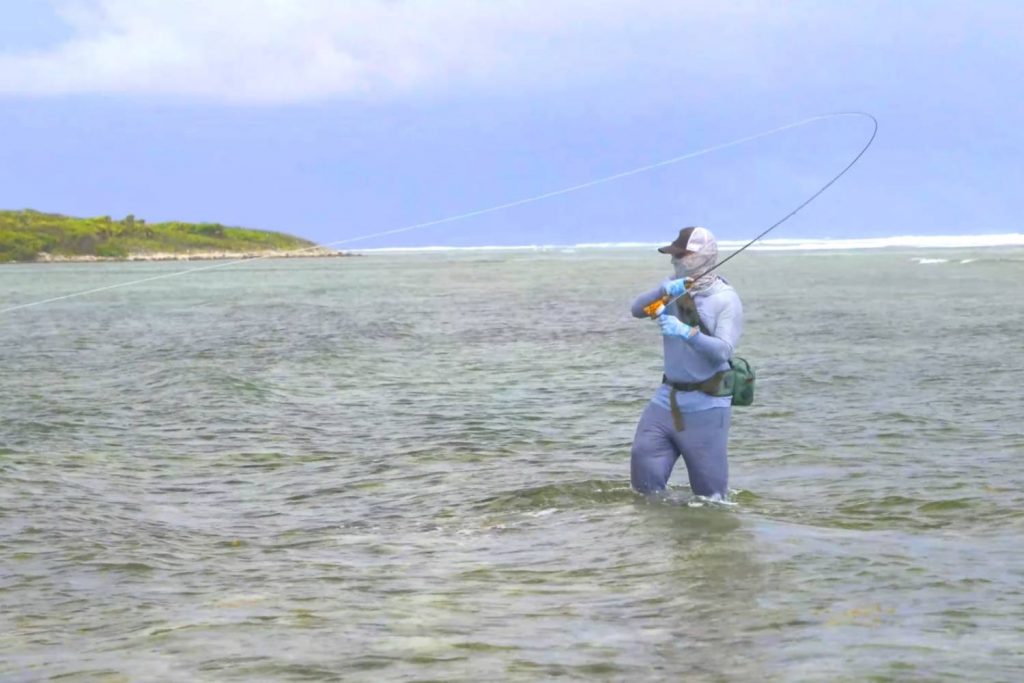
A floating line is the practical first line for shallow flats, surface presentations and situations where immediate pickup matters. It keeps mending and repositioning simple, and it lets you control fly depth mainly with leader, fly weight and retrieve.
Intermediate and clear-tip lines
An intermediate tip is useful when the fly needs to settle just under the surface without committing the whole line to a deeper track. A full intermediate line creates a more consistent subsurface path and a slimmer profile for casting in wind, but it also changes pickup and demands more planning before the next shot.
Sinking lines
A sinking head or full sinking system belongs where current, boat speed, retrieve and target depth require it. Select density by the presentation you need rather than by a promise that one sink rate always reaches one depth. Current, line angle, pause time and retrieve speed all change the result.
Match line weight to the complete outfit
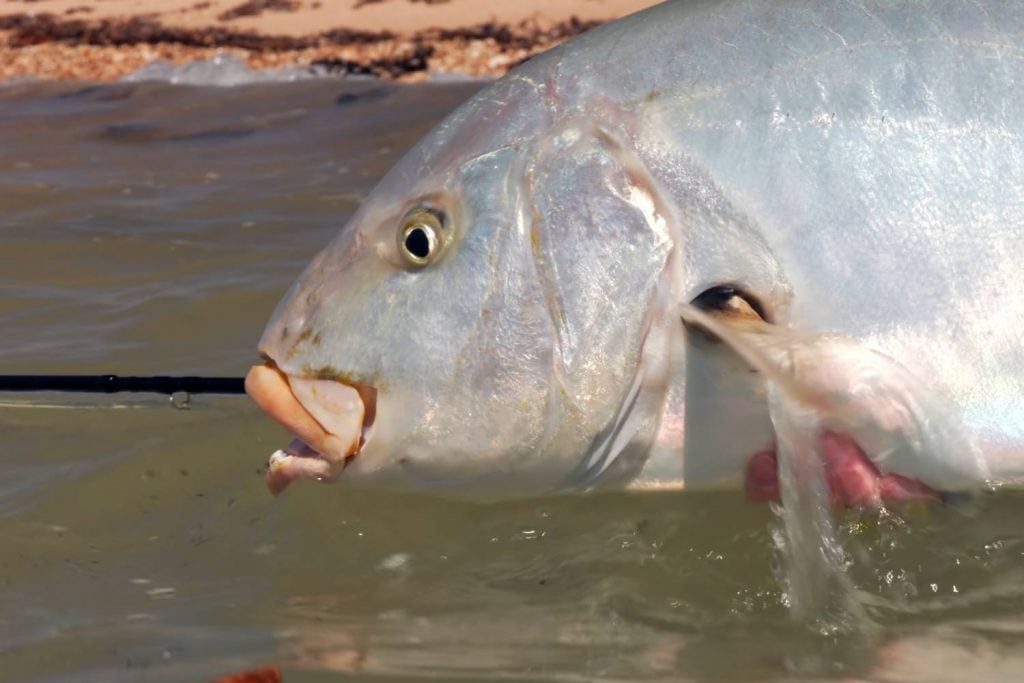
Start with the line designation printed on the rod. Then check whether the named line is true to weight, half-line heavy or deliberately overweight. A WF8F sold for an 8-weight rod can still carry more mass than another WF8F, and that difference affects loading and presentation.
Move up in outfit weight when the fly, wind and required lifting power demand it—not simply because the fishery is saltwater. A lighter outfit can present more quietly but reaches its limits sooner with heavy flies and hard wind. A heavier outfit can carry more fly and maintain loop authority, but it lands with more disturbance and is more tiring to cast.
For a bonefish-specific 7–9-weight decision, including line visibility and running-line management, use our guide to the best fly line for bonefish.
Current saltwater picks in detail
Cortland All Purpose Taper: balanced tropical floater
Cortland describes the All Purpose Taper as a long-body tropical floating line for both close and distant targets in wind. Its 100-foot, monofilament-core range spans WF6F through WF12F, making it the broadest starting point here when you need one familiar casting feel across several rod weights.
Cortland Tropic All Purpose: shorter and more forceful
The 444 Tropic All Purpose uses a short aggressive taper, hard monofilament core and 90-foot format in WF7F through WF10F. Choose it when quick loading and turnover in heat matter more than the most delicate delivery.
Cortland Guide: visible line and quick pickup
The Guide is a seafoam floating line built half a line size heavy for tropical heat. Cortland pairs its aggressive front profile with an extended back taper for pickup and direction changes. That combination suits moving targets and repeated shots, provided your rod and casting stroke agree with the extra head mass.
Cortland Ghost Tip: just under the film
The Ghost Tip combines a 9-foot clear intermediate tip with a visible floating head and running line. It is the specialist choice when the fly should track below the surface but you still want the handling and pickup of a mostly floating system.
Cortland Tropic Clear Intermediate: full subsurface track
The Tropic Clear Intermediate is a full clear intermediate line rather than a floating line with a short clear section. That distinction matters: choose it for a sustained subsurface retrieve, not as a stealthier substitute for every shallow-water floating presentation.
Generation-bounded field notes
These field notes apply only to the exact line names below:
- RIO DirectCore Flats Pro Saltwater Fly Line: during extensive use on Seychelles flats, this exact line loaded quickly, produced useful distance and turned over larger flies in wind. Those observations do not establish the behavior of another RIO Flats Pro variant.
- Scientific Anglers Grand Slam Amplitude Saltwater Fly Line: this exact unsuffixed line loaded quickly, handled wind well and picked up cleanly in the recorded use. Do not merge it with newer Textured, Smooth, Grand Slam or Clear Float labels.
- RIO Elite Tarpon Saltwater Fly Line: this exact line used a long back taper, covered 9- through 12-weight designations and supported quick pickup for a second shot. Do not transfer that account to every RIO tarpon line.
Frequently asked questions
Do I need a saltwater-specific fly line?
You need a line whose temperature range, core, taper and density fit the saltwater conditions you will fish. A freshwater label is not automatically a problem, and a saltwater label is not automatically a solution. The decisive question is whether the full design matches heat, fly size, wind and presentation.
What is the best all-around saltwater fly line?
For hot conditions and mixed floating-line work, a tropical all-purpose taper is the clearest starting point. In this shortlist, Cortland All Purpose Taper offers the broadest balanced range. Switch to a more aggressive head, clear tip, full intermediate or sinking design only when that job is actually required.
Should a saltwater line be one size heavier than the rod?
Not by default. Match the label to the rod first, then read the maker’s published grain or “half-line-heavy” description. Many modern lines already carry extra head mass while retaining the rod’s nominal line number.
Is a clear line always stealthier?
A clear line can reduce the visible profile of line near the fish, but color is only one part of stealth. Splash, shadow, fly placement, leader length and the angle at which line crosses a fish can matter more. Clear line can also be harder for the angler to track.
How many saltwater lines do I need?
Begin with one line that solves your most common climate and depth job. Add a second density or temperature range only when your fishing regularly demands it. A deliberate floating-plus-intermediate setup is more useful than several similar floating lines with no clear role.
