
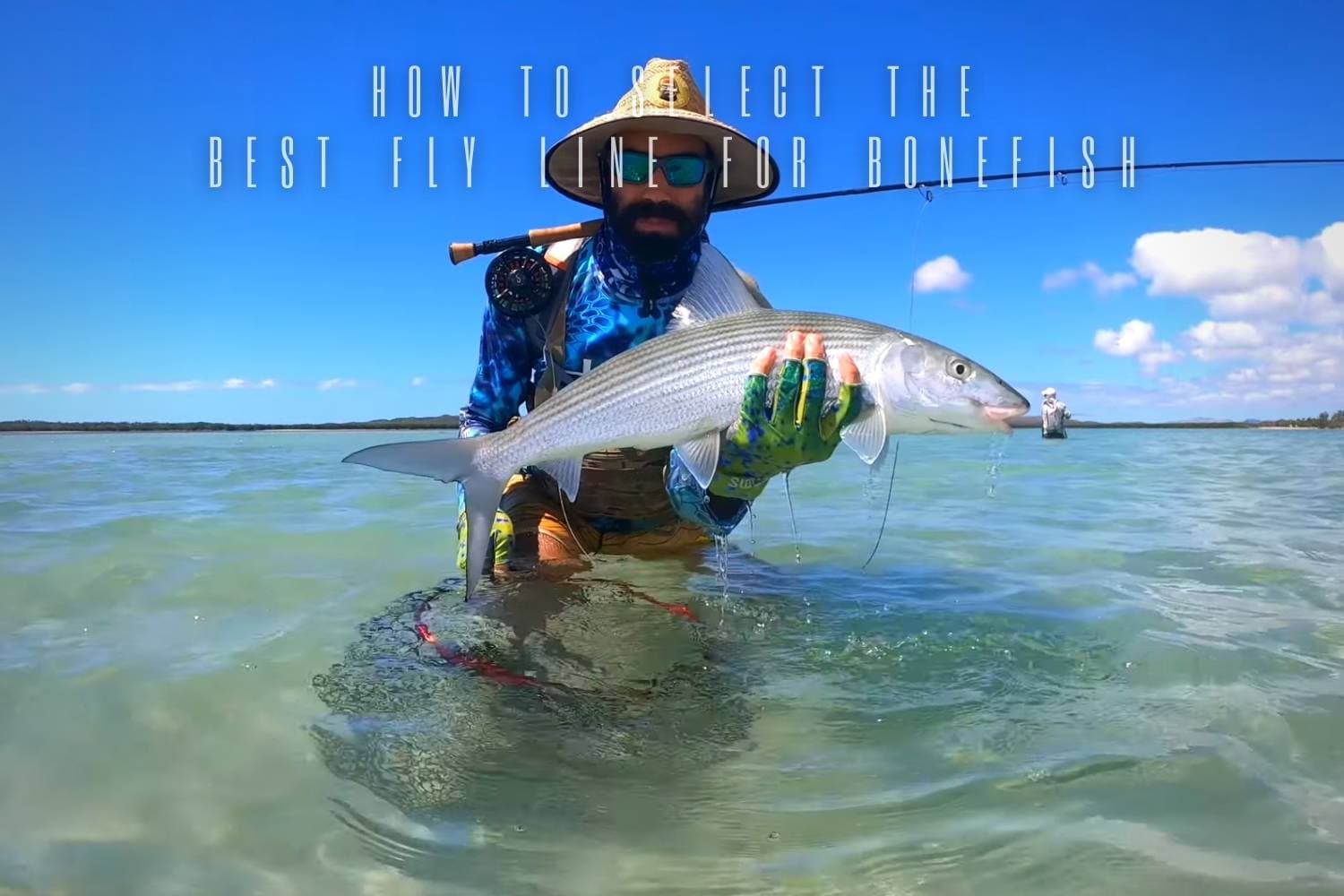
A good bonefish line must stay manageable on hot flats, load at the distance of a real shot, form a stable loop in wind and land with enough control to protect the presentation. For most anglers, the choice sits between 7-, 8- and 9-weight floating lines, with taper, color and running-line behavior deciding which one fits the day.
Bonefish lines compared
These lines solve different flats problems. The first three are floating starting points; Ghost Tip is a specialist alternative when the fly needs to track below the surface.
| Line | Best fit | Published 7–9wt configuration | Main trade-off |
|---|---|---|---|
| Cortland All Purpose Taper | Balanced hot-flats work at close and longer range | WF7F, WF8F and WF9F within a 100 ft floating monofilament-core family | The longer body is less instantly forceful than a compact head |
| Cortland Guide | Wind, moving targets, visible tracking and fast pickup | Seafoam WF7F, WF8F and WF9F; half-line heavy; 100 ft; extended back taper | Extra head mass can land more forcefully when the caster does not manage speed and loop shape |
| Cortland Flats Taper Clear | Clear-water flats where a clear floating line is preferred | Clear WF7F, WF8F and WF9F within a 100 ft floating monofilament-core family | A clear line is harder for some anglers and guides to track |
| Cortland Ghost Tip | A fly that should track just under the surface | WF7I/F, WF8I/F and WF9I/F; 9 ft clear intermediate tip; floating head and running line | The intermediate tip changes pickup and is unnecessary for many shallow presentations |
Build for hot flats
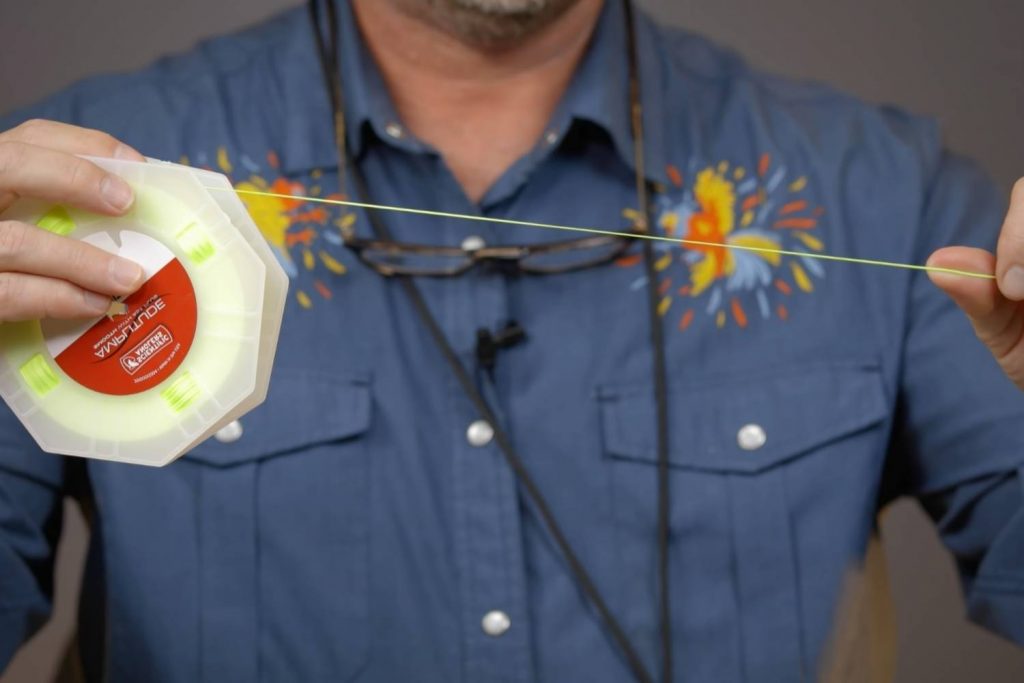
Heat changes how a line handles. A line that feels crisp in the morning can soften after hours on a warm deck, while a coldwater coating may become sticky and difficult to shoot. Tropical lines pair harder coatings with cores intended to resist tangling in heat, but that same firmness can retain coils when conditions cool.
Plan for the water and deck temperature during the trip, not the word “bonefish” on the box. If the fishery regularly starts cool and warms sharply, decide which part of the day creates the bigger handling problem. Our broader saltwater fly line guide explains tropical, cold-salt, intermediate and sinking choices in more detail.
Balance quick loading with a controlled presentation
Bonefish shots are often sudden. The line needs to load with the amount of head you can realistically carry before the fish changes direction. That does not mean the shortest or heaviest head always wins.
A compact, front-loaded head is easier to feel at short range and helps turn over a fly when the wind rises. A longer body can carry line smoothly, hold a more stable loop at distance and land with more control. The trade-off is that it may need more line outside the rod tip before it comes alive.
- Estimate the normal shot, not the heroic cast. A line that works beautifully at 70 feet may feel vague if most shots happen at 30.
- Match the fly. Small unweighted patterns need less front-loaded mass than bulky or heavily weighted flies.
- Protect the final turnover. A line can reach the fish and still fail if the leader collapses or the fly lands too hard.
- Practice pickup as well as delivery. Bonefish change direction. The ability to lift, redirect and present again matters as much as maximum distance.
Choose for wind and shot distance
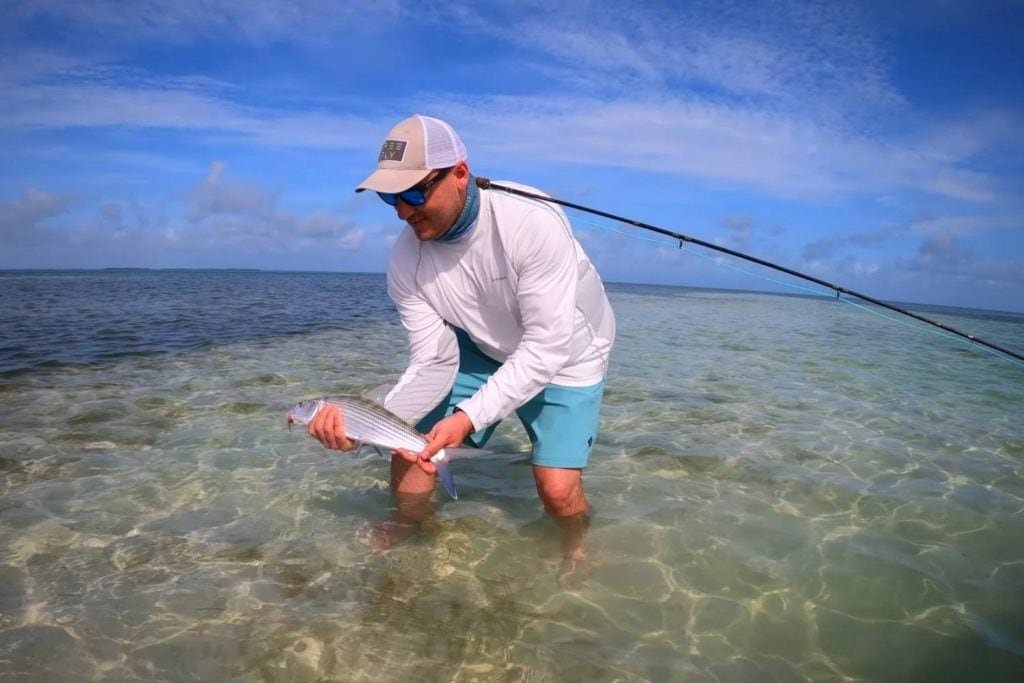
Wind is normal on open flats, but a heavier head is not a complete answer. It helps the rod load quickly and gives the loop authority, yet it can also increase disturbance if the caster drives it into the water. The most useful line is the one that forms a narrow, stable loop with your rod and fly at the distance you can control.
The Cortland Guide is the power-oriented option here. It is half a line size heavy and uses an extended back taper for pickup. The All Purpose Taper is the more balanced choice when casts vary from close shots to longer presentations. Flats Taper Clear prioritizes a clear floating profile over high visibility to the angler.
Practice with the full leader and the flies you will carry. A line that looks excellent with yarn at a casting pond can behave differently once a weighted pattern and a long leader enter the system.
Choose line visibility deliberately
Line color serves two audiences: the fish and the people trying to track the cast. A visible head makes it easier to judge how much line is outside the rod, follow the pickup and respond to a guide’s direction. A clear line reduces the visible line profile but can be harder to track against glare and broken water.
Do not assume clear automatically means invisible or bright automatically means fish-spooking. Splash, line shadow, leader placement and the path of the cast can matter more than color. Choose a line you can control, then use leader length and presentation angle to keep the fly and line away from the fish’s path.
The seafoam Guide is the easiest line in this shortlist to track. Flats Taper Clear is the opposite choice. All Purpose Taper sits between those priorities as the general casting option.
Manage the running line before the fish arrives
A line cannot shoot cleanly if the running line is wrapped around a shoe, reel seat, boat fitting or itself. Hot-weather stiffness helps, but it does not organize loose line for you.
- Strip enough line for the likely shot before casting begins. Keep it in large, orderly loops rather than a tight pile.
- Place the longest loops first. That lets the shorter loops leave without dragging through a nest underneath.
- Keep the line off rough edges. On a skiff, watch cleats, coolers, hinges and footwear. While wading, keep loops where current will not sweep them around your legs.
- Clear the first guide. Make sure the line is not wrapped around the rod blank before the delivery cast.
- Practice the handoff. After the fly lands, move from line control to the retrieve without creating slack or trapping the running line under a finger.
Highly visible running line can help a guide and angler see a developing tangle. Clear line may demand more deliberate preparation because misplaced loops are harder to spot.
Match 7-, 8- and 9-weight outfits
Match the line number to the rod number first, then account for lines that are deliberately half a size heavy. Do not automatically put a 9-weight line on an 8-weight rod to gain power; a product such as the Cortland Guide already carries extra head mass under its nominal label.
7-weight
A 7-weight setup favors lighter flies, calmer conditions and quieter presentations. It asks more of the caster when wind rises and gives up some authority with heavier patterns. It is best when the destination and guide genuinely favor the lighter outfit.
8-weight
An 8-weight is the broad starting point for mixed bonefish conditions. It balances fly turnover, wind handling and presentation without moving immediately to the heaviest option. All Purpose Taper, Guide and Flats Taper Clear each include an 8-weight designation but produce different casting feels.
9-weight
A 9-weight setup adds mass for stronger wind, larger flies and a more powerful rod. The trade-off is more fatigue and a delivery that requires careful speed control to avoid landing hard. Choose it because the fishery and fly demand it, not because heavier always sounds safer.
Current bonefish picks in detail
Cortland All Purpose Taper: balanced starting point
Cortland describes this tropical floating line as a long-body design for both close and distant targets in wind. The family includes WF7F, WF8F and WF9F, so it covers the central bonefish outfit range without changing to a radically different taper at each rod weight.
Cortland Guide: quick, visible and assertive
The Guide is half a line size heavy, seafoam colored and built with an extended back taper. It suits anglers who want the rod to load decisively, want to see the line clearly and expect to pick up for another shot. The extra mass still needs a controlled delivery.
Cortland Flats Taper Clear: clear floating profile
Flats Taper Clear is a full clear floating weight-forward line with defined WF7F, WF8F and WF9F options. Choose it when a clear line profile matters more than easy visual tracking. Its color does not replace a careful cast, long leader or good presentation angle.
Cortland Ghost Tip: specialist subsurface option
Ghost Tip combines a 9-foot clear intermediate tip with a floating head and running line. It is not the default flats line; it earns a place when the fly needs to ride just below the surface and a full intermediate line would be more depth than the presentation calls for.
Read the complete model name
Bonefish labels within one brand can describe separate constructions, not interchangeable generations. Scientific Anglers names recorded in its collection on August 10, 2026 include Magnitude Textured Bonefish Plus Clear Float, Magnitude Smooth Bonefish Plus Clear Float, Amplitude Textured Bonefish and Amplitude Textured Bonefish Plus. Textured versus Smooth, Bonefish versus Bonefish Plus, and Clear Float are meaningful parts of the identity. Do not shorten them to “the SA Bonefish line” or assume they behave like the older Mastery Bonefish line.
Generation-bounded bonefish lines
Keep these observations and specifications tied to the exact versions named below:
- RIO Bonefish Quickshooter: this exact line used a short head that loaded quickly and favored mid- to close-range shots in wind. Do not apply that profile to a newer or differently suffixed RIO bonefish line.
- Scientific Anglers Mastery Bonefish Fly Line: this exact line used a stiff core and longer head for tropical conditions and longer casts. That does not establish the construction of current Magnitude or Amplitude variants.
- Airflo Chard’s Tropical Punch Fly Line: this exact line used a hard saltwater coating, a 40.2-foot head and WF8 through WF12 designations. Treat those details as historical product context, not a current Airflo family claim.
Frequently asked questions
What line weight is best for bonefish?
An 8-weight line on an 8-weight rod is the broad starting point. Use a 7-weight for lighter flies and calmer, presentation-focused fishing; use a 9-weight when wind and fly size justify the more powerful outfit. Follow the destination guide’s advice when it differs.
Should a bonefish line be floating?
Usually, yes. A floating line offers the easiest pickup and depth control on shallow flats. Use an intermediate tip only when the fly needs to track below the surface; do not choose it merely because clear line sounds stealthy.
Is a short or long head better?
A shorter, more concentrated head loads quickly and turns over a fly with less line outside the rod. A longer body can carry line smoothly, control distance and land more gently. Choose by normal shot distance, wind and fly size.
Is a clear line best for bonefish?
Clear is one useful option, not a universal winner. It reduces the visible line profile but can be difficult to track. A visible line can improve distance judgment and pickup. Good placement and a controlled landing matter with either color.
How far must I cast?
There is no single required distance. Practice accurate presentations from short range through the distance your trip commonly demands, then add wind and a full leader. The first useful cast matters more than the longest cast of the day.
How do I stop running-line tangles?
Stretch or straighten the line as appropriate for its maker’s instructions, strip the likely casting length before the shot, place it in large ordered loops and keep those loops clear of feet, fittings and current. Rehearse the pickup and delivery with the same amount of line you will use on the flats.
