
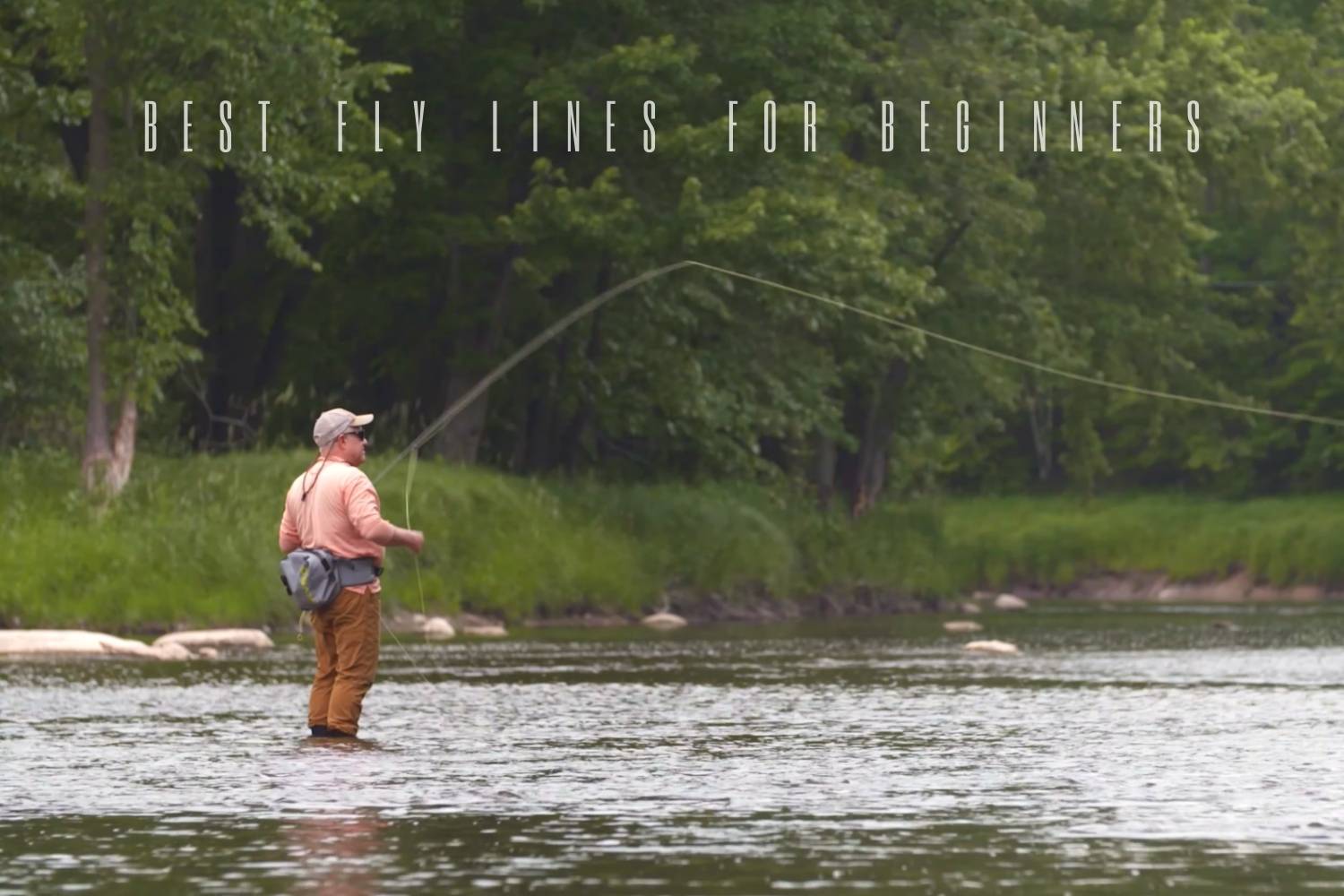
A first fly line should make the whole outfit easier to understand, not add another layer of specialist choices. Start by matching the line number to the rod, choose a weight-forward floating line, and keep the first rig light and simple. That combination covers basic overhead casts, roll casts, dry flies, and modest nymph rigs while you learn how the rod loads.
The quick answer
For a general freshwater outfit, buy the same line weight printed on the rod and choose a WF floating configuration. A 5-weight rod normally starts with a 5-weight line; a 4-weight rod starts with a 4-weight line. A reel marked for a small range, such as 4/5 or 5/6, can still be suitable as long as it holds the chosen line and enough backing without crowding the spool.
Do not overline the rod automatically. A heavier line can make a rod load sooner at close range, but it also changes how the rod and taper behave. Begin with the rated weight unless the rod maker specifies another match or a clearly defined close-range use calls for it.
Match line weight to the rod before choosing a brand
The number is the first decision because it links the rod and line. Look just above the rod handle for the rod rating, then choose the same number on the fly-line box or spool label. The reel rating is mainly a capacity and balance guide; it often spans two nearby line weights.
- Read the rod rating. If it says 5-weight, begin with a 5-weight line.
- Check reel capacity. Confirm that the reel is intended for that line class and can hold both backing and the full fly line.
- Keep the first leader and fly modest. A light dry, soft hackle, or simple nymph rig lets you feel what the line and rod are doing.
- Change one variable at a time. Learn the matched outfit before experimenting with a heavier line, a dense tip, or a more aggressive taper.
A mismatched line can make a good rod feel awkward. Too little line mass may make it difficult to feel the rod load at ordinary practice distance; too much can make the rod feel overloaded as more line is carried. A rated match gives you the clearest baseline.
Why a weight-forward floating line is the default
Weight-forward taper
A weight-forward line concentrates more of its casting mass in the head and then narrows into running line. It is the straightforward choice for learning basic casting and for progressing from short practice casts to longer fishing casts. A double-taper line can be useful for close presentation and line control, but it is not necessary for a first general-purpose setup.
Floating density
A floating line is easier to see, lift, mend, and reposition. It can present a dry fly, carry a dry-dropper, or fish a light subsurface rig through the leader. Choose an intermediate, sink-tip, or full-sinking line only when the fishing job is specifically below the surface and depth control cannot be handled sensibly with the leader and fly.
True-to-weight versus more aggressive tapers
A true-to-weight line is the cleanest reference point for learning how the rated rod casts. A shorter or more aggressive head can help turn over a more resistant rig or load quickly in tight quarters, but it is not automatically easier in every situation. The more forceful the taper, the more care it may take to land a small fly softly.
Two practical starting points
| Exact line | Defined configurations | Best starting job | Important limit |
|---|---|---|---|
| Cortland 333 Trout All Purpose | WF3F through WF10F; floating; weight-forward; 90 feet | A conventional freshwater setup on a modern medium- to fast-action graphite rod | Choose by the rod’s rating; the broad size range does not make one configuration universal |
| Cortland Headwater | WF1F through WF4F; floating; weight-forward; 80 feet | Light rods, small streams, and short casts where the line must load the rod up close | It is a small-water specialist rather than the default for larger water or heavier rigs |
Cortland 333 Trout All Purpose: the conventional first setup
This is the simpler choice when the goal is a normal freshwater outfit rather than a specialist creek line. It is a floating, weight-forward line with a braided nylon multifilament core and a 90-foot length. The defined size run begins at WF3F and continues through WF10F, so the important step is selecting the one that matches the rod.
Its all-purpose profile suits learning with dry flies, straightforward nymph rigs, and ordinary freshwater casts. It does not remove the need to control leader length, fly size, or casting tempo, but it keeps the line decision familiar.
Cortland Headwater: the small-stream exception
Headwater is built true to line weight with a short body and front taper that helps load a rod at close range. Its exact WF1F, WF2F, WF3F, and WF4F configurations make it relevant to light outfits used on small streams and spring creeks.
Choose it when most casts will be short and the flies will remain light. If the plan includes larger rivers, longer carries, heavy indicators, or bulky streamers, a broader general-purpose line and a more suitable rod class are the better starting point.
Set up the reel in the right order
- Load backing first. Backing fills space on the reel and sits behind the fly line.
- Install the fly line in the correct direction. The running-line end connects to backing; the front end connects to the leader.
- Leave spool clearance. The completed line and backing should not rub the reel frame or bind when wound in.
- Add a suitable leader. Begin with a straightforward tapered leader rather than a complex multi-fly system.
- Practice with a short working length. Learn to feel the rod load before trying to shoot more line.
Simple line care
Before fishing, pull off only the amount of line you expect to use and straighten obvious coils gently. After use, remove grit with a soft damp cloth, allow the line to dry, and wind it back under light, even tension. Check the front section and loop for cracks, cuts, or rough spots, and avoid packing the reel so tightly that the line rubs the frame.
If casting suddenly feels harder, check the simple things first: twisted line, a leader that is too long or heavy for the fly, debris on the coating, or too much line outside the rod tip. Replacing the line should not be the first response to a setup problem.
Beginner fly line questions
Should a beginner start with a 5-weight?
A 5-weight is a common general freshwater starting class, but the line still has to match the rod you own and the flies and water you intend to fish. A light small-stream outfit may call for a 3- or 4-weight; heavier flies and wind may call for more rod and line.
Is a bright line color a problem?
Color is secondary to weight, taper, and density. A visible line can help you track the head and manage drifts. Presentation depends more on the leader, fly, line speed, and where the line lands than on choosing a universally “stealthy” color.
When should a beginner add a sinking line?
Add one when repeated fishing situations require a fly line to control subsurface depth. Keep the floating line as the learning and surface-presentation setup, then choose the sinking density for a defined depth, retrieve, and water type rather than as a general upgrade.
