
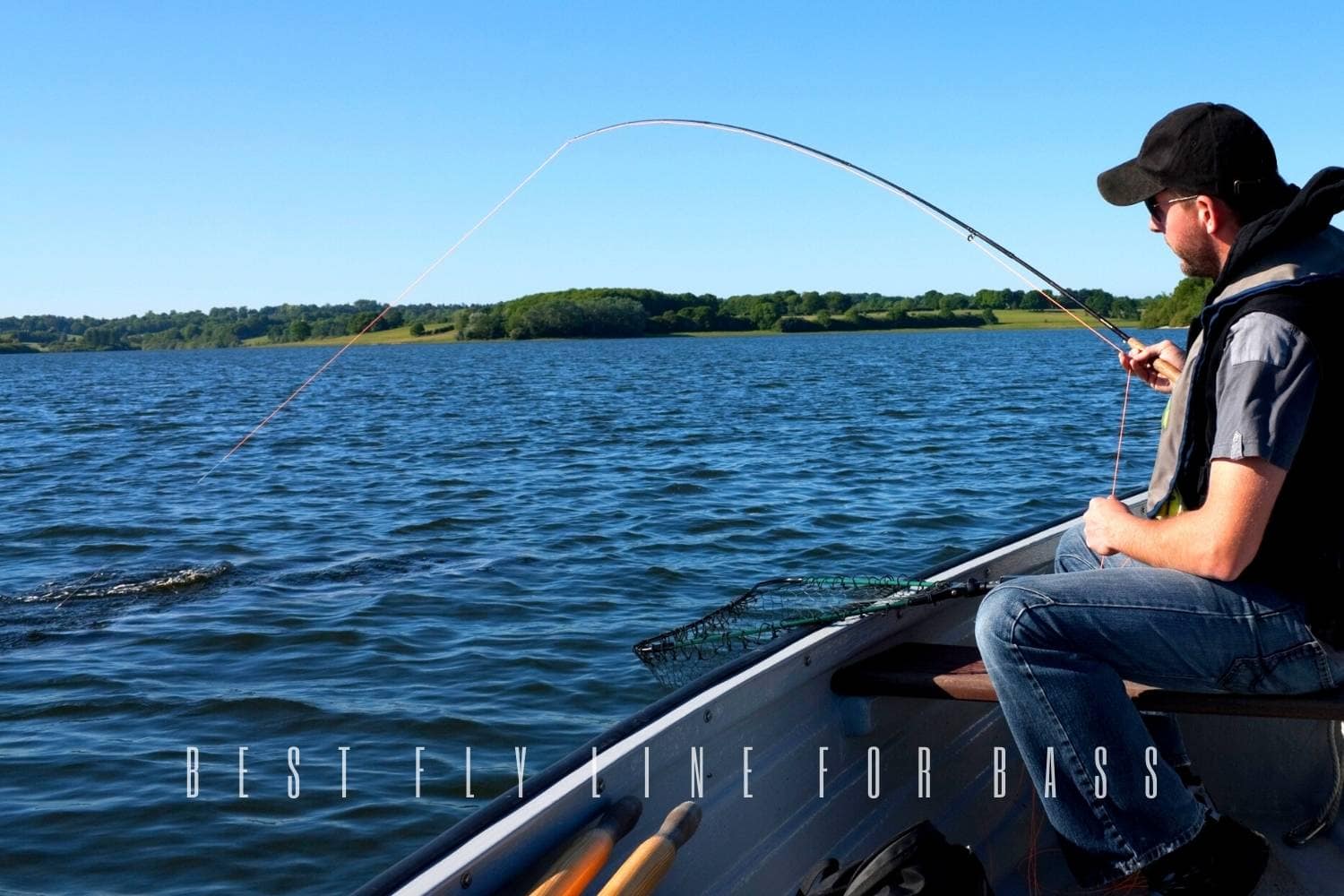
The best fly line for bass must turn over bulky, air-resistant flies, load the rod at practical fishing distance and help control fish around cover. A powerful floating line is the default for poppers, divers and shallow streamers. An intermediate tip is better for submerged grass and structure, while a denser sink tip or compact sinking head belongs in deeper, more open water.
For a dedicated warmwater floating setup, start with Cortland Bass. Choose Bass Intermediate when subsurface structure is the main target. 333 Bass Panfish covers lighter floating outfits, Streamer Sink Tip 10 T3 adds a controlled Type 3 tip, and Compact Sink Type 6 is the deep-water specialist.
Bass fly lines compared
| Line | Density | Best fit | Listed build |
|---|---|---|---|
| Bass | Floating | Poppers, divers and streamers on dedicated bass rods | WF5F–WF9F; 100 ft; full line size heavy; braided nylon multifilament core |
| Bass Intermediate | 26 ft intermediate tip with floating running line | Submerged grass, current and structure | WF5I/F–WF9I/F; 100 ft; full line size heavy; monofilament core |
| 333 Bass Panfish | Floating | Lighter bass and panfish outfits in summer warmth | WF3F–WF7F; 90 ft; aggressive taper; monofilament core |
| Streamer Sink Tip 10 T3 | 10 ft Type 3 tip with floating running line | Streamers in shallow current, drop-offs and outside weed edges | WF5S/F–WF8S/F; 100 ft; 3–4 IPS tip; braided nylon multifilament core |
| Compact Sink Type 6 | 28 ft Type 6 head with intermediate running line | Deep, open-water bass and large flies | 200–500 grain heads spanning 5/6wt through 12+wt; 100 ft; monofilament core |
What makes a bass fly line different?
Bass lines are shaped around the fly and the fishing distance, not just the fish. Hair bugs, foam poppers, deer-hair divers and weighted streamers create more air resistance than a typical trout dry fly. A short, powerful front section carries that resistance and turns the leader over with fewer false casts.

Short loading for real fishing distances
Many bass casts happen from a boat, bank or river position where the fly must move quickly from one target to the next. A concentrated head can load a compatible rod with less line outside the tip. That helps with short shots, but it does not remove the need to match the head weight to the rod.
Turnover for bulky and weighted flies
A more aggressive taper keeps energy moving toward a popper or streamer instead of allowing the loop to collapse. Leader design still matters. A line can carry a bulky fly only if the leader butt and taper are strong enough to continue the turnover.
Control around cover
Line strength is only one part of pulling a bass away from wood, grass or docks. The rod, leader, knots and hook all share the load. Choose a line that casts the fly cleanly and helps maintain direct contact, then use tackle appropriate for the cover rather than relying on line weight alone.
Warmwater handling
Summer surface temperatures can make a soft coldwater line feel sticky. The Cortland Bass and 333 Bass Panfish descriptions specifically address summer use, while other lines are presented for broader temperature ranges. Match the coating and core to the conditions where the line will spend most of its time.
Current bass-line picks
Cortland Bass: dedicated floating choice
Cortland Bass is a 100-foot floating weight-forward line in WF5F through WF9F. Cortland describes the short, powerful head as a full line size heavy and designed to turn over bass poppers and streamers. The line also uses an X-Strong braided nylon multifilament core. This is the direct choice for a fast-action bass rod, repeated short-to-medium shots and surface or shallow presentations.
Choose it when: bulky flies, quick loading and warm summer fishing define the day. Skip it when: a softer rod does not need the extra head weight or the fly must remain well below the surface.
Bass Intermediate: subsurface structure specialist
Bass Intermediate uses a 26-foot intermediate tip, a floating running line and a full-line-size-heavy profile in WF5I/F through WF9I/F. Cortland positions it for subsurface bass tactics, current and submerged structure. The tip lets the fly track below the surface while the floating rear section remains easier to handle than a completely intermediate line.
Choose it when: the fly should pass over grass, along submerged wood or through a river lane without diving as steeply as a dense head. Skip it when: surface bugs are the main tactic or the water demands a faster descent.
333 Bass Panfish: lighter warmwater floating option
333 Bass Panfish is a 90-foot floating weight-forward line listed in WF3F through WF7F. Its aggressive taper is intended for air-resistant topwater flies and streamers, while a hard jacket and monofilament core are described for summer heat. The lighter size range makes it a better match for smaller bass flies, panfish crossover and rods that do not need a full-size-heavy dedicated bass head.
Choose it when: the outfit is lighter and the fly menu is moderate rather than oversized. Skip it when: the rod and fly require the heavier dedicated Bass profile or a sinking system.
Streamer Sink Tip 10 T3: moderate-depth streamer option
Streamer Sink Tip 10 T3 combines a 10-foot Type 3 tip rated at 3–4 IPS with a floating running line and aggressive short taper. Cortland lists bass among its intended species and offers WF5S/F through WF8S/F. It fits shallow river slots, drop-offs and weed edges where a full intermediate is too subtle but a long dense head would spend too much time near bottom.
Choose it when: you want a short sinking section plus floating-line control. Skip it when: the retrieve should stay deep across most of a long cast.
Compact Sink Type 6: deep open-water specialist
Compact Sink Type 6 uses a 28-foot Type 6 sinking head paired with an intermediate running line. Configurations run from a 200-grain 5/6-weight designation through 500 grains for 12-weight-and-heavier use. Cortland identifies bass among the deep-water applications. The compact head is designed to keep the fly down and turn over larger patterns with limited false casting.
Choose it when: bass are holding deep in open water and the cast needs a concentrated sinking head. Skip it when: the target is close to heavy snagging cover, the water is shallow or rapid line pickup is more important than depth.
Floating versus intermediate and sinking lines for bass
Use a floating line for surface flies and shallow cover
A floating line keeps poppers and divers working correctly, makes line pickup easier and lets the angler steer or mend around current and obstacles. It is also the practical default for repeated casts to banks, docks and grass pockets. A weighted fly and suitable leader can cover modest depth without changing the whole line.
Use an intermediate tip for submerged grass and structure
An intermediate tip keeps a streamer below chop and helps it track along structure without the abrupt angle of a fast sink tip. Retrieve speed becomes an important depth control: faster strips bring the fly upward, while pauses and slower retrieves let the tip settle.
Use a Type 3 tip for a stronger but controlled drop
A short Type 3 tip works around moderate drop-offs, outside weed lines and river seams. The floating running line helps with pickup and line management. The short sinking section also limits how much line must be brought to the surface before the next cast.
Use a compact Type 6 head in deep, open water
A dense compact head belongs away from branches, cables and thick submerged cover where a deep line can hang up before the fly reaches the target. It is most useful for open-water ledges, deep river pools and suspended fish when an intermediate tip cannot hold the presentation down.
Match the line to rod, fly and cover

Start with the rod’s line rating
A 7-weight rod normally starts with a 7-weight line, but the exact head design matters. Cortland Bass and Bass Intermediate are already described as a full line size heavy. Buying an 8-weight version for a 7-weight rod would add another step beyond that built-in weight and may overload the rod. Compact heads should be selected by their listed grain and rod-weight window.
Let the fly decide how aggressive the taper must be
A small foam bug on a light leader does not need the same head as a wind-resistant deer-hair diver or a weighted articulated streamer. Choose enough front-end power to turn over the largest fly used regularly, not the largest fly that might be tied on once a year.
Shorten the decision around cover
Near hard cover, favor fast pickup, accurate turnover and a line that loads at the actual casting distance. A floating or intermediate-tip system is usually easier to redirect than a long full-sinking line. Deep heads make more sense where there is room to let the line descend and retrieve without dragging through snags.
Balance the leader with the line
A powerful bass taper paired with a long, fine leader wastes turnover energy. Use a leader butt and taper capable of carrying the fly, then select the terminal section for fly size, water clarity, abrasion and cover. Check knots and loops regularly when repeatedly casting weighted flies.
For a broader selector by rod weight, water and presentation, see the Best Fly Line guide. For more depth-system detail, use the sinking fly line guide.
Frequently asked questions
Is a 7-weight fly line good for bass?
It can be. A 7-weight setup covers many smallmouth and largemouth situations, but the right choice depends on fly size, wind, cover and the rod. A compact popper may cast well on a 7-weight while a very large, waterlogged fly may call for a heavier outfit.
Can a trout line be used for bass?
A general trout line can handle small bass flies and open water, but a long or presentation-oriented taper may struggle with bulky poppers and weighted streamers. Choose a bass or streamer taper when the fly—not merely the fish—requires more front-end power.
Should the line be heavier than the rod rating?
Not by default. Begin with the matching designation and read how the exact line is weighted. A line built a full size heavy already supplies extra mass to load fast-action rods. Upsizing it again can make the rod feel overloaded and reduce control.
Is a floating or sinking line better for bass?
A floating line is the more versatile first choice for topwater flies, shallow cover and quick target changes. Add an intermediate or sink-tip system when fish are consistently below the surface. Use a dense compact head for deep open water rather than as an automatic replacement for the floating line.
What line works around weeds?
A floating line is easiest over mats and through pockets. An intermediate tip can track above submerged grass, while a short Type 3 tip can cover the outside edge. Control the countdown and retrieve so the fly stays above the vegetation instead of burying into it.
Does a low-stretch core guarantee better hook sets?
No single line feature guarantees a hook set. Direct contact can help, but slack control, hook sharpness, leader stretch, rod angle and the timing of the strip set all matter.
Bottom line
Use Cortland Bass for the dedicated floating warmwater job, Bass Intermediate for submerged structure, and 333 Bass Panfish for lighter floating outfits. Move to Streamer Sink Tip 10 T3 when a moderate short tip fits the lane, or Compact Sink Type 6 when deep open water demands a dense head. Match the exact configuration to the rod and choose depth by cover and retrieve—not by season or line weight alone.
